


Root-zone mulching
Apply a 5–8 cm layer of shredded bark or leaf mold over the root zone, keeping it 5–8 cm away from the trunk, to stabilize soil moisture and temperature and reduce weed competition around the shrub.

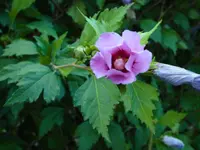
Rose of Sharon, Hibiscus syriacus, is a deciduous flowering shrub commonly grown in gardens and landscapes. It forms an upright, multi-stemmed shrub with woody branches and plentiful summer blooms.
Flowers are usually large, trumpet-shaped, and available in white, pink, purple, or blue tones, often with a darker center. Foliage is medium green and emerges relatively late in spring.
This species originates from East Asia but is widely planted in temperate regions for its tolerance of heat, urban conditions, and moderate drought once established. These traits make it straightforward to care for Rose of Sharon in most residential gardens.
It generally prefers full sun, well-drained soil, and consistent moisture during the first years after planting for best flowering and growth.

Care Difficulty
Easy Care

Light Preference
Full Sun

Water Requirements
Moderate Water

Temperature Preference
Cold Hardy

Hardiness Zone
5–9

Soil Texture
Sandy, Loamy, Clay

Soil pH
Acidic (5.5–6.5), Slightly acidic (6.5–7.0)

Soil Drainage
Moist but well-drained

Fertilization
Light (every 4–6 weeks)
Scan your plant to receive care tips personalized for your specific plant
Available on iOS and Android
This shrub needs abundant direct light for strong flowering and dense growth.
This species prefers evenly moist, well-drained soil rather than constant wetness or drought.
This hardy shrub tolerates a wide temperature range but performs best with warm summers and cold but not extreme winters.
This shrub tolerates typical outdoor humidity but benefits from moderately moist air in hot climates.
Hibiscus syriacus grows best in deep, moderately fertile, well-drained mineral soil.
This species is suitable for growing in containers when given enough root volume and stability.
Hibiscus syriacus responds well to moderate feeding during its active growing season.
Pruning Hibiscus syriacus helps maintain structure and encourages abundant flowering on new wood.
Rose of Sharon is more often transplanted in the landscape than repotted long-term in containers.
Hibiscus syriacus is commonly propagated from semi-ripe cuttings and seeds.
Hibiscus syriacus is cold hardy in much of the US and usually needs only minimal winter care outdoors.

Plant Health Check
Not sure what's wrong with your plant? Check your plant's health inside the app.
This species flowers later than many ornamental shrubs, often from mid-summer into early fall, providing nectar and pollen when many other garden plants have finished blooming.
It tolerates air pollution, compacted soils, and reflected heat better than many flowering shrubs, which is why it is widely planted along streets and in parking-lot landscapes.
After flowering, it forms woody seed capsules that split open when dry, gradually releasing numerous small seeds that can self-sow around the parent plant.

Hibiscus syriacus is the national flower of South Korea, where it is known as mugunghwa and symbolises endurance and perseverance, and it appears in the country’s national emblem and in many official insignia.
Lack of flowers often comes from too little sun, heavy pruning in late spring, or excess nitrogen fertilizer. Old, exhausted soil or drought stress also reduce buds. Adjust care gradually and allow a full growing season for recovery.
Keep your plants happy and healthy with plant identification, disease detection, and easy care guidance.

Lemon-scented Geranium
Pelargonium crispum
 POPULAR
Cape jasmine
Gardenia jasminoides

Engelmann's hedgehog cactus
Echinocereus engelmannii
Confederate rose
Hibiscus mutabilis
Maxillaria picta
Maxillaria picta
Geraldton wax
Chamelaucium uncinatum

Bastard Cherry
Ehretia tinifolia
lace hedgehog cactus
Echinocereus reichenbachii