Control clump spread
Every 3–5 years, use a sharp spade to slice off outer offsets at the dripline to keep the clump from overcrowding paths or neighboring plants and to maintain good air circulation around the rosette bases.

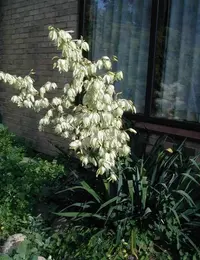
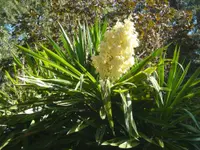
Adam's needle, Yucca filamentosa, is an evergreen shrub-like perennial from the southeastern United States. It naturally grows in dry, sandy, and rocky habitats. The plant forms a dense rosette of stiff, sword-shaped leaves with fibrous threads along the edges and sends up a tall flower stalk topped with many white, bell-shaped blooms. Its architectural shape and tolerance of heat, drought, and poor soil make it a dependable structural plant in low-maintenance gardens. Once established, it needs little water and copes well with neglect, which simplifies how to care for Adam's needle.

Care Difficulty
Easy Care

Light Preference
Full Sun

Water Requirements
Low Water

Temperature Preference
Cold Hardy

Hardiness Zone
4–10

Soil Texture
Sandy, Loamy, Rocky

Soil pH
Slightly acidic (6.5–7.0), Slightly alkaline (7.0–7.5)

Soil Drainage
Well-drained

Fertilization
Minimal (feed rarely)
Scan your plant to receive care tips personalized for your specific plant
Available on iOS and Android
This sun-loving perennial thrives in bright, open sites and handles tough conditions once established.
This drought-tolerant species prefers infrequent, deep watering in fast-draining soil.
This hardy yucca tolerates a wide temperature range, from cold winters to hot summers, when planted in the ground.
Yucca filamentosa handles a wide humidity range and usually does not need special humidity control indoors or outdoors.
Yucca filamentosa prefers very well-drained, lean soil that mimics dry, sandy habitats.
This species is suitable for container growing, especially in sunny, dry locations.
Yucca filamentosa is a low-nutrient, drought-adapted plant that only needs light feeding in containers or very poor soils.
Pruning Yucca filamentosa focuses on cleanup rather than reshaping the plant.
Yucca filamentosa is usually grown in the ground and only needs infrequent transplanting when overcrowded or poorly placed.
Yucca filamentosa is commonly propagated by division and offsets, with seeds used mainly for breeding or patient growers.
Yucca filamentosa is cold hardy in most temperate gardens and usually needs minimal winter care once established in the ground.

Plant Health Check
Not sure what's wrong with your plant? Check your plant's health inside the app.
This species is naturally common on sandy coastal dunes and dry pine barrens in the eastern United States, where its deep, fibrous root system helps stabilize loose, shifting soils.
The narrow, blue‑green leaves develop distinctive curling white threads, or filaments, along their margins, which gives the species its name and helps distinguish it from other yucca species.
Unlike many related yuccas, this species tolerates freezing winters and is reliably hardy into northern climates, surviving snow and subfreezing temperatures that would damage more tender desert yuccas.

Yucca filamentosa was traditionally used by Indigenous peoples of the southeastern United States as a fiber plant; its strong leaf fibers were processed and twisted into cordage for items such as rope, nets, and sandals, making it an important regional source of durable plant-based material.
Flowering usually starts when the rosette is mature, often after several years. Lack of blooms is commonly due to insufficient age, heavy shade, or nutrient‑rich, overwatered soil that encourages foliage instead of flower stalk formation.
Keep your plants happy and healthy with plant identification, disease detection, and easy care guidance.