Choose a Resistant Cultivar
Not all varieties are equally susceptible to lace bugs.
The 'Variegata' is resistant to the Andromeda and the Azalea lace bugs, while 'Cavatine' is constantly susceptible to both.


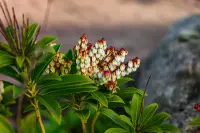
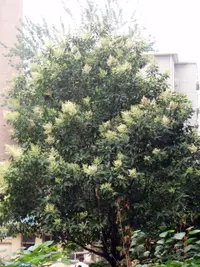
Japanese Pieris (Pieris japonica) is a broadleaf evergreen shrub in the heath family, Ericaceae. It retains its leaves throughout the winter. A mature plant reaches approximately 8-12 feet (2.4-3.6 m) in height, although this takes about twenty years. In early spring, drooping clusters of small white flowers appear at the tips of the branches. New leaves initially take on an orange-bronze hue, then turn a glossy dark green.
In the wild, Pieris japonica grows in the mountainous scrublands of Japan, Taiwan, and southeastern China. These areas have acidic soil and constant moisture. In warmer regions, the strong midday sun can severely burn the foliage. Most USDA zones 5-8 are suitable for it. Below you'll find information on how to care for Japanese Pieris in a garden bed or a container.

Care Difficulty
Moderate Care

Light Preference
Partial Shade

Water Requirements
Regular Water

Temperature Preference
Cold Hardy

Hardiness Zone
5–8

Soil Texture
Loamy, Peaty, Organic-rich

Soil pH
Strongly acidic (4.5–5.5), Acidic (5.5–6.5)

Soil Drainage
Moist but well-drained

Fertilization
Minimal (feed rarely)
Scan your plant to receive care tips personalized for your specific plant
Available on iOS and Android
This shrub thrives in soft morning light, while direct midday sun can scorch the foliage in summer.
Tip: Note discolored, papery spots on the exposed side — this indicates too much sun.
Roots of Pieris japonica are close to the surface, so a correct watering regimen is essential for plant health.
Note: A 2-3 inch (5-8 cm) layer of mulch will extend the interval between waterings by several days.
Cool or moderate conditions suit this plant much better than prolonged periods of heat, which is why it thrives in coastal and mountain gardens.
Note: Late frosts cause yellowing of blooming flowers. However, the following year's blooms will remain unaffected.
Air humidity is of virtually no importance for Japanese pieria under normal outdoor garden conditions. The real damage comes from the cold February wind, which dries out the leaves while the roots are still in the frozen ground.
Indoors, humidity is a critical factor for the plant. Central heating reduces indoor relative humidity to 20-30%, and below 40% leaf tips turn brown within a few weeks. It's best to maintain humidity at 50-60% and place the pot at least 3 feet (90 cm) from a radiator or vent.
The main mistake when growing this plant is the soil, as it requires a truly acidic mix, not regular garden soil.
Note: Japanese camellia (Camellia japonica) and Japanese skimmia (Skimmia japonica) require the same pH balance, so all three plants can grow well in the same bed.
Container growing is perfectly suitable if you're starting with a compact cultivar rather than a full-sized plant.
Note: The soil in potted Japanese Pieris dries out faster than that of those grown outdoors. Check it twice a week in summer.
This shrub is easy to feed, and one moderate spring application is usually enough for the entire year.
Note: Stop fertilizing by mid-July, about 8 weeks before the first frost.
You don't need to prune Japanese Pieris at all, and it will still hold its shape well. Timing is much more important than technique.
Shrubs planted outdoors rarely need repotting once established. However, it’s recommended to change the soil mix every few years for container plants.
Semi-hardwood cuttings are the method used by most gardeners, as seed propagation is slow and not always successful.
Pieris japonica cultivars retain their varietal characteristics only when propagated from cuttings. Seeds produce different results.
In winter, reduce indoor watering to once every 2-3 weeks — this is sufficient to prevent the soil from drying out.

Plant Health Check
Not sure what's wrong with your plant? Check your plant's health inside the app.
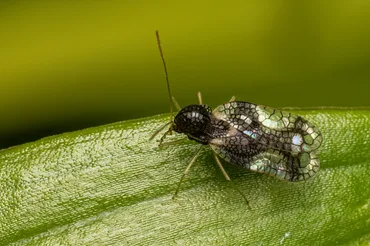
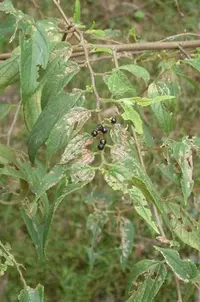
These small sap-feeding insects live on the undersides of leaves. The upper surface becomes mottled and pale as they feed.
Beneath it, you'll notice dark, resinous specks — their waste.
Solution
Spray the undersides of the leaves with a strong stream of water in late spring, when the nymphs have just hatched.
Insecticidal soap or horticultural oil will help kill the young.
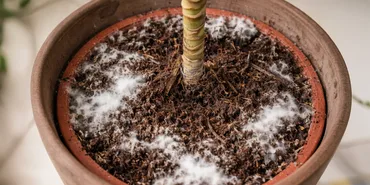
A water mold in the soil attacks the roots in wet ground. Entire branches wilt and turn brown, while the rest of the shrub appears healthy.
Compacted clay and planting the crown too deeply increase the risk of disease.
Solution
Repot the plant on a 6-inch (15 cm) high mound or improve drainage first.
Remove dead branches and disinfect pruning shears between cuts.
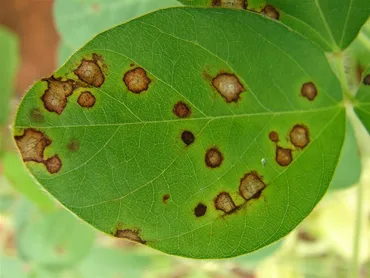
Sometimes you can see brown spots with a purple border on older leaves. Wet foliage and dense stems promote their spread.
In most gardens, the damage is purely visual.
Solution
Remove fallen leaves in autumn and do not leave them to overwinter.
Direct water toward the base of the plant. Removing a few interior branches will improve air circulation.
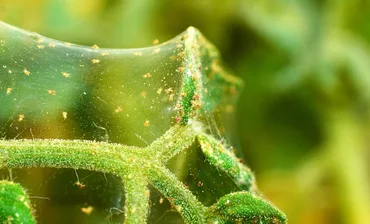
Dry and dusty summers encourage the appearance of spider mites. Foliage takes on a dull bronze hue.
Fine webbing accumulates where the leaves meet the stem.
Solution
Watering with a hose every few days during dry weather reduces mite numbers. Horticultural oil helps with severe infestations.
Regular mulching and watering prevent stress on the plant.
The botanical name Pieris refers to the Pierides, a name associated with the Muses of Greek mythology.
The specific name is much more literal and simply means "from Japan".
Grayanotoxins are found in the leaves, stems, and nectar of the plant. For this reason, botanists classify Pieris japonica as a highly toxic plant.
Honey from heather flowers may contain the same compounds.
While many garden cultivars are compact, some species can reach approximately 9-12 feet (2.7-3.7 meters) in height and develop a dense upright form.
The Royal Botanic Gardens, Kew, classifies it as a shrub or tree.

Deer stay away from this shrub. The toxins that make the foliage toxic also make it taste terrible.
Expect 6 to 12 inches (15-30 cm) per year under favorable conditions. A nursery plant takes 10-15 years to reach full size. Dwarf varieties can remain small for decades.
Keep your plants happy and healthy with plant identification, disease detection, and easy care guidance.