Tiger Jaws Care (Faucaria tigrina)

About Tiger Jaws

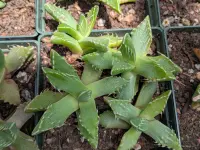
Tiger jaws, Faucaria tigrina, is a compact succulent from arid regions of South Africa. It forms low rosettes of thick, triangular leaves with tooth-like edges that resemble an open jaw. The plant grows slowly and stays small, making it suitable for windowsills and desk pots. In good light, it may produce yellow, daisy-like flowers in autumn. This species is generally easy to grow if its need for strong light, very free-draining soil, and infrequent watering is respected. Because of its drought tolerance and small size, it suits beginners learning how to care for Tiger Jaws.

Main Plant Requirements

Care Difficulty

Moderate Care

Light Preference

Full Sun

Water Requirements

Low Water

Temperature Preference

Tropical / Frost Sensitive

Hardiness Zone

10–11

Soil Texture

Sandy, Loamy, Rocky

Soil pH

Slightly acidic (6.5–7.0), Neutral (7.0)

Soil Drainage

Well-drained

Fertilization

Minimal (feed rarely)

Get Personalized Care Plan

Scan your plant to receive care tips personalized for your specific plant

Personalized Care in the App

Available on iOS and Android

How to Care for the Tiger Jaws

This compact succulent prefers strong light but not extreme, scorching sun.

  • Provide 4–6 hours of direct morning sun plus bright, filtered light the rest of the day for Tiger Jaws.
  • In very hot climates, protect from intense afternoon sun with light shade to prevent leaf scorching and bleached spots.
  • If stems elongate or leaves lose their firm, compact shape, the plant is not getting enough light; move it to a brighter position, especially in winter.

This drought-adapted succulent needs infrequent but thorough watering.

  • Water only when the top 3–5 cm of soil are completely dry, then soak the root zone and let excess drain away.
  • During active growth in spring and fall, expect to water roughly every 10–21 days depending on heat, sun, and potting mix.
  • Reduce watering sharply in winter; shriveled, thin leaves signal slight underwatering, while soft, translucent, or yellowing leaves often indicate overwatered Faucaria tigrina.

This species prefers warm, dry conditions and is sensitive to frost.

  • Aim for 65–80°F (18–27°C) during active growth, which supports compact rosettes and steady development.
  • Protect from temperatures below 40°F (4°C); brief drops to 35°F (2°C) may be tolerated if soil is dry, but frost can damage tissues.
  • In hot weather above 90°F (32°C), give light shade and good airflow to prevent heat stress and leaf scorch, especially in small containers.

This succulent tolerates dry indoor air and rarely needs special humidity control.

This species needs a very fast-draining, mineral-rich mix to prevent root rot.

  • Use a gritty, sandy succulent or cactus mix with large particles that keep the root zone airy.
  • Combine roughly 50–60% commercial cactus mix with 40–50% coarse minerals such as pumice, perlite, or horticultural grit.
  • Keep pH slightly acidic to neutral (pH 6.0–7.0), avoiding peat-heavy blends that stay wet and compacted.
  • For Faucaria tigrina care, avoid dense garden soil or standard potting mix that holds water around the roots.

This compact succulent is very suitable for container growing.

  • Choose a shallow, wide pot that matches the shallow, spreading root system and reduces water retention around the crown.
  • Select unglazed terracotta if extra evaporation is needed, as it helps the mix dry faster between waterings.
  • Elevate the pot slightly on feet or mesh to ensure drainage holes are unobstructed and excess water leaves the container quickly.

This compact succulent has low nutrient needs, so fertilizer supports growth but must be used sparingly for healthy Tiger Jaws.

  • Use a balanced succulent fertilizer or diluted balanced NPK at 1/4–1/2 strength during active growth in spring–summer.
  • Feed every 4–6 weeks only if growth is active and roots are healthy.
  • Skip compost-heavy mixes; choose mineral, well-draining soil and liquid or slow-release formulations instead.
  • Reduce or stop feeding in fall–winter when growth slows, to avoid weak, stretched tissue.

Pruning needs for Faucaria tigrina are minimal and focus on cleanliness and shape rather than size control.

  • Best time for light pruning is late winter to early spring before strong new growth starts.
  • Pinch or cut off dead, shriveled, or damaged leaves at the base with clean, sharp scissors.
  • Remove crowded, diseased, or mushy rosettes to prevent rot spread and improve air flow.
  • Pruning mainly maintains a compact clump and improves appearance; it does not strongly increase flowering.

This small succulent prefers tight quarters and benefits from infrequent, careful repotting to avoid root disturbance.

  • Repot every 2–3 years or when roots circle the pot, soil dries extremely fast, or growth slows without other cause.
  • Choose late spring as the best time, when Faucaria tigrina is entering active growth and can recover faster.
  • Use a shallow pot with drainage and a gritty cactus mix to keep roots aerated and reduce rot risk.
  • Gently loosen the rootball, remove old soil, and avoid damaging thick roots; keep slightly dry for 3–5 days afterward to limit stress.

This species is commonly propagated, mainly by division of offsets and from seed under controlled conditions.

  • Separate offsets in late spring–summer when plants are actively growing and rosettes are firm.
  • Allow cut or broken surfaces to callus for 1–3 days, then place in dry, gritty cactus mix.
  • Provide bright, indirect light, 70–80°F warmth, and very light, infrequent watering until roots form.
  • Sow seeds on the surface of moist, well-draining mix, keep slightly covered, and maintain steady warmth for germination.

Cold-sensitive Faucaria tigrina needs dry, cool, but frost-free winter conditions, especially in container culture.

  • Move pots indoors before temperatures drop below 40°F; prolonged exposure near freezing can damage tissues.
  • Provide bright light and good air flow in a cool room, around 50–60°F, to maintain compact growth.
  • Water very sparingly in winter, letting soil stay dry for long periods to prevent root rot.
  • Outdoor plants in mild climates benefit from a gravel mulch to keep the crown dry rather than for insulation.

Care Tips

Seasonal rest period

From late fall to early spring reduce handling, avoid repotting, and keep the plant in a cooler, very bright spot so the natural semi-dormant phase is not disrupted and leaf rosettes stay compact.

Pot depth choice

Use a shallow but wide pot so the short fibrous roots can fill the container quickly, which improves anchoring and reduces the risk of deep, wet soil staying soggy around the root zone.

Targeted top-dressing

Add a 0.5–1 cm layer of coarse grit or small stones on the soil surface to keep the leaf bases dry, limit algae and fungus gnat growth, and stabilize the rosettes.

Flowering management

After blooms fade, remove spent flowers by pinching them off at the base to prevent seed formation from draining energy and to keep the crown dry and less susceptible to rot.

Cluster division timing

Divide crowded clumps only in warm, bright months, then let cut or separated sections dry for 1–2 days before replanting so wounds callus over and divisions establish faster when growing Tiger Jaws.

Common Pests and Diseases

Mealybugs

This pest hides in leaf joints and between the thick leaf pairs, sucking sap and causing yellowing, distortion, and sticky honeydew that can lead to sooty mold.

Solution

Isolate the plant, then dab visible insects with cotton swabs dipped in 70% isopropyl alcohol and gently wipe leaf bases and crevices; repeat weekly until no new insects appear. Improve light and airflow, avoid overfertilizing soft growth, and, if the infestation is larger, use a ready-to-use insecticidal soap or neem oil spray, making sure the soil stays mostly dry during treatment.

Aphids

These insects cluster on tender new leaf edges and flower stalks, extracting sap and causing curling, stunted growth, and sticky residue on the rosette.

Solution

Move the plant to a sink and rinse colonies off with a firm but controlled stream of water, then let the leaves dry thoroughly. For persistent populations, apply insecticidal soap to all plant surfaces in the evening, repeat every 5–7 days, and reduce excess nitrogen fertilizer that encourages soft, aphid-prone growth when caring for Tiger Jaws.

Spider mites

This pest thrives in hot, dry indoor air, causing fine stippling on leaves, dull color, and very thin webbing deep in the rosette and between leaf tips.

Solution

Shower the plant with lukewarm water to remove mites, then let it dry quickly in bright light. Increase local humidity slightly with a nearby water tray (not misting the leaves), improve airflow, and apply a miticide or neem oil spray to all leaf surfaces, repeating several times over 2–3 weeks to catch new hatchlings.

Soft rot

This disease causes sudden soft, water-soaked, foul-smelling leaves starting at the base, often after cold, wet, or poorly ventilated conditions.

Solution

Remove the plant from its pot, cut away all mushy tissue with a sterile blade, and discard severely affected plants or sections. Repot only firm, healthy offsets into fresh, very fast-draining cactus mix, keep completely dry for several days, then resume very light watering and maintain warmer temperatures with strong airflow to prevent recurrence.

Fungal leaf spots

Symptoms include small, dark, sunken spots on leaves that may enlarge and coalesce, especially in cool, damp conditions or when water sits in the rosette for long periods.

Solution

Trim and discard heavily marked leaves, then keep the plant in brighter light and allow any water on the foliage to dry quickly. Water only at the soil level in the morning, avoid overhead watering, and in severe or recurring cases use a sulfur- or copper-based fungicide labeled for succulents, applied according to the product directions.

Interesting Facts

Jaw-like leaf teeth

The triangular leaves have stiff, spine-tipped projections along the edges that resemble an open animal jaw, an adaptation that helps shade the leaf surface and slightly reduce water loss in intense South African sun.

Winter growth pattern

In habitat this species grows mainly in the cooler, wetter winter months and often slows or nearly stops growth in hot, dry summers, a strategy typical of many South African winter-rainfall succulents.

Sandstone crevice specialist

In the wild it often grows tightly wedged in shallow sandstone crevices, with only the leaf tips exposed, which protects the roots, reduces evaporation, and helps the plant survive in very sparse, rocky soils.

Botan icon

Did you know?

Faucaria tigrina produces relatively large, bright yellow daisy-like flowers that can open and close with daily light changes, but in habitat these blooms are often pollinated by small bees and other insects that are active during the cooler hours when the flowers are fully open.

FAQs about Tiger Jaws

Lack of blooms usually comes from insufficient light, cramped roots, or no cool, bright rest in fall. Provide strong light, a slightly cooler, drier autumn, and avoid heavy fertilizing to support bud formation and reliable flowering.

Grow Healthy Plants with Botan Care

Keep your plants happy and healthy with plant identification, disease detection, and easy care guidance.


Botan plant care app — identify plants on mobile

Explore More Plants