Dormancy scheduling
Mark the plant’s natural summer dormancy on a calendar and begin withholding water gradually in late spring so the bulbous caudex can rest and reset for the next growth cycle.

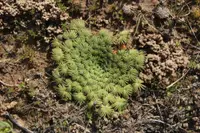
Palm leaf oxalis (Oxalis palmifrons) is a compact, bulb-forming perennial grown mainly for its unusual, fan-shaped foliage. Each leaf divides into many narrow segments, creating a small palm-like rosette that stays close to the soil and forms a slow-growing clump over time.
This species is native to arid regions of South Africa, where it experiences cool, moist winters and dry summers. It often behaves as a winter-growing, summer-dormant plant, which is important for understanding how to care for Palm leaf oxalis.
It prefers bright light, excellent drainage, and careful watering that avoids constant wetness. Its seasonal dormancy and sensitivity to overwatering make it slightly more demanding than typical houseplants, but manageable for attentive growers.

Care Difficulty
Moderate Care

Light Preference
Partial Sun

Water Requirements
Moderate Water

Temperature Preference
Warm Climate

Hardiness Zone
9–11

Soil Texture
Sandy, Loamy, Rocky

Soil pH
Acidic (5.5–6.5), Slightly acidic (6.5–7.0)

Soil Drainage
Well-drained

Fertilization
Minimal (feed rarely)
Scan your plant to receive care tips personalized for your specific plant
Available on iOS and Android
This compact South African bulb prefers bright, gentle sun to maintain its tight, fan-like leaves.
This species prefers lightly moist, fast-draining soil with short dry intervals around the bulbs.
This desert-adapted oxalis prefers moderate warmth but tolerates a fairly wide temperature range if kept dry when cool.
This species tolerates a wide humidity range and rarely needs special humidity management indoors.
This bulbous plant prefers a very free-draining, sandy-mineral mix that dries quickly between waterings.
This compact species is very suitable for container growing.
This bulb-forming succulent has modest nutrient needs but responds well to light feeding during active growth.
Oxalis palmifrons needs only light, maintenance pruning to stay tidy and healthy.
This compact bulbous species prefers slightly snug pots and only occasional repotting.
This species is most reliably increased by dividing its clustered bulbs rather than by seed.
Oxalis palmifrons is moderately cold tolerant when kept dry but needs protection from hard freezes, especially in pots.

Plant Health Check
Not sure what's wrong with your plant? Check your plant's health inside the app.
This species forms tight, spherical clumps of many tiny, palm-shaped leaf fans arranged in near-perfect rosettes, giving it a highly geometric, architectural look compared with other Oxalis species.
It is a winter-growing geophyte from the Western Cape of South Africa, producing foliage in the cooler, wetter season and entering summer dormancy when its underground bulb-like tubers survive heat and drought.
The fan-like leaf segments exhibit nyctinasty, a daily movement where the leaflets fold or close at night and reopen in light, driven by specialized hinge cells at the leaflet bases.

Oxalis palmifrons is considered one of the more unusual ornamental oxalis species among collectors because of its extremely compact size and highly symmetrical fan rosettes, which can make a mature clump resemble a miniature palm grove in succulent and caudiciform plant displays.
Brown leaf tips or segments usually come from underwatering, low humidity, excess fertilizer, or sudden strong sun exposure. Check soil moisture, flush built-up salts, and move the plant away from harsh midday sun to prevent further damage.
Keep your plants happy and healthy with plant identification, disease detection, and easy care guidance.