


Dormancy scheduling
Mark a calendar reminder to gradually reduce water and stop feeding in late fall, then resume slightly heavier watering in early spring as new growth points appear to keep the caudex in a stable rest–growth cycle.


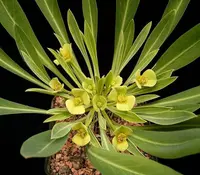
Euphorbia bupleurifolia, commonly called pine cone plant, is a small succulent shrub with a thick, scaly caudex that resembles a pine cone. Narrow leaves form a tuft at the top, giving it a compact, architectural look.
This species is native to South Africa, where it grows in dry, rocky habitats with strong light and very fast-draining soil. It stores water in its swollen stem and drops leaves in stress or drought, which helps it survive irregular moisture.
For many growers, the main challenges are avoiding overwatering and providing enough light. Once its basic needs are understood, it is a manageable choice for collectors learning how to care for Pine cone plant. Its compact, water-storing form is also characteristic of species such as the Baseball Plant, another South African Euphorbia adapted to dry, rocky conditions.

Care Difficulty
Moderate Care

Light Preference
Full Sun

Water Requirements
Low Water

Temperature Preference
Tropical / Frost Sensitive

Hardiness Zone
10–11

Soil Texture
Sandy, Loamy, Rocky

Soil pH
Acidic (5.5–6.5), Slightly acidic (6.5–7.0)

Soil Drainage
Well-drained

Fertilization
Minimal (feed rarely)
Scan your plant to receive care tips personalized for your specific plant
Available on iOS and Android
This compact Euphorbia prefers bright, indirect sun similar to many small succulents.
This caudiciform Euphorbia stores water and needs a careful, drought-tolerant watering approach. A similar dry-out approach also works well for the African Milk Tree.
This species favors warm, stable conditions and reacts poorly to cold or sudden temperature swings.
This species handles typical indoor humidity well and rarely needs special humidity management.
This caudiciform euphorbia needs a very fast-draining, mineral-based mix to prevent root and stem rot.
This species is well suited to container cultivation, especially in regions with cold winters.
This slow-growing succulent needs modest feeding to support steady growth without forcing lush, weak tissue in the Pine cone plant.
Pruning Euphorbia bupleurifolia is minimal and mainly focused on hygiene and maintaining a compact outline.
This small caudiciform euphorbia prefers tight pots and infrequent disturbance.
Multiplying Euphorbia bupleurifolia is usually done from seed and is moderately slow.
Winter care focuses on keeping this warmth-loving caudex dry, cool, and frost-free.

Plant Health Check
Not sure what's wrong with your plant? Check your plant's health inside the app.
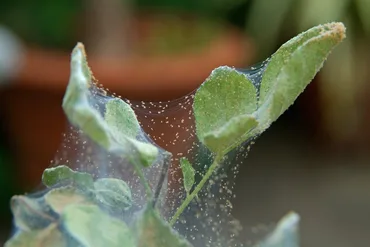
This pest often appears in hot, dry indoor conditions and can damage the small leaves near the top of the caudex.
Symptoms include fine webbing, pale stippling, and slow decline of new growth.
Solution
Rinse the plant gently under lukewarm water, focusing on the foliage and upper stem, then allow it to dry in bright, indirect light.
Гse a dilute insecticidal soap or neem oil spray on the foliage (not the soil surface wounds) every 5–7 days and increase humidity slightly.
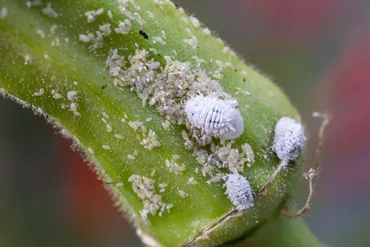
These insects hide in leaf bases and stem crevices of the caudiciform body, feeding on sap and excreting sticky honeydew.
Symptoms include white cottony clusters, distorted new growth, and slow weakening of the plant.
Solution
Remove visible insects with a cotton swab dipped in isopropyl alcohol, taking care not to injure the caudex skin.
Apply a light insecticidal soap or neem oil spray to affected areas every 7–10 days and isolate the plant from other succulents until clear.
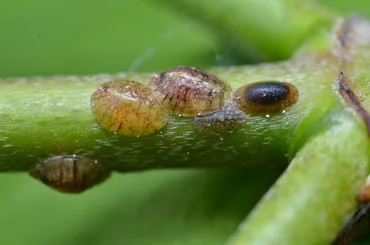
This pest forms hard, dome-shaped shells on the caudex and lower stem, where it feeds unnoticed for long periods.
Symptoms include rough brown or tan bumps that do not wipe off easily and gradual yellowing or reduced vigor.
Solution
Gently scrape or lift individual scales with a fingernail or soft tool, then dab remaining spots with isopropyl alcohol on a cotton swab.
Follow with a systemic insect control product for succulents or repeated light applications of horticultural oil, avoiding full-strength oil on sun-exposed tissue.
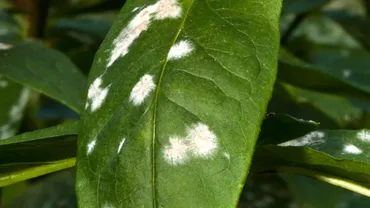
This disease can appear when Euphorbia bupleurifolia is kept in stagnant, humid air with poor light and frequent overhead misting.
Symptoms include white, powdery patches on leaves and young stems, leading to premature leaf drop.
Solution
Improve air circulation and provide brighter light while avoiding overhead watering on foliage.
Remove heavily affected leaves and treat remaining growth with a sulfur-based or potassium bicarbonate fungicide for ornamentals, applied in light, even coats according to label directions.
This species develops a swollen, woody caudex that resembles a small pine cone, formed by compressed stem tissue and persistent leaf bases adapted to store water and nutrients.
In its native South African habitat, the plant often sheds its narrow leaves and rests during the dry winter period, resuming active growth and leaf production in the warmer, wetter months.
Like other euphorbias, it produces cyathia, a highly reduced floral structure that mimics a single flower and is adapted to attract small insects that transfer pollen between plants.

This species is endemic to limited areas of South Africa’s Eastern Cape and KwaZulu-Natal provinces, where it grows sparsely on rocky, well-drained slopes, making wild populations naturally localized and of conservation interest.
This species generally performs best outdoors in warm, frost‑free climates where light and airflow are stronger. It can be grown indoors if light is very bright, air is dry, and watering remains conservative to prevent root issues.
Keep your plants happy and healthy with plant identification, disease detection, and easy care guidance.

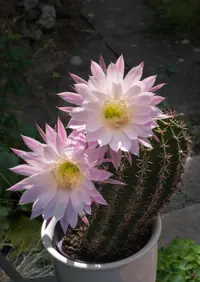
Easter lily cactus
Echinopsis oxygona
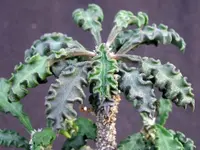
Euphorbia decaryi
Euphorbia decaryi
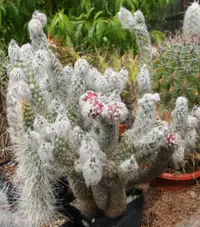
Austrocylindropuntia vestita
Austrocylindropuntia vestita
 POPULAR
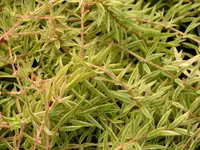
Needle Stonecrop
Sedum lineare
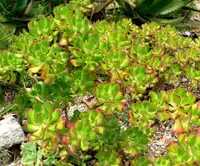
tree stonecrop
Sedum dendroideum
 POPULAR
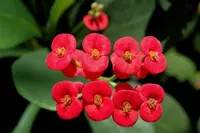
Crown-of-thorns
Euphorbia milii
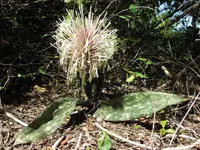
star sansevieria
Dracaena pethera
Fasciated haworthia
Haworthiopsis fasciata