Flush central cup
Every 2–4 weeks, pour lukewarm water through the central cup until it overflows, then gently tip the plant to drain it, which reduces salt buildup and discourages mosquito larvae and bacterial rot.

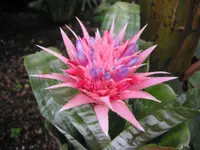
The urn plant, Aechmea fasciata, is an epiphytic bromeliad native to the Atlantic rainforests of Brazil. It is often grown as a compact indoor ornamental. Its stiff, arching leaves form a rosette that holds water like a tank, with silver banding and a central pink flower spike that can last for several months. The plant grows slowly and usually produces offsets, or pups, around the base. It generally prefers bright, filtered light, moderate room temperatures, and airy, free-draining potting mixes suited to epiphytic plants. These traits make it a relatively low-maintenance choice for those learning how to care for Urn plant.

Care Difficulty
Easy Care

Light Preference
Bright Indirect Light

Water Requirements
Moderate Water

Temperature Preference
Tropical / Frost Sensitive

Hardiness Zone
10–11

Soil Texture
Sandy, Loamy, Organic-rich

Soil pH
Acidic (5.5–6.5)

Soil Drainage
Well-drained

Fertilization
Light (every 4–6 weeks)
Scan your plant to receive care tips personalized for your specific plant
Available on iOS and Android
This bromeliad prefers bright, indirect light to keep its foliage banding and flower color strong.
Watering focuses on both the central cup and the potting mix, with careful attention to drainage.
Stable, warm conditions support healthy growth and flowering in this bromeliad.
This bromeliad prefers moderately humid air but adapts to typical indoor levels with minimal stress.
Use a very airy, fast-draining mix that mimics an epiphytic growing environment.
This species is well suited to container growing due to its compact root system and rosette form.
Aechmea fasciata is a light feeder but responds well to modest, balanced nutrition during active growth.
Pruning needs for Aechmea fasciata are minimal and focus on cleanliness rather than shaping.
This bromeliad prefers to stay slightly root-bound, so repotting is infrequent and mainly done for stability and fresh mix.
New plants are most reliably produced from offsets, called pups, formed around the base of mature rosettes.
This tropical species is frost-sensitive and needs mild, stable conditions through winter, especially in cooler climates.

Plant Health Check
Not sure what's wrong with your plant? Check your plant's health inside the app.
This species forms a stiff rosette of arching leaves that create a central water-holding tank, which in nature collects rain, organic debris, and small invertebrates that supply nutrients to the plant’s roots and leaf bases.
The pink bracted inflorescence can remain visually attractive for several months because the showy parts are long-lasting bracts, while the true flowers are the short-lived blue blossoms that emerge from between them.
In the wild it typically grows as an epiphyte on tree trunks and branches in Brazil’s Atlantic forest, anchoring to bark rather than rooting in soil and absorbing moisture and nutrients mainly through specialized leaf tissues called trichomes.

The species was introduced into European horticulture in the 19th century and has since become one of the most widely cultivated bromeliads worldwide, to the point that many cultivated plants are now propagated exclusively by tissue culture rather than collected from the wild.
This bromeliad usually flowers only once when mature, then slowly declines while producing offsets called pups. Lack of bloom is often due to immaturity; most plants need 2–4 years from pup to flowering under stable conditions.
Keep your plants happy and healthy with plant identification, disease detection, and easy care guidance.