Pup management
Remove basal offsets with a clean, sharp knife when they are 10–20 cm tall and the soil is dry, then let the cut surfaces callus for 3–7 days in shade before replanting to reduce rot risk.

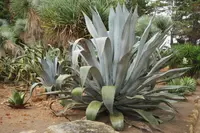
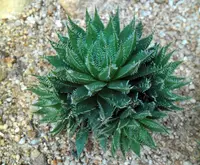
The century plant, Agave americana, is a large, architectural succulent known for its bold rosette of thick, blue-green, spiny leaves. It forms a striking, sculptural shape and usually flowers only once at the end of its long life cycle.
This species is native to arid and semi-arid regions of Mexico and the southern United States, where it thrives in hot, dry, sunny sites. It is generally tough and low maintenance but its sharp spines and large size require thoughtful placement. In cultivation, it prefers very bright light, fast-draining soil, and minimal watering, which makes it easier to care for Century plant in warm, dry climates.

Care Difficulty
Easy Care

Light Preference
Full Sun

Water Requirements
Low Water

Temperature Preference
Warm Climate

Hardiness Zone
8–11

Soil Texture
Sandy, Loamy, Rocky

Soil pH
Slightly acidic (6.5–7.0), Slightly alkaline (7.0–7.5)

Soil Drainage
Well-drained

Fertilization
Minimal (feed rarely)
Scan your plant to receive care tips personalized for your specific plant
Available on iOS and Android
Agave americana needs strong sun to build compact, sturdy rosettes and maintain leaf color.
Agave americana is highly drought-tolerant and needs infrequent, deep watering in fast-draining soil.
This species prefers warm, arid conditions but survives a moderate range of outdoor temperatures if kept dry.
Agave americana tolerates a wide humidity range and rarely needs special humidity management indoors.
Agave americana requires very fast-draining, mineral-heavy soil to prevent root and crown rot.
This species is suitable for container growing when the pot choice manages its size and weight safely.
Agave americana needs only modest feeding, as it is adapted to nutrient-poor, rocky soils.
Agave americana benefits from light, careful pruning focused on hygiene and safety rather than shaping.
This large agave is usually grown in the ground; container plants or young specimens need infrequent but careful moves.
Agave americana is most commonly propagated from offsets, as seeds are slower and less predictable.
This agave is moderately frost tolerant when mature but benefits from simple winter protection in colder regions.

Plant Health Check
Not sure what's wrong with your plant? Check your plant's health inside the app.
The common name century plant is misleading, because Agave americana typically lives 10–30 years before flowering rather than 100 years.
This species is monocarpic, meaning the individual rosette flowers once and then dies, producing a tall branched flower stalk that can reach several meters in height.
Agave americana leaf fibers have been used for rope, twine, and coarse textiles, especially in Mexico, due to their strength and resistance to decay.

In its native range, the sap of Agave americana (aguamiel) has traditionally been collected and fermented to produce pulque, an alcoholic beverage with a long cultural history in central Mexico.
This species blooms only once at maturity, often after 10–30 years, then the main rosette dies. Lack of flowering in younger plants is normal and does not indicate poor health or incorrect conditions.
Keep your plants happy and healthy with plant identification, disease detection, and easy care guidance.