Rosette size management
Remove the lowest, oldest leaves with a clean pull and slight twist once they are fully shriveled to keep the large rosette lifted off the soil surface and reduce rot risk at the crown.

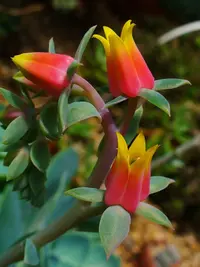
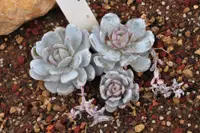
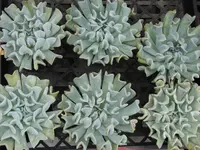
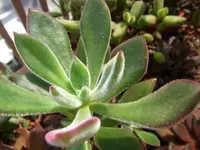
Metallic echeveria (Echeveria gibbiflora) is a rosette-forming succulent known for its large, fleshy leaves with a metallic sheen in gray-green to reddish tones. Mature plants can form impressive, wide rosettes on short, woody stems and produce tall flower stalks with tubular pink to red blooms.
This species is native to highland regions of Mexico and Central America, where it grows in rocky, well-drained habitats with bright light and low to moderate rainfall. Its drought tolerance and slow growth make it relatively easy to care for indoors if given strong light, fast-draining soil, and careful watering, so understanding how to care for Metallic Echeveria helps prevent rot and stretching.

Care Difficulty
Moderate Care

Light Preference
Full Sun

Water Requirements
Low Water

Temperature Preference
Tropical / Frost Sensitive

Hardiness Zone
10–11

Soil Texture
Sandy, Loamy, Rocky

Soil pH
Slightly acidic (6.5–7.0), Neutral (7.0)

Soil Drainage
Well-drained

Fertilization
Minimal (feed rarely)
Scan your plant to receive care tips personalized for your specific plant
Available on iOS and Android
Echeveria gibbiflora prefers bright, direct sun for compact growth and strong leaf color.
Echeveria gibbiflora needs infrequent, deep watering and thorough drying between waterings.
This species prefers warm, dry conditions and is sensitive to hard frost and prolonged cold, especially in wet soil.
Humidity is usually not critical for Echeveria gibbiflora, which prefers dry air and strong light.
Echeveria gibbiflora needs a sharply draining, mineral-rich mix to prevent root and stem rot.
This species is well suited to container growing when the pot is chosen to control moisture and support its rosette.
This succulent benefits from light feeding but grows acceptably in lean soil.
Echeveria gibbiflora needs minimal pruning, mainly for cleanliness and shape control.
This species prefers a snug pot but benefits from occasional repotting into fresh, fast-draining mix.
This succulent is commonly propagated from offsets, leaf cuttings, or stem cuttings.
This species is frost sensitive and needs careful winter management in most temperate climates.

Plant Health Check
Not sure what's wrong with your plant? Check your plant's health inside the app.
This species can form rosettes over 30–40 cm across in mature plants, much larger than most commonly grown Echeveria species, giving it a more architectural presence in the landscape.
Its tall, branched inflorescences carry tubular, strongly curved red to pink flowers with yellowish tips, which are adapted to attract hummingbirds as pollinators in its native range.
Wild and cultivated forms show marked variation in leaf thickness, waviness, and color, which is why it has been widely used as a parent in breeding ornamental hybrids and cultivars.

In parts of central Mexico, the large, fleshy leaves of Echeveria gibbiflora have traditionally been used as natural molds for shaping and steaming certain regional foods, taking advantage of their size, flexibility, and ability to withstand cooking temperatures without disintegrating quickly.
Leggy growth usually results from insufficient light, especially indoors. The rosette elongates, leaves spread apart, and color fades. Move it to a brighter spot and rotate the pot regularly to encourage a more compact shape.
Keep your plants happy and healthy with plant identification, disease detection, and easy care guidance.