Bulb exposure check
Position the bulb so that the upper half sits above the soil surface to reduce rot risk and make it easier to monitor for scale insects and soft spots during dormancy checks.

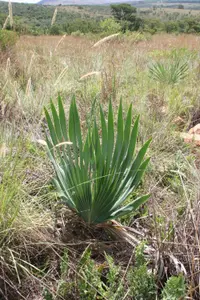
Bushman's poison bulb, Boophone disticha, is a bulb-forming succulent plant from arid and semi-arid regions of southern Africa. It is known for its fan of stiff, grey-green leaves emerging from a large exposed bulb.
The plant grows slowly and can live for many years, making it more suited to patient growers and collectors than to casual beginners. Its seasonal growth pattern, with a marked rest period, is a key trait affecting how to care for Bushman's Poison Bulb.
Boophone disticha prefers very well-drained, gritty soil, strong light, and careful watering that respects its dormant phase, or the bulb is prone to rot.

Care Difficulty
Moderate Care

Light Preference
Full Sun

Water Requirements
Low Water

Temperature Preference
Tropical / Frost Sensitive

Hardiness Zone
10–11

Soil Texture
Sandy, Loamy, Rocky

Soil pH
Slightly acidic (6.5–7.0), Neutral (7.0)

Soil Drainage
Well-drained

Fertilization
Minimal (feed rarely)
Scan your plant to receive care tips personalized for your specific plant
Available on iOS and Android
This bulb-forming succulent prefers strong, direct light to build its compact fan of leaves.
This drought-adapted bulb needs careful, sparing watering to avoid rot.
This species thrives in warm, dry conditions with a pronounced cool, dry rest period.
This bulb is tolerant of low indoor humidity and rarely needs special moisture in the air.
Boophone disticha needs very fast-draining, mineral, desert-style soil to prevent bulb rot.
This species grows reliably in containers when drainage and bulb position are carefully managed.
This bulbous species needs only light feeding, as it is adapted to lean, sandy soils.
Boophone disticha needs minimal pruning, focusing only on hygiene and safety around the sharp leaf tips.
This bulb prefers to stay undisturbed and is usually repotted or transplanted infrequently.
Boophone disticha is typically propagated by seeds or, less often, by carefully separating offsets from mature bulbs.
This bulb is not fully frost hardy and benefits from dry, cool but not freezing conditions in winter.

Plant Health Check
Not sure what's wrong with your plant? Check your plant's health inside the app.
The large, layered bulb often sits half above the soil and can form a spreading ring of dry bulb scales that protects the growing point from fire, grazing, and desiccation in its native southern African grasslands.
This species produces its leaves in a distinctive two-ranked fan, with all leaves arising in opposite rows from the bulb, a growth pattern that is unusual and very diagnostic within the amaryllis family.
In many habitats the leaves appear mainly in the cooler, wetter season and die back during hot, dry periods, allowing the bulb to survive long seasonal droughts underground in a dormant state.

The plant contains potent alkaloids that have been used historically by some southern African communities in arrow poisons and ritual practices, and several of these compounds have been scientifically studied for their strong effects on the nervous system.
Lack of flowering often comes from insufficient dry rest, overcrowded bulbs, or low light. This species usually needs a pronounced dormant period and maturity before regular blooming, so avoid frequent repotting and respect its seasonal cycle.
Keep your plants happy and healthy with plant identification, disease detection, and easy care guidance.