Water tray hygiene
Empty and rinse the water tray every 3–5 days to prevent mineral buildup and algae, then refill with fresh rainwater or distilled water to keep the roots and surrounding micro-environment healthy.

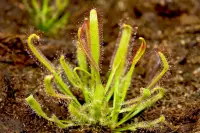
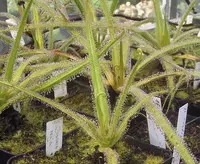
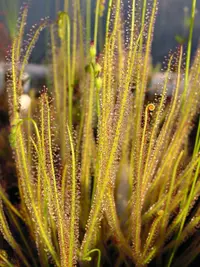
Cape sundew is a small carnivorous plant that captures insects with sticky, glistening tentacles on its leaves. It forms low rosettes with narrow, strap-like leaves and can flower repeatedly, producing delicate pink to white blooms on tall stems.
Drosera capensis is native to South Africa, where it grows in nutrient-poor, wet habitats such as bogs and marshy grasslands. Its ability to feed on insects makes it more forgiving of lean, acidic substrates and low mineral water.
For many growers, it is one of the easier carnivorous species, which helps when learning how to care for Cape sundew. It prefers bright light, constantly moist soil, and low-nutrient conditions.

Care Difficulty
Moderate Care

Light Preference
Full Sun

Water Requirements
Keep Soil Moist

Temperature Preference
Warm Climate

Hardiness Zone
9–11

Soil Texture
Sandy, Peaty, Organic-rich

Soil pH
Strongly acidic (4.5–5.5)

Soil Drainage
Waterlogged tolerant

Fertilization
Minimal (feed rarely)
Scan your plant to receive care tips personalized for your specific plant
Available on iOS and Android
This carnivorous species needs strong light to maintain red coloration and sticky leaf glands.
This species prefers constantly moist, low-mineral conditions rather than alternating wet and dry cycles.
This sundew grows best in mild, frost-free conditions with only moderate temperature swings.
This species prefers moderately humid air but adapts to many home environments.
This carnivorous species needs nutrient-poor, acidic, consistently moist substrate, not regular potting soil.
This species is well suited to container growing for both windowsills and outdoor benches.
This carnivorous species gains most nutrients from captured insects, so fertilizer use for Cape sundew must be minimal and highly diluted.
Pruning Drosera capensis is light but useful for maintaining healthy foliage and good trap production.
Repotting keeps Drosera capensis vigorous by refreshing its low-nutrient substrate and preventing root congestion.
Drosera capensis is commonly propagated, which makes it easy to expand a collection or replace older plants.
This species is not frost hardy and needs thoughtful winter management, especially in cold climates.

Plant Health Check
Not sure what's wrong with your plant? Check your plant's health inside the app.
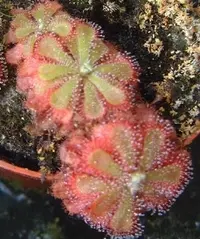
The leaves carry reddish tentacles tipped with mucilage, and when small insects get stuck, nearby tentacles slowly bend toward the prey, increasing contact and digestion efficiency.
After trapping prey, the leaf surface secretes digestive enzymes such as proteases and phosphatases that break down soft tissues, allowing the plant to absorb nitrogen and other minerals from the insect body.
This species can survive regular flowering and occasional damage by resprouting from the root crown, which is one reason Drosera capensis plant care is considered easier than for many other carnivorous plants.

In some non‑native regions, especially in parts of New Zealand, Drosera capensis has escaped cultivation and become invasive, forming dense mats that can outcompete local bog and wetland plant species.
Browning usually develops from mineral buildup in tap water, dry air, or intense heat. Switch to distilled or rainwater, keep the soil evenly moist, and protect from hot, dry drafts or direct scorching midday exposure.
Keep your plants happy and healthy with plant identification, disease detection, and easy care guidance.