Spoon-Leaved Sundew Care (Drosera spatulata)

Also known as: spoon-leaved sundew

About Spoon-Leaved Sundew

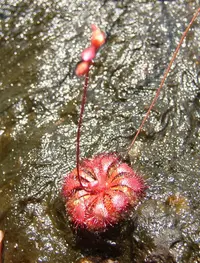
Spoon-leaved sundew (Drosera spatulata) is a small rosette-forming carnivorous plant that traps insects on sticky, spoon-shaped leaves. The leaves glisten with mucilage droplets that attract and hold prey.

This species is native to parts of Australia, New Zealand, and East Asia, where it grows in open, nutrient-poor, often boggy habitats. Its compact size and tolerance for cool to mild conditions make it one of the more approachable sundews for beginners.

Understanding how to care for Spoon-Leaved Sundew starts with providing bright light, consistently damp, low-mineral substrate, and pure water, which match its natural habitat conditions.


Main Plant Requirements

Care Difficulty

Moderate Care

Light Preference

Full Sun

Water Requirements

Keep Soil Moist

Temperature Preference

Tropical / Frost Sensitive

Hardiness Zone

9–11

Soil Texture

Sandy, Peaty, Organic-rich

Soil pH

Strongly acidic (4.5–5.5)

Soil Drainage

Waterlogged tolerant

Fertilization

Minimal (feed rarely)

Get Personalized Care Plan

Scan your plant to receive care tips personalized for your specific plant

Personalized Care in the App

Available on iOS and Android

How to Care for the Spoon-Leaved Sundew

This sundew needs bright light to develop strong color and sticky, functional traps.

  • Provide 4–6 hours of direct morning sun plus bright, filtered light the rest of the day; in hotter regions, protect from harsh sun after 2 p.m.
  • Outdoors, full sun in mild coastal climates is suitable, but in hotter inland areas use 30–40% shade cloth to prevent leaf scorch and bleaching.
  • Indoors, place Spoon-Leaved Sundew at a sunny south or east window; leggy, pale leaves and weak dew indicate insufficient light.

This species prefers consistently wet conditions that mimic its bog habitat.

  • Use the tray method where possible: stand the pot in 1–2 cm of rain, distilled, or reverse-osmosis water, allowing the tray to almost empty before refilling.
  • Keep the substrate constantly damp from surface to bottom; dry, crispy leaves and halted dew production suggest underwatering, while a sour smell or blackened roots indicate chronic waterlogging without air pockets.
  • In cooler months, let the tray dry for 1–2 days between fillings to reduce rot risk, especially for Drosera spatulata grown in low light and lower temperatures.

Stable mild to warm temperatures support steady growth in this sundew.

  • Aim for 65–80°F (18–27°C) for active growth, with good light and high humidity to prevent stress and leaf dehydration.
  • Short exposures down to 40°F (4°C) may be tolerated if soil stays damp, but repeated frosts or freezes can kill leaves and damage the crown.
  • In hot spells above 90°F (32°C), give light shade and ensure ample water; avoid placing plants near heat-reflective surfaces that can overheat pots and roots.

This species prefers moderate to high humidity but adapts to many household conditions.

  • Aim for 50–70% humidity to keep leaves dewy and mucilage production strong.
  • Tolerates brief drops to 30–40%, but leaf tips may dry and dewdrops shrink.
  • If stress appears, group pots on a water-filled pebble tray or grow in a terrarium to support Spoon-Leaved Sundew.

Use a nutrient-poor, airy, and consistently wet mix for healthy Drosera spatulata roots.

  • Choose a base of unfertilized sphagnum peat with a fine, fibrous texture for moisture retention.
  • Mix peat with 30–50% inert material such as perlite or silica sand to improve aeration and prevent compaction.
  • Keep soil strongly acidic, around pH 4–5.5, and avoid any compost, manure, or standard potting mix that adds nutrients.
  • Rinse sand and perlite before use to remove mineral residues that could accumulate salts and burn sensitive carnivorous roots.

This species is very suitable for container growing.

  • Use a relatively shallow but wide pot to match the small root system and allow rosettes to spread outward.
  • Select plastic or glazed ceramic pots, which slow evaporation and help keep the soil evenly wet for longer periods.
  • Place the pot in a stable tray of distilled or rainwater so the lower drainage holes sit in 1–2 cm of water without submerging the entire root zone.

Drosera spatulata needs extremely low nutrients, so use fertilizer sparingly and only during active growth.

  • Use a very dilute balanced liquid fertilizer (around 1/4–1/8 strength) formulated for orchids or carnivorous plants, never standard houseplant strength.
  • Apply to the soil, not the leaves, every 4–6 weeks in spring–summer if growth looks weak.
  • Do not use compost or slow-release granules, which can burn roots in this nutrient-sensitive species.
  • Stop feeding Spoon-Leaved Sundew in autumn–winter, when growth slows, to avoid mineral buildup.

Pruning Drosera spatulata is light and mostly focused on hygiene rather than shaping.

  • Best timing is during active growth in spring–summer, when the plant recovers fastest.
  • Use fine scissors or small sterile snips to remove dead, blackened, or fungus-covered leaves at the base.
  • Thin out crowded, old rosettes only if they shade healthy new growth or trap mold.
  • Prompt removal of spent foliage maintains light levels, encourages fresh traps, and reduces disease risk.

Repotting Drosera spatulata maintains a low-mineral substrate and prevents overcrowding in small pots.

  • Plan to repot every 1–2 years in late winter–early spring, or when roots circle the pot and growth slows.
  • Use fresh, mineral-free mix such as 1:1 sphagnum peat and perlite or sand, without compost or fertilizer.
  • Water the plant well before repotting, then gently loosen and move the root ball with minimal disturbance.
  • After repotting, keep humidity moderately high and light slightly reduced for 5–7 days to limit transplant shock.

Drosera spatulata is commonly propagated by seed, leaf cuttings, and division under warm, bright, humid conditions.

  • Sow fresh seeds on the surface of damp peat-perlite mix in spring, under bright light, without covering the seeds.
  • Maintain high humidity and 65–80°F for germination, keeping the substrate constantly moist with low-mineral water.
  • Take leaf cuttings in spring–summer, pressing leaves onto moist medium until plantlets form at the margins.
  • Divide dense clumps by gently separating rosettes with roots attached, then replant into fresh carnivorous plant mix.

This subtropical species usually needs mild winter conditions and is not tolerant of hard freezes.

  • For container plants, move indoors or into a frost-free greenhouse when temperatures approach 32°F.
  • Provide bright light and cool, not cold, conditions around 50–65°F, with soil kept moist but not waterlogged.
  • Avoid outdoor exposure below light frost; long freezes can kill roots and crowns even if foliage looks intact.
  • In very mild climates, a sheltered porch or cold frame can suffice for Spoon-Leaved Sundew indoor care.

Care Tips

Use Pure Water Tray

Stand the pot in a shallow tray with 0.5–1 cm of rain, distilled, or reverse-osmosis water and let it evaporate before refilling, which keeps salts from building up and mimics the plant’s naturally wet-dry cycles without drying the roots completely.

Refresh Moss Surface

Every 6–12 months, gently remove any algae-crusted or browned top layer of sphagnum moss or peat and replace it with a thin layer of fresh, rinsed medium to keep traps clean and reduce fungal issues when growing Spoon-Leaved Sundew.

Manage Winter Growth

In cooler indoor setups (below ~60°F), expect slower, tighter rosettes and reduce water depth in the tray slightly so the medium stays moist but not waterlogged, which helps prevent root rot during the plant’s semi-rest period.

Encourage Leaf Renewal

Use fine tweezers to carefully remove dead leaves from the outer rosette ring once they are fully dry, which improves air movement at the crown and lowers the risk of mold and fungus gnats.

Seed Harvest Routine

If flowers are allowed, place a small paper envelope or folded paper collar around ripening seed pods and gently tap them every few days so the tiny black seeds are collected without being lost, making it easier to start new plants from your healthiest specimens.

Common Pests and Diseases

Aphids

These insects cluster on tender new growth and flower stalks, sucking sap and causing distortion, stickiness, and stunted leaves. Symptoms include weakened traps that produce less or no mucilage (dew).

Solution

Rinse the plant gently with a strong but controlled stream of rainwater or distilled water to dislodge the insects, repeating every few days. For persistent infestations, use a dilute, carnivorous-plant-safe insecticidal soap sprayed only on the pests, then rinse off after a short contact time to avoid damaging the traps.

Fungus gnats

These insects are attracted to constantly moist carnivorous soil and lay eggs that hatch into larvae feeding in the upper substrate. This pest can weaken young plants and seedlings, especially in low air movement and saturated media.

Solution

Allow the top few millimeters of the medium to become just slightly less wet between waterings and increase airflow around the pots. Use yellow sticky traps to catch adults and, if needed, apply a biological control such as Bacillus thuringiensis israelensis (BTi) to the water tray to target larvae without harming the plant.

Spider mites

These pests appear in warm, dry conditions and feed by piercing leaf surfaces, leading to pale, dry, or bronzed leaves and reduced dew production. Fine webbing may be visible between leaves in advanced cases.

Solution

Increase humidity and gently rinse foliage with lukewarm distilled water to remove mites and webbing. For ongoing problems, apply a carnivorous-plant-safe miticide or insecticidal soap in several light treatments, ensuring the plant then recovers in bright light and stable moisture to rebuild healthy traps.

Botrytis (gray mold)

This disease thrives in cool, stagnant, very humid conditions, causing brown, collapsing leaves and a fuzzy gray mold on dead insects, old traps, or flower stalks. Symptoms include rapid spread across crowded rosettes if dead material is not removed.

Solution

Promptly remove and discard all affected leaves, spent flowers, and moldy prey, then improve airflow and slightly reduce crowding of pots. Keep the foliage bright and the medium moist but not waterlogged at the surface, and use a targeted fungicide labeled safe for ornamental use only if sanitation and ventilation do not stop the spread.

Leaf burn from minerals

Symptoms include browning leaf tips, loss of dew, and gradual decline when tap water or fertilizer with dissolved salts accumulates in the soil. This issue is common because the species is highly sensitive to mineral buildup in its root zone.

Solution

Switch immediately to rainwater, distilled, or reverse-osmosis water and flush the pot thoroughly from the top to leach out salts, letting excess drain away. If damage is advanced, repot into fresh, nutrient-free medium such as a 1:1 mix of sphagnum peat and perlite, and maintain low-mineral water only as part of Drosera spatulata care instructions.

Interesting Facts

Wide native range

This species occurs naturally from eastern Australia and Tasmania through New Zealand to parts of Southeast and East Asia, making it one of the most geographically widespread sundews in the Southern Hemisphere.

Highly variable forms

Drosera spatulata shows notable variation in rosette size, leaf shape, and coloration between populations, and several geographically named forms are recognized in cultivation to reflect this natural diversity.

Efficient self‑seeder

In suitable conditions it produces many small seeds that readily germinate around the parent rosette, which is why Drosera spatulata care instructions often mention that pots can fill with seedlings over time.

Botan icon

Did you know?

Although it is a carnivorous plant, in some native habitats Drosera spatulata often grows in tight mats mixed with mosses and other small plants, forming low, shimmering carpets where its sticky leaves trap tiny invertebrates that move through the vegetation.

FAQs about Spoon-Leaved Sundew

This species works well indoors if given very bright light and consistently pure water. Its compact rosette and glistening trap leaves provide visual interest, making it a good choice for a small terrarium or windowsill display.

Grow Healthy Plants with Botan Care

Keep your plants happy and healthy with plant identification, disease detection, and easy care guidance.

Botan plant care app — identify plants on mobile

Explore More Plants