Burro's tail Care (Sedum burrito)

Also known as: donkey tail, burro's tail

About Burro's tail

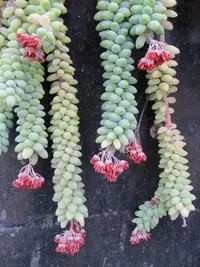
Burro's tail, Sedum burrito, is a trailing succulent known for its long, hanging stems densely packed with plump, blue‑green leaves. It is often grown in hanging baskets or on shelves where its stems can cascade down. Native to Mexico, this species has adapted to rocky, dry environments and stores water in its leaves, which makes it relatively drought tolerant indoors. Its fleshy leaves are fragile and detach easily, so the plant is best placed where it will not be bumped. With bright indirect light, occasional watering, and very well‑draining soil, it is generally easy to care for Burro's tail in home conditions.

Main Plant Requirements

Care Difficulty

Easy Care

Light Preference

Full Sun

Water Requirements

Low Water

Temperature Preference

Warm Climate

Hardiness Zone

9–11

Soil Texture

Sandy, Loamy, Rocky

Soil pH

Slightly acidic (6.5–7.0), Neutral (7.0)

Soil Drainage

Well-drained

Fertilization

Minimal (feed rarely)

Get Personalized Care Plan

Scan your plant to receive care tips personalized for your specific plant

Personalized Care in the App

Available on iOS and Android

How to Care for the Burro's tail

This succulent prefers bright conditions but needs some protection from harsh midday sun.

  • Provide 4–6 hours of morning sun or bright, filtered light; an east or bright north exposure suits Burro's tail well.
  • It tolerates light afternoon sun in mild climates, but in hot, dry regions give dappled shade after 11 a.m. to prevent leaf scorch and bleaching.
  • If stems stretch, leaves space out, or color fades to dull green, light is too low; move gradually to a brighter spot, especially in winter.

Watering should mimic brief desert rain followed by a thorough dry-down.

  • Allow the top 3–5 cm of soil to dry completely before watering; in warm growing seasons this may mean roughly every 10–21 days, depending on heat and soil mix.
  • In winter or cool, low-light periods, reduce watering sharply and wait until the soil is dry almost to the bottom to prevent root rot in Sedum burrito.
  • Overwatering signs include mushy, translucent leaves and leaf drop from the stem; underwatering shows as wrinkled, soft leaves that plump up after a deep soak in free-draining soil.

This species prefers warm, dry conditions and dislikes frost or prolonged chill.

  • Aim for 65–80°F (18–27°C) during active growth for best metabolism and compact form.
  • Protect from temperatures below 40°F (4°C); brief dips to 32°F (0°C) may be survived if dry, but repeated frost damages leaves and stems.
  • In hot spells above 90°F (32°C), give light shade and extra airflow; heat-tolerant when roots are cool and soil is dry between waterings, especially in summer.

Humidity is rarely a concern for Sedum burrito, which prefers dry air and thrives in typical indoor conditions.

  • Ideal relative humidity is 30–50%, similar to most heated homes.
  • Tolerates drier air well, so avoid misting, which can promote rot on dense leaves.
  • Watch for mushy leaves or blackened stems as signs of excess moisture in the air and on surfaces, and increase airflow if seen.

Sedum burrito needs a very fast-draining, gritty substrate that dries quickly between waterings.

  • Use a cactus or succulent mix amended with extra coarse sand, pumice, or perlite to create a loose, sandy structure.
  • Aim for soil that drains fully within seconds of watering and never stays soggy, preventing root and stem rot.
  • Keep pH slightly acidic to neutral (pH 6.0–7.0), which suits most commercial succulent blends without extra adjustment.
  • Avoid peat-heavy, compact, or water-retentive mixes; lighten any dense medium with at least 30–50% mineral grit for better aeration.

This trailing succulent is very suitable for container growing, especially in hanging baskets or raised pots.

  • Select a wide, shallow pot to match the shallow root system and reduce unused wet soil depth.
  • Choose heavier materials like ceramic or clay for hanging containers to counterbalance long, trailing stems and reduce tipping.
  • Ensure drainage holes are large and unobstructed so water exits quickly, preventing it from pooling near the compact root zone.

This succulent needs only light feeding to stay healthy and avoid overly lush, weak growth.

  • Use a balanced liquid succulent or cactus fertilizer (around 10-10-10) diluted to 25–50% strength.
  • Feed Burro's tail once every 4–6 weeks during spring and summer, after thorough watering.
  • Skip compost-heavy mixes and choose a low-organic, mineral-based substrate to prevent rot.
  • Stop feeding in fall and winter when growth slows, to avoid soft, etiolated stems.

Pruning Sedum burrito is mainly for tidying and shaping trailing stems.

  • Best time is late spring to midsummer, when the plant is actively growing.
  • Snip off dead, shriveled, or damaged stems with clean, sharp scissors or small pruning shears.
  • Shorten overly long or sparse trails to encourage fuller, branching growth from higher nodes.
  • Remove crowded stems gradually to maintain good air flow and reduce risk of rot.

This succulent prefers slightly tight pots and only needs infrequent repotting.

  • Repot every 2–3 years or when roots circle the pot, drainage slows, or growth stalls.
  • Plan repotting in spring, handling stems gently since leaves detach very easily.
  • Use a shallow pot with drainage holes and a gritty cactus–succulent mix to limit water retention.
  • Let roots dry for 1–2 days after repotting, then water lightly to reduce transplant stress.

Sedum burrito is commonly propagated from stem or leaf cuttings taken from healthy plants.

  • Take 5–10 cm stem cuttings or individual leaves in late spring or summer for best rooting.
  • Allow cut surfaces to callus in dry shade for 1–3 days before planting.
  • Place cuttings on or slightly in gritty, barely moist cactus–succulent mix with bright, indirect light.
  • Keep temperatures around 65–80°F and avoid overwatering until new roots and growth appear.

This tender succulent needs protection from freezing temperatures and excess winter moisture.

  • Move container plants indoors before temperatures drop near 40°F, providing bright light and good airflow.
  • Keep soil almost dry in winter, watering lightly only when the mix is fully dry.
  • Avoid cold drafts and keep temperatures ideally above 50°F to prevent tissue damage.

Care Tips

Support heavy stems

Use a hanging basket or a tall pot and let stems drape over the edge early, so their weight is supported and they do not kink or snap at the soil line as they lengthen.

Minimize handling

Plan repotting and rearranging ahead of time and handle only the pot whenever possible, because even gentle contact can cause the fragile leaves to detach and expose small wounds.

Strategic propagation

Place fallen healthy leaves or trimmed stem pieces on top of slightly moist, gritty mix and leave them undisturbed for several weeks to root, effectively turning breakage into new plants.

Gradual light shifts

When moving the plant between locations or seasons, increase light exposure in small steps over 7–10 days to avoid sunscald on the powdery, glaucous leaf surface.

Clean, dry foliage

Use a soft, dry brush or air blower on low power to remove dust instead of washing with water, preserving the natural leaf coating that helps reduce moisture loss and supports long-term Sedum burrito plant care.

Common Pests and Diseases

Mealybugs

This pest is attracted to the thick, overlapping leaves and hides in leaf joints, sucking sap and causing stunted growth and leaf drop. Symptoms include white cottony clusters between the fragile leaves and at the stem tips.

Solution

Isolate the plant, then use a cotton swab dipped in 70% isopropyl alcohol to dab visible insects, taking care not to knock off the leaves. Follow with a gentle spray of insecticidal soap or a low-pressure water rinse weekly until no new clusters appear, and keep the plant in bright, dry conditions to discourage reinfestation.

Aphids

These insects feed on tender new growth at the hanging stem tips, causing distortion, sticky honeydew, and sometimes sooty mold on the waxy leaves. Symptoms include curled young leaves and clusters of small green, black, or brown insects on soft tissue.

Solution

Move the plant to a sink or shower and rinse the stems with a gentle but thorough stream of water to dislodge aphids without snapping leaves. If needed, apply insecticidal soap or a neem oil spray every 7–10 days, and avoid high nitrogen fertilizer that encourages overly soft, aphid-prone growth when growing Burro's tail.

Spider mites

This pest favors dry indoor air and the dense foliage, causing tiny yellow speckling on leaves and fine webbing between hanging stems. Symptoms include dull, stippled foliage that may eventually shrivel and drop.

Solution

Increase humidity slightly around the plant without keeping the soil wet, then rinse stems and leaves under a gentle lukewarm shower to wash off mites. After rinsing, use a miticidal spray labeled for indoor succulents or a repeated neem oil treatment, checking the inner sides of stems and protected leaf crevices where mites hide.

Powdery mildew

This disease appears in crowded, low-light, or poorly ventilated conditions and shows as white, powdery patches on the plump leaves. Symptoms include dull, blotchy areas that can weaken the foliage if not corrected.

Solution

Improve air circulation, provide brighter light, and avoid overhead watering so leaves dry quickly. Remove heavily affected stems, then treat remaining foliage with a sulfur-based or potassium bicarbonate fungicide labeled for ornamentals, applying lightly to avoid residue buildup on the waxy leaves.

Interesting Facts

Uncertain wild origin

Sedum burrito is widely grown in cultivation, but its exact natural habitat in Mexico has never been clearly documented, so botanists still debate whether truly wild populations exist or if it originated as a horticultural selection.

Fragile bead-like leaves

The species forms long trailing stems densely packed with cylindrical, bead-like leaves that detach very easily, a trait that helps the plant propagate when fallen leaves root in the soil.

Different from Burro’s tail

Although often confused with Sedum morganianum, this species has shorter, more rounded leaves and a generally tighter, neater appearance, leading many botanists and growers to treat it as a distinct species rather than just a form or cultivar.

FAQs about Burro's tail

Yellowing usually comes from excess moisture, poor drainage, or sudden low-light changes. Check for soggy soil, compacted mix, or a pot without drainage. Allow the substrate to dry more between waterings and remove badly damaged leaves.

Grow Healthy Plants with Botan Care

Keep your plants happy and healthy with plant identification, disease detection, and easy care guidance.

Botan plant care app — identify plants on mobile

Explore More Plants