Edge Containment
Install a shallow edging strip or stone border around beds, as this plant can creep quickly and overtake nearby low growers if not physically contained and periodically cut back along the border line.

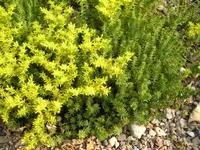
Tasteless stonecrop, Sedum sexangulare, is a low, mat-forming succulent often used as a groundcover, rock garden accent, or green roof plant. It forms dense carpets of tiny, fleshy leaves arranged in six rows on its stems, with small yellow star-shaped flowers in summer.
This species is native to parts of Europe and western Asia, where it naturally grows on rocky slopes, walls, and dry, open sites. Its drought tolerance and modest nutrient needs make it forgiving for beginners.
Understanding how to care for Tasteless Stonecrop starts with recognizing its preference for bright light, sharp drainage, and only occasional watering. It suits outdoor containers and sunny, low-maintenance plantings in many temperate climates.

Care Difficulty
Easy Care

Light Preference
Full Sun

Water Requirements
Low Water

Temperature Preference
Cold Hardy

Hardiness Zone
3–9

Soil Texture
Sandy, Loamy, Rocky

Soil pH
Slightly acidic (6.5–7.0), Neutral (7.0)

Soil Drainage
Well-drained

Fertilization
Minimal (feed rarely)
Scan your plant to receive care tips personalized for your specific plant
Available on iOS and Android
This low-growing sedum thrives in bright, open sites with plenty of sun exposure.
Sedum sexangulare prefers infrequent, deep watering and very fast-draining soil.
This hardy sedum tolerates a wide temperature range, from cold winters to hot summers, when established.
This species tolerates a wide humidity range and rarely needs special humidity management.
Sedum sexangulare grows best in lean, fast-draining mineral soil that never stays wet for long.
This low, spreading succulent is well suited to container growing outdoors.
This low-growing succulent needs only light feeding to maintain compact, healthy growth.
Pruning Sedum sexangulare is simple and mainly keeps the mat dense and tidy.
This hardy groundcover is usually grown in the ground, with transplanting done only when spread or location must change.
Sedum sexangulare is commonly multiplied by division and short stem cuttings.
This species is generally cold hardy in much of the US and needs little specific winter care in the ground.

Plant Health Check
Not sure what's wrong with your plant? Check your plant's health inside the app.
The specific epithet sexangulare refers to the way its tiny succulent leaves are arranged in six distinct spiral ranks around the stem, creating a precise hexagonal pattern when viewed from above.
This species is naturally distributed across rocky and sandy habitats in central and eastern Europe into western Asia, where it forms dense mats on thin, nutrient-poor soils and stone surfaces.
Sedum sexangulare evolved to survive long dry periods and winter cold in open habitats, storing water in its leaves and retreating to its root system when aboveground parts are damaged by frost or heat.

In parts of its native range, Sedum sexangulare is one of the pioneer plants on disturbed or newly exposed mineral substrates, helping stabilize the surface and create early microhabitats that allow less stress-tolerant species to establish later.
This species spreads by low, creeping stems that root at the nodes, forming a dense mat over time. It is vigorous but shallow-rooted, so it is usually easy to control by lifting or edging unwanted sections.
Keep your plants happy and healthy with plant identification, disease detection, and easy care guidance.