Peacock Moss Care (Selaginella uncinata)

Also known as: Peacock Spikemoss, Peacock Fern

About Peacock Moss

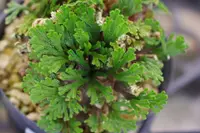
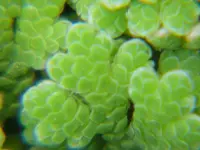
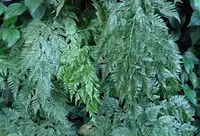
Peacock moss, Selaginella uncinata, is a spikemoss, not a true moss, forming low, creeping mats with blue-green, iridescent foliage. Its fronds show shifting metallic tones in the right light.

This species is native to humid, shaded forests in China and Southeast Asia, where it carpets the ground and rocks. In cultivation it stays compact and spreads slowly, making it suitable for terrariums, paludariums, and sheltered indoor displays.

It prefers constant moisture, high humidity, and soft, indirect light, so it can be sensitive to drying out or harsh sun. Understanding how to care for Peacock Moss helps keep its color and texture stable over time.

Main Plant Requirements

Care Difficulty

Hard Care

Light Preference

Partial Shade

Water Requirements

Keep Soil Moist

Temperature Preference

Tropical / Frost Sensitive

Hardiness Zone

9–11

Soil Texture

Loamy, Peaty, Organic-rich

Soil pH

Strongly acidic (4.5–5.5), Acidic (5.5–6.5)

Soil Drainage

Moist but well-drained

Fertilization

Light (every 4–6 weeks)

Get Personalized Care Plan

Scan your plant to receive care tips personalized for your specific plant

Personalized Care in the App

Available on iOS and Android

How to Care for the Peacock Moss

This shade-loving species thrives in soft, indirect light that mimics a forest floor.

  • Provide bright, filtered light or light shade, such as under taller plants or on an east-facing windowsill with 2–3 hours of gentle morning sun.
  • Tolerates deep shade for part of the day, but growth becomes sparse if kept below roughly 4–5 hours of bright, indirect light overall; avoid direct midday or afternoon sun on Peacock Moss.
  • In summer, protect from harsh sun with sheer curtains or dappled shade; in winter, move slightly closer to a bright window to compensate for weaker light.

This plant prefers consistently moist conditions and reacts quickly to drying out.

  • Aim for evenly moist soil; water once the top 0.5–1 cm feels just barely dry, never allowing the root zone to dry completely.
  • Use loose, well-draining soil or a peat-based mix so Selaginella uncinata stays damp but not waterlogged; avoid standing water in saucers or low spots outdoors.
  • Reduce watering slightly in cooler months, watching for crisp, curling fronds as a sign of underwatering and yellow, limp, or mushy stems as a sign of excess moisture.

This species prefers mild, stable temperatures similar to a humid, sheltered woodland.

  • Ideal growth occurs around 65–75°F (18–24°C); it tolerates short dips to 55°F (13°C) but growth will slow.
  • Keep it away from frost, as tissue damage can occur near 40°F (4°C) and plants are often killed by freezing conditions.
  • In hotter weather above 80°F (27°C), provide shade, higher humidity, and good air movement to prevent heat stress and browning tips.

This moisture-loving species needs high, stable humidity to stay dense and prevent frond tip dieback.

  • Aim for 70–90% humidity; growth slows and fronds crisp at levels below about 50%.
  • Dry indoor air causes curled, browned tips and thinning mats, especially at leaf edges and shoot tips.
  • Increase humidity by using a closed or semi-closed terrarium, covered propagator, or room humidifier rather than misting alone.

This plant prefers a consistently moist, airy, organic-rich substrate that holds water but never turns sour or waterlogged.

  • Use a fine-textured mix of roughly 50% peat or coco coir, 30–40% leaf mold or compost, and 10–20% perlite for structure and drainage.
  • Aim for slightly acidic conditions, around pH 5.0–6.5, which favors nutrient availability and supports healthy Selaginella uncinata growth.
  • Ensure the mix drains freely yet stays evenly damp by avoiding dense garden soil, clay-heavy substrates, or pure sand that dries too quickly.
  • Improve aeration by incorporating fine orchid bark or shredded bark chips, which create air spaces and prevent compaction around surface roots.

This species is well suited to container culture, especially shallow, wide pots or terrariums that support its creeping habit.

  • Choose a broad, shallow container so the creeping stems can spread horizontally, forming an even mat without piling on themselves.
  • Use a pot material that slows evaporation, such as glazed ceramic or plastic, to keep the constantly moist substrate from drying between waterings.
  • Place the container inside a decorative outer cachepot or tray to trap ambient moisture around the plant while still allowing quick drainage of excess water from the inner pot.

Selaginella uncinata benefits from light, careful feeding rather than heavy fertilization.

  • Use a balanced liquid fertilizer (around 10-10-10) at 1/4–1/2 strength for Peacock Moss in active growth.
  • Feed every 4–6 weeks in spring and summer; skip or feed once at very low strength in fall and winter.
  • Apply only to moist substrate to avoid root burn, and flush with plain water occasionally.
  • Avoid slow-release pellets close to stems; a small amount of fine compost mixed into the medium is sufficient.

Pruning Selaginella uncinata is mainly light grooming to maintain a compact, healthy mat.

  • Trim back leggy or overlong fronds in spring or early summer to encourage denser side growth.
  • Snip off dead, browned, or damaged stems at the base to reduce disease risk and improve appearance.
  • Thin crowded patches by removing small sections, allowing better air movement across the foliage.
  • Use clean, sharp scissors and avoid cutting into the main, thicker stems more than necessary.

This species prefers stable, moist conditions, so repotting or transplanting should be infrequent and gentle.

  • Check for roots circling the pot, water running straight through, or slowed growth as cues to move Selaginella uncinata.
  • Plan repotting in early spring, about every 2–3 years, moving only 1 pot size up.
  • Lift the plant with as much intact root ball and surrounding soil as possible to limit disturbance.
  • Set into fresh, moisture-retentive, airy mix, water thoroughly, then keep shaded and evenly moist for 1–2 weeks.

Propagation of this species is common and relies mostly on division and short stem cuttings.

  • Divide dense clumps in spring, keeping each division with healthy roots and several intact fronds.
  • Take 3–5 cm stem cuttings with nodes, then press them onto moist, fine-textured substrate.
  • Maintain high humidity (60–80%) and bright, indirect light to encourage rooting and lateral spread.
  • Layer creeping stems by pinning them to the soil surface until new roots form, then separate.

This plant is frost-sensitive and needs sheltered conditions during cold weather.

  • Keep indoor plants at 55–70°F in winter and away from cold drafts or heater blasts.
  • For outdoor containers, move them indoors or into a frost-free greenhouse before temperatures drop near freezing.
  • Use a light mulch over the root zone in very cool rooms to buffer temperature swings and retain moisture.
  • Reduce watering slightly in winter but never allow the soil to dry out completely.

Care Tips

Shallow Tray Setup

Grow mats in a wide, shallow tray with a snug-fitting clear lid to maintain stable moisture around the foliage while still allowing brief daily ventilation to prevent fungal issues.


Use Moss-Friendly Hardscape

Press small pieces of the plant gently onto porous rocks, wood, or driftwood and secure with fine mesh or cotton thread so the creeping stems can root into the surface and create a dense carpet over time.

Bottom-Up Rehydration

If the surface looks dull and slightly wilted, set the pot in a shallow dish of room‑temperature water for 10–20 minutes so the root zone fully rehydrates without saturating the foliage.

High-Humidity Microzone

Cluster this plant with other humidity-loving species on a water-filled pebble tray and place the group away from vents or fans to build a local microclimate with more stable humidity.

Regular Division Renewal

Every 12–18 months, gently lift and divide the mat into several sections, discard any brown or woody centers, and replant only the freshest outer growth to keep the colony compact, vigorous, and easier to manage when caring for Peacock Moss.

Common Pests and Diseases

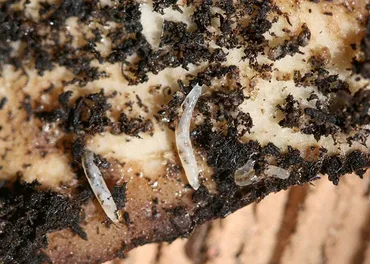
Fungus gnat larvae

This pest thrives in the constantly moist potting mix that Selaginella uncinata prefers, where the larvae feed on fine roots and organic matter. Symptoms include slow, weak growth and small black flies hovering over the potting surface.

Solution

Allow only the top 0.5–1 cm of the substrate to dry slightly between waterings, use a fine sand or grit top-dressing, and set up yellow sticky traps to catch adults. For heavier infestations, drench the soil with a biological control such as Bacillus thuringiensis israelensis (BTI) according to label directions.

Rhizoctonia stem rot

This disease develops in overly wet, poorly aerated substrates and warm conditions, causing lower stems to turn brown, collapse, and spread rapidly through dense mats of foliage. Symptoms include patchy dieback, thinning fronds, and a mushy basal stem zone.

Solution

Immediately remove and discard all affected sections, improve drainage, and reduce watering so the medium is moist but not waterlogged. Repot into a fresh, airy mix, avoid burying stems, space plants for better air movement, and in severe cases use a fungicide labeled for Rhizoctonia on ornamentals, following instructions carefully.

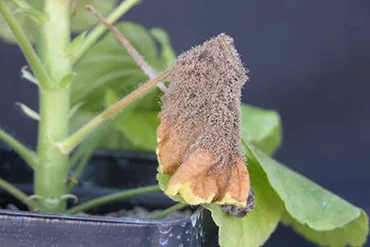
Botrytis gray mold

This disease appears in cool, humid, low-airflow conditions, especially when foliage stays wet for long periods. Symptoms include water-soaked patches on fronds that quickly develop fuzzy gray mold and cause sections of the mat to brown and collapse.

Solution

Increase air circulation, avoid overhead misting that keeps fronds wet, and promptly remove all affected tissue and any fallen plant debris. In persistent cases, slightly reduce humidity, space plants farther apart, and apply a low-toxicity fungicide labeled for Botrytis if cultural corrections are not sufficient.
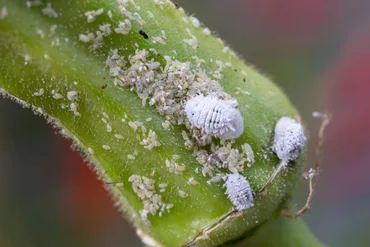
Mealybugs

These insects hide in the dense, overlapping stems and leaf joints, feeding on plant sap and excreting sticky honeydew that can attract sooty mold. Symptoms include stunted growth, distorted new fronds, and small white cottony clusters tucked into crevices.

Solution

Isolate the plant, then dab visible insects with cotton swabs dipped in isopropyl alcohol and rinse the foliage gently with lukewarm water. For ongoing control, repeat inspections weekly, increase humidity stability to reduce stress, and use a labeled insecticidal soap or horticultural oil, ensuring thorough coverage of stems and hidden joints.

Pythium root and stem blight

This disease occurs when the plant sits in saturated, cold media, leading to blackened, poorly developed roots and sudden collapse of entire sections despite moist soil. Symptoms include yellowing mats that pull up easily, with roots showing brown, water-soaked tissue instead of fine white threads.

Solution

Discard severely affected plants, since recovery is unlikely, and improve drainage and watering practices for remaining specimens so the substrate stays evenly moist, not boggy. For mild cases, trim away damaged roots, repot into a clean, airy mix, disinfect containers and tools, and consider a preventive fungicidal drench labeled for Pythium on ornamentals when following Selaginella uncinata care instructions in greenhouse-like conditions.

Interesting Facts

Iridescent blue foliage

The leaves show an intense metallic blue or turquoise sheen under indirect light because of microscopic structures in the leaf cells that interfere with light, a phenomenon known as structural coloration rather than pigment color.

Ancient lineage relative

This species is a spikemoss, part of the Selaginellaceae, an ancient lineage of vascular plants that diverged early in land plant evolution and still reproduces via spores instead of flowers and seeds.

Creeping mat growth

It spreads by slender, branching stems that root as they creep, forming dense ground-hugging mats in humid, shaded habitats, which helps stabilize the soil and retain moisture in its native understory environments.

Botan icon

Did you know?

Selaginella uncinata is frequently used as a model species in research on iridescent plants, because its stable, vivid blue structural color provides a clear example of how leaf microstructure can affect light capture and photosynthesis in low-light forest conditions.

FAQs about Peacock Moss

Browning usually comes from low humidity, drying out, or direct sun scorch. Check that the substrate never fully dries, raise humidity above 60%, and shield it from strong light and hot, moving air.

Grow Healthy Plants with Botan Care

Keep your plants happy and healthy with plant identification, disease detection, and easy care guidance.

Botan plant care app — identify plants on mobile

Explore More Plants