Begonia Powdery Mildew – How to Save Your Plant
Begonia powdery mildew looks like a floury white coating on the leaves and spreads quickly, but early treatment usually saves the plant.

On this page
- How to Recognize Powdery Mildew on Begonia Leaves
- What Causes Powdery Mildew on Begonias?
- Poor Air Circulation Around the Plant
- High Humidity and Stagnant Conditions
- Plant Stress and Weak Growth
- How to Treat Powdery Mildew on Begonias
- How to Prevent Powdery Mildew from Coming Back
- When a Begonia Cannot Be Saved
- Last Notes: Keep Your Begonia Healthy
If your begonia's leaves look like someone sprinkled flour on them, you're probably looking at begonia powdery mildew. It spreads fairly quickly, but most plants survive if treated early. A combination of steps usually helps: moving the plant away from others, pruning the most affected leaves, and spraying with a baking soda mixture once a week for about a month.
However, the full list of steps to save your begonia is much wider. If you're not entirely sure what you're seeing, Botan can scan the leaf and determine whether it's powdery mildew or something else.

How to Recognize Powdery Mildew on Begonia Leaves
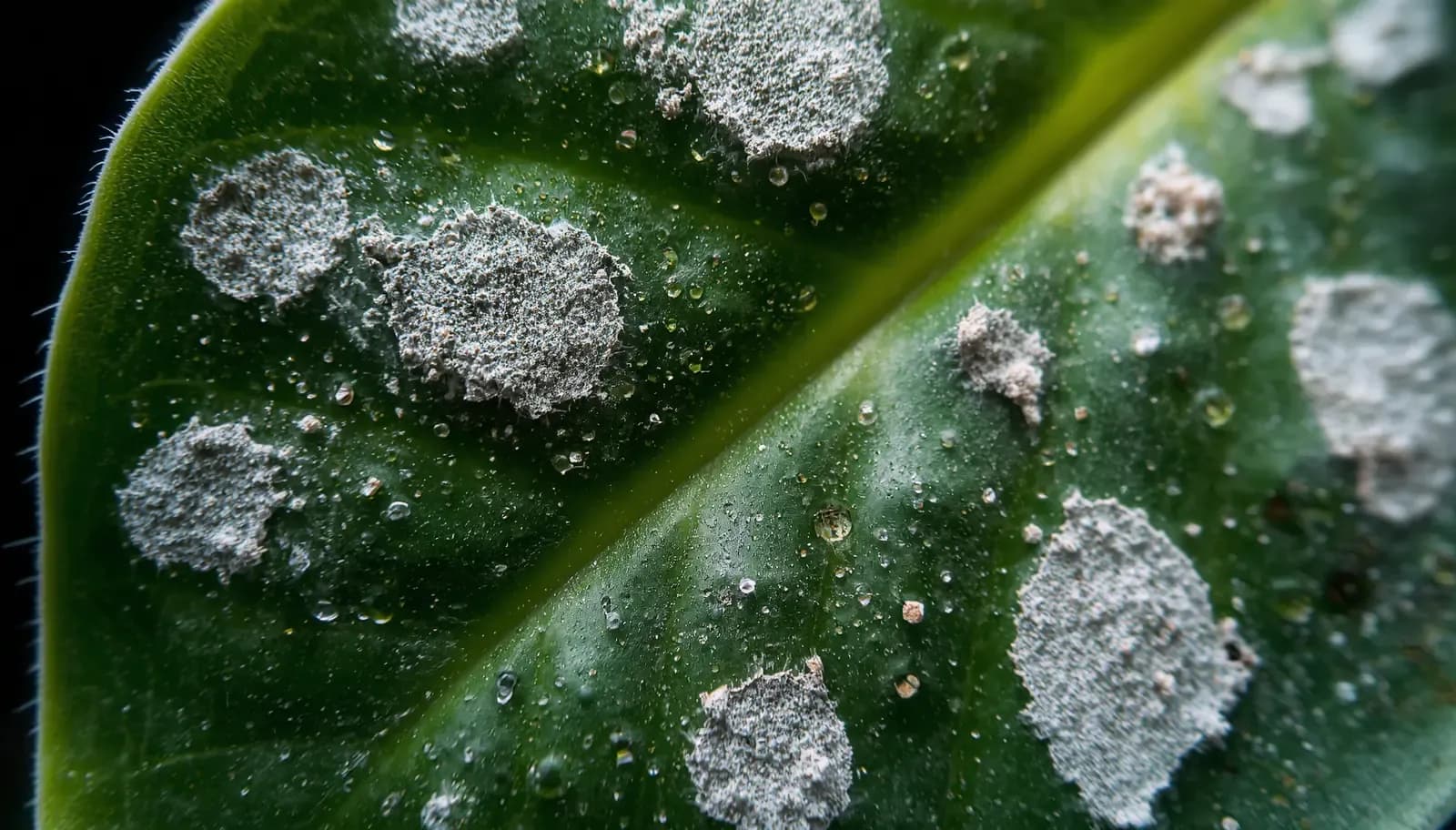
You'll usually see it on the upper side of the leaf first. It looks like a light dusty film, kind of like talcum powder. These begonia white spots are initially very small, but then spread and merge into larger patches.
A few other signs that commonly appear include:
- Yellow or light-colored edges around the white film
- Leaves curl or become slightly deformed
- New shoots grow curled or shorter than they should
- A grayish coating that easily wipes off but reappears after 1-2 days
Sometimes people confuse it with dust or hard water residue from spraying. The dust will fade and disappear forever. Powdery mildew on begonias constantly returns and spreads laterally across the leaf. Mineral spots appear flat and chalky, while powdery mildew has a softer, fluffier texture upon closer inspection.
-1.webp&w=1920&q=75)
Identify Your Plant's Issues Early
Spot plant problems before they spread with Botan
What Causes Powdery Mildew on Begonias?
There are several causes of powdery mildew on begonias. Begonia fungus thrives in still air and high humidity. Spores are carried by air currents from neighboring plants, your hands, or tools you've used elsewhere.
Anything that stresses the plant makes it easier for the fungus to establish itself. Spotted varieties, such as Begonia maculata, are most often affected when the corner of the room where they are located becomes stuffy. Let’s check all factors that cause powdery mildew on begonias below in detail.

Poor Air Circulation Around the Plant
Stagnation of air is usually the main cause. When leaves lie in dead clumps, moisture lingers on the surface much longer than it should. Cluttered windowsills, overcrowded shelves, and rooms with the door closed all day — these are all conditions.
Begonias don't mind a little air movement, but a cold draft from an air conditioner or an open window in winter will harm them.
High Humidity and Stagnant Conditions
Begonias like conditions with humidity levels around 40-60%. If humidity exceeds this level and there is no air circulation, this creates ideal conditions for fungus growth. This most often occurs in bathrooms, basements, and grow tents. The same applies to any area where steam accumulates. Opening a window or running a fan for a couple of hours is usually enough to solve the problem.
Plant Stress and Weak Growth
A begonia that receives everything it needs can, in most cases, resist spores. A poorly cared-for begonia cannot. Stress typically occurs due to too long intervals between waterings and subsequent overwatering. Weeks of low light, moving the plant from hot to cold locations and vice versa, skipping fertilizing, or rough handling also damage the leaves.
Poor growth means the leaf tissue is softer than it should be, and soft tissue is precisely what the fungus thrives on. Simply maintaining basic conditions will benefit the health of your plant more than any attempt to save it.
How to Treat Powdery Mildew on Begonias
As soon as you see the white film, don't wait. Here's how to remove it completely from the plant:
- Move the plant away from the others. Spores easily jump from one plant to another, so isolation slows the spread of infection.
- Trim off the most affected leaves. Remove any leaves that are more than half covered with spores. Use clean scissors and wipe them with rubbing alcohol between cuts.
- Collect the cuttings in a bag and discard them. Do not compost them — seal the bag and dispose of them in the trash.
- Prepare a treatment spray. A simple recipe you can use at home: 1 teaspoon of baking soda, ½ teaspoon of mild dish soap, and a liter of water. Some people use potassium bicarbonate instead of baking soda, as it's gentler on the leaves. Neem oil will also be a good solution if diluted according to the bottle instructions.
- Spray the entire plant. Treat both sides of each leaf, as well as the stems. Do this in the morning so everything has time to dry before evening.
- Repeat every 7 days for 3-4 weeks. Continue spraying even after the white spots disappear. Spores persist longer than you think.
- Clean the area around the pot. Wipe down the pot itself, the tray, the shelf, and any tools that have come into contact with the plant.
- Avoid using fertilizer for a couple of weeks. Excessive new growth will soften the leaves, which is exactly what the fungus wants.
If you don't want to mix anything yourself, there are fungicides for ornamental plants available in stores. Look for sulfur or potassium bicarbonate on the label. The Royal Horticultural Society provides good information on which products are best for indoor use. Give it time to notice the results — you'll know recovery is underway when new, clean leaves emerge.
How to Prevent Powdery Mildew from Coming Back
After treating the plant, it's important to ensure that the causes of begonia powdery mildew don't recur. Read our quick guide on preventing this disease.
Prevention Step | Why It Helps | Practical Tip |
Space plants apart | Reduces the buildup of moisture around the foliage | Space between pots is approximately 1 hand width |
Water at the soil level | Prevents leaves from becoming damp | A long-spout watering can helps |
Add airflow | Breaks up stagnant pockets of air | Small fan on a low speed for a few hours a day |
Wipe leaves occasionally | Pulls off early spores and dust | Wet soft cloth, leaf by leaf |
Quarantine new plants | Prevents new infections from entering the pot | Isolate new arrivals for approximately 2 weeks |
Wash and sterilize tools after each use | Keeps you from spreading it yourself | A quick wipe with an alcohol wipe will suffice |

When a Begonia Cannot Be Saved
Sometimes you can't save your begonia even if you take all necessary measures. Here are signs that it's too late to treat the plant:
- You see the begonia's white spots on more than two-thirds of the leaves.
- Stems are soft to the touch or have dark stripes.
- New shoots constantly curl, no matter what you do.
- Powdery mildew returns after several treatments.
- Roots appear brown or have an unpleasant odor upon inspection.
Before giving up completely, take cuttings from clean stems. Dip them in rooting hormone and plant them in fresh, sterile soil. A new plant from a mother plant you like is better than one that doesn't take root.
Last Notes: Keep Your Begonia Healthy
In most cases, simply following all the necessary care guidelines is enough to prevent begonia powdery mildew. Ensure consistent lighting, even watering, good air circulation, and space between pots. Inspect the leaves once a week.
Spotting a problem on the first day is much easier than trying to treat it on the 20th. Scanning the leaves with the Botan scanner can also confirm the diagnosis before the problem gets out of hand. The Missouri Botanical Garden has additional information on this disease if you'd like to learn more.
FAQ
No, it only affects plants and will not harm people or animals. However, it's important to wash your hands after handling infected leaves to avoid spreading spores to other plants on the shelf.
Dariia Plaksina
Botanist
5 years of botanical research experience
Dariia Plaksina is a biologist, botanist, and writer of informational articles with over 5 years of experience exploring the world of plants, nature, and biology. She studied at Taras Shevchenko National University of Kyiv, Educational and Scientific Center “Institute of Biology and Medicine,” where she built a strong scientific foundation for her future work.
For Dariia, writing is a hobby, a calling, and a way to make reliable knowledge easier to understand. Her articles focus on plant care, plant health, and natural processes, helping readers learn more about the living world through clear, accessible, and science-based explanations.
Related Articles
8 min read · 1 Oct 2026
Lemon Tree Leaves Turning Yellow: Causes and How to Fix It
Yellow leaves are one of the most common lemon tree problems. This guide explains eight causes of lemon tree leaves turning yellow, from overwatering to root rot, with a fix for each.
5 min read · 16 Sept 2026
How to Keep Cats Away From Plants: 7 Safe and Effective Methods
Cats may dig in potting soil, chew leaves, or knock containers over. These seven methods combine safer placement, physical protection, a suitable chewing alternative, and play to help protect your plants without putting your cat at risk.
5 min read · 7 Sept 2026
Overwatering vs Underwatering: How to Tell the Difference
Overwatering and underwatering can look almost identical, so they're easy to confuse. In this guide, we'll cover the signs of each, simple ways to tell them apart, and how to treat your plant once you know what's wrong.
Explore Plants by Care Needs
Identify the plant and problem. Help your plant recover
Identify plant problems early, understand what's wrong, and get clear care guidance. Botan helps you turn guesswork into confident plant care