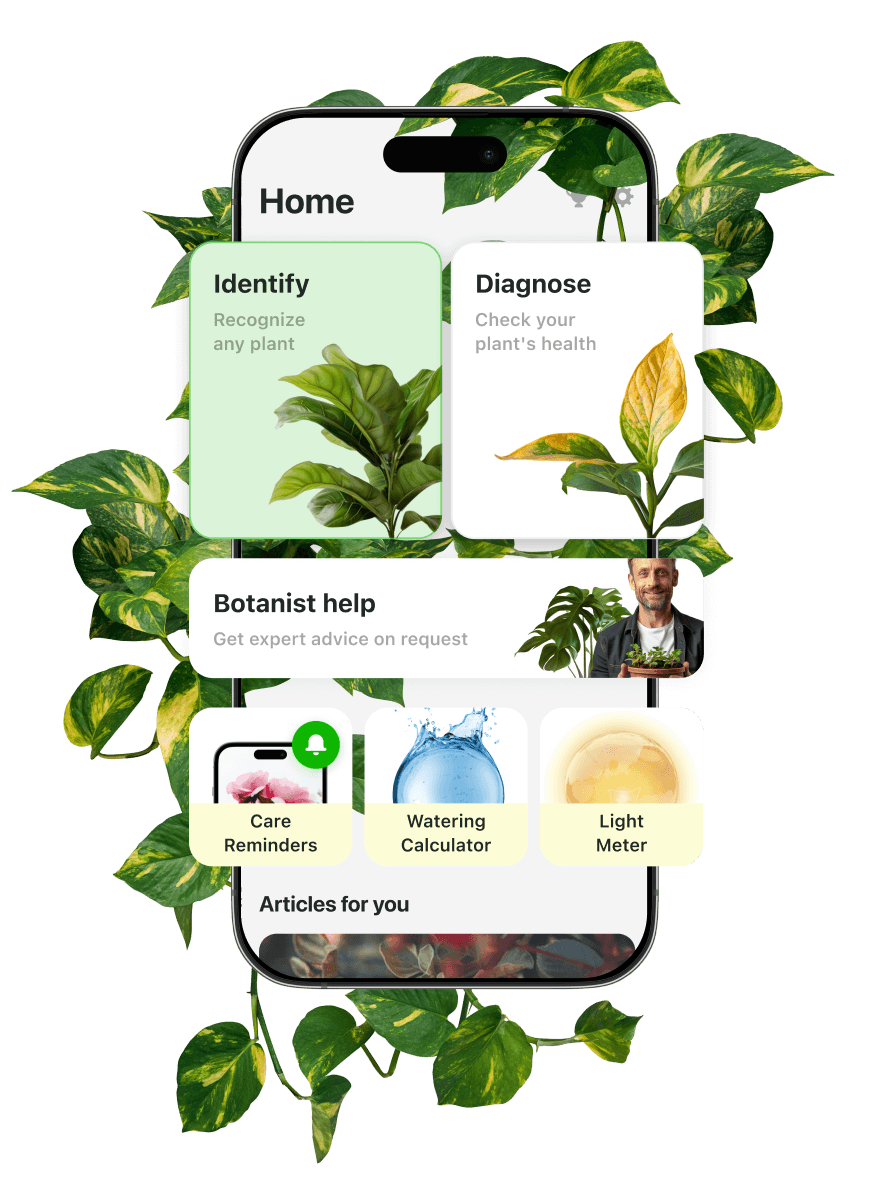
How to Fix Brown Spots on Pothos Leaves Before They Spread
Pothos is hardy, but brown spots usually signal overwatering, disease, or too much direct sun. To fix the problem, identify the cause first—using a plant disease identifier or by checking the key symptoms.

On this page
- Why Brown Spots Appear on Pothos Leaves
- How to Identify the Cause Before Treating the Plant
- Common Causes of Brown Spots on Pothos Leaves
- Overwatering and Root Stress
- Fungal or Bacterial Leaf Problems
- Direct Sunlight or Heat Stress
- Brown Spots on Pothos: Cause, Signs, and First Fix
- Step-by-Step Pothos Leaf Rescue Plan
- How to Prevent Brown Spots from Coming Back
Pothos seems to be a perfect plant. It tolerates low light and irregular watering with ease. However, it’s still vulnerable to factors like overwatering, infections, and direct sunlight. Pothos brown spots often indicate these specific issues.
Still, they are symptoms, and to get rid of them, you need to identify the cause correctly. You can do it in seconds with the Botan disease identifier, but knowing the patterns and right approaches is also helpful.
So, if you want to understand your pothos better, just keep reading. We share all the most important information below.

Why Brown Spots Appear on Pothos Leaves
Black or brown spots on pothos leaves always indicate serious stress, damage, or disease. They may look quite similar even when the causes are different, which is why it’s crucial to spot all the details.
For example, you can notice:
- Dry and crisp spots — often surface-level, appearing on the sun-exposed side or newer growth.
- Wet, soft, expanding spots — the most common type, often move up from roots, tissue collapses when touched.
- Spots with a border — a yellow halo or a distinct darker border.
- Irregular necrotic patches — shapeless, with no defined margins.
Generally speaking, dry spots indicate temperature damage. Wet spots are often caused by bacterial damage. Necrotic spots or spots with borders often indicate fungal infection.
But this is just a general principle. A more advanced, step-by-step approach is required to correctly identify the cause.
Check the Reason of Leaf Spots
Scan with Botan and get a result with 98%+ accuracy
How to Identify the Cause Before Treating the Plant
If you want to examine golden pothos brown spots, whether wet, dry, with or without borders, take the following steps:
- Take a look at the roots. Pull the pot up or unpot the plant. See if roots are light (normal) or dark and mushy. In the second case, this might be a root rot.
- Check if the soil has been wet for a long time. Also, check if it has a sour odor. If yes, this might be an infection.
- Examine the stem. See if there are any lesions, discoloration, or soft spots. If yes, it can be fungal.
- Check the location of spots. Root rot usually appears on the older leaves. Infections and environmental damage may target upper leaves.
- Consider care changes. If you started watering more, it may indicate root rot or infection, and rule out temperature damage.
That’s how you narrow the search, but further detailed analysis is still required.
Alternatively, you can use a tool like Botan, which is more than just a flower identifier. If you take a photo of a damaged pothos, the system will analyze the symptoms listed above and provide a specific diagnosis and treatment plan.
Common Causes of Brown Spots on Pothos Leaves
Let’s dive deeper into the three most common reasons for the appearance of dark spots: overwatering, infections, and sunlight or heat stress.

Overwatering and Root Stress
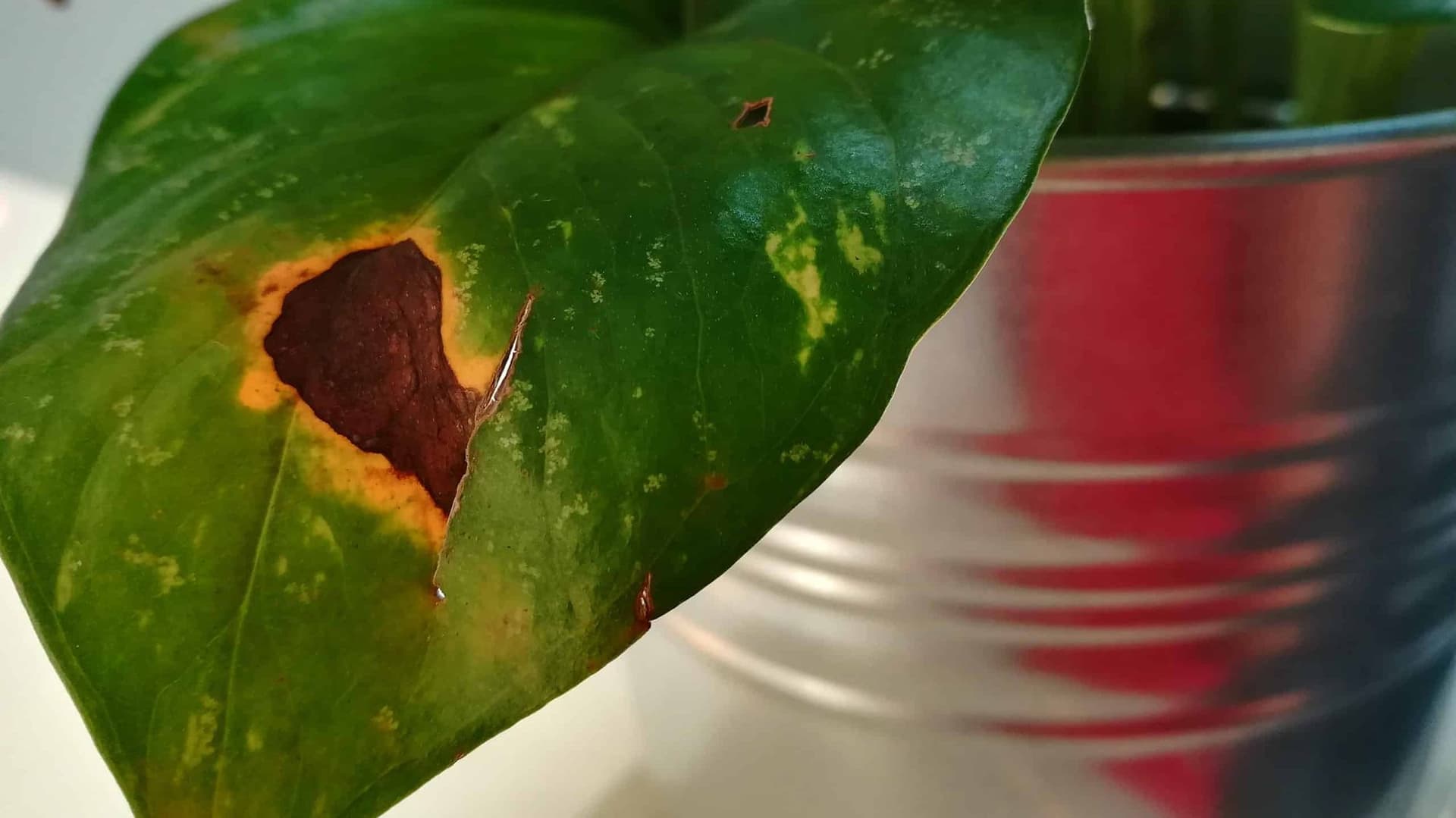
If you grow your plant in a pot, it can be damaged by excessive moisture, or rather, the resulting lack of oxygen that roots also depend on. So, when overwatered, roots can’t breathe, start rotting, and turn brown and then black.
You can see it in the leaves, too. They turn yellow and develop quite large brown spots that then turn black.
Fungal or Bacterial Leaf Problems
High humidity, poor air circulation, and wet foliage can also trigger fungal or bacterial infections. Unlike overwatering, they do not always affect roots. Unlike spots from environmental stress, they spread.
The most common fungal infections include Rhizoctonia and fungal leaf spot, triggered by different pathogens. In all cases, spots are dark-brown or black, with defined edges and visible structure. Frequently, fungal spots also have a yellow halo, a darker border, and even visible spores at the center.
Bacterial leaf spot and bacterial wilt also cause spots that are typically water-soaked and angular or V-shaped.
Direct Sunlight or Heat Stress
Pothos plants need bright, but indirect sunlight 6-8 hours a day. However, they can get sunburns from direct sun, and that’s exactly the case when black spots may appear.
Often, you can notice such damage in plants that are closest to a window. Plants with light-colored leaves are also very vulnerable.
You can easily distinguish them from fungal spots or spots from overwatering. They are firm and crisp, and they don’t spread.
Brown Spots on Pothos: Cause, Signs, and First Fix
Now, let’s sum it up in a quick guide to cause identification.
Possible Cause | Dark Spot Characteristics | First Actions |
Overwatering/root rot | Soft, mushy, with waterlogged tissue and foul odor | Unpot the plant, trim rotten roots, let them dry, and repot in fresh, dry soil |
Fungal infection | Dark spots with a border ring, yellow halo, or powdery spores | Remove damaged leaves, stop overwatering, improve air circulation |
Bacterial infection | Start water-soaked, soon turn black, have soft, collapsing tissue, spread very fast | Isolate the plant, remove all damaged leaves (sterilize garden tools) |
Sunlight/temperature damage | Dry, crispy, concentrating on the upper side of leaves, never spreading | Move from direct light |

Step-by-Step Pothos Leaf Rescue Plan
If you want to do everything correctly, use this simple checklist:
- Inspect the spots first. Identify the most likely reason. Consider the location, moisture level, and spreading patterns.
- Remove damaged leaves. It’s not necessary in the case of temperature damage. If you suspect a fungal or bacterial infection, it’s a must. Use sterilized tools.
- Check and help the roots. Cut off all dark and rotten parts. Dry wet roots for a few hours.
- Isolate the plant. It’s necessary if you suspect a bacterial infection.
- Stop misting. Also, if the fungal infection doesn't improve, apply a fungicide.
After you do that, monitor the situation for the next few weeks. If there’s no improvement, the diagnosis might be incorrect, or the plant is too damaged to recover (for example, due to a severe bacterial infection).
How to Prevent Brown Spots from Coming Back
To prevent similar problems in the future, remember the key rules of pothos care:
- Water only when the top 2 inches of the soil are dry (approximately every 1-2 weeks, but don’t rely on the schedule).
- Move your pothos from direct sunlight.
- Ensure temperatures above 55°F / 13°C.
- Use a pot with drainage holes.
- Check for pests every 2-3 weeks.
Also, use fertilizer not more often than every 4-6 weeks during the active growth.
FAQ
No, they can’t. Remove them — that will help stop the spread if an infection is involved.
Dariia Plaksina
Botanist
5 years of botanical research experience
Dariia Plaksina is a biologist, botanist, and writer of informational articles with over 5 years of experience exploring the world of plants, nature, and biology. She studied at Taras Shevchenko National University of Kyiv, Educational and Scientific Center “Institute of Biology and Medicine,” where she built a strong scientific foundation for her future work.
For Dariia, writing is a hobby, a calling, and a way to make reliable knowledge easier to understand. Her articles focus on plant care, plant health, and natural processes, helping readers learn more about the living world through clear, accessible, and science-based explanations.
Related Articles
8 min read · 1 Oct 2026
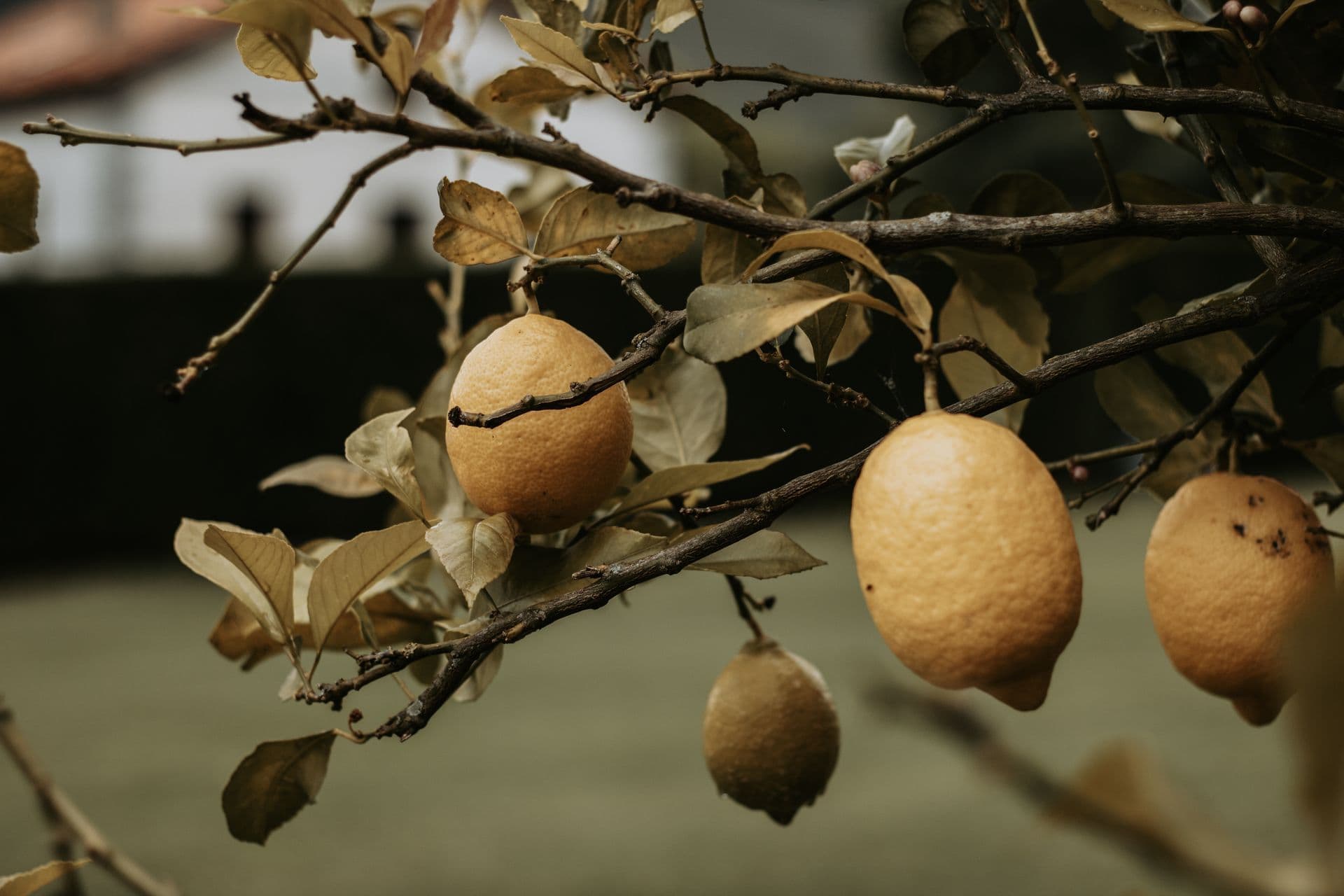
Lemon Tree Leaves Turning Yellow: Causes and How to Fix It
Yellow leaves are one of the most common lemon tree problems. This guide explains eight causes of lemon tree leaves turning yellow, from overwatering to root rot, with a fix for each.
5 min read · 16 Sept 2026
How to Keep Cats Away From Plants: 7 Safe and Effective Methods
Cats may dig in potting soil, chew leaves, or knock containers over. These seven methods combine safer placement, physical protection, a suitable chewing alternative, and play to help protect your plants without putting your cat at risk.
5 min read · 7 Sept 2026
Overwatering vs Underwatering: How to Tell the Difference
Overwatering and underwatering can look almost identical, so they're easy to confuse. In this guide, we'll cover the signs of each, simple ways to tell them apart, and how to treat your plant once you know what's wrong.
Explore Plants by Care Needs
Identify the plant and problem. Help your plant recover
Identify plant problems early, understand what's wrong, and get clear care guidance. Botan helps you turn guesswork into confident plant care