Why Aglaonema Root Rot Happens and How to Rescue Your Plant
If your Aglaonema is wilting and turning yellow despite proper care, the problem may be root rot rather than a lack of water. This guide explains how to spot it, what causes it, and how to save your plant before the damage spreads.

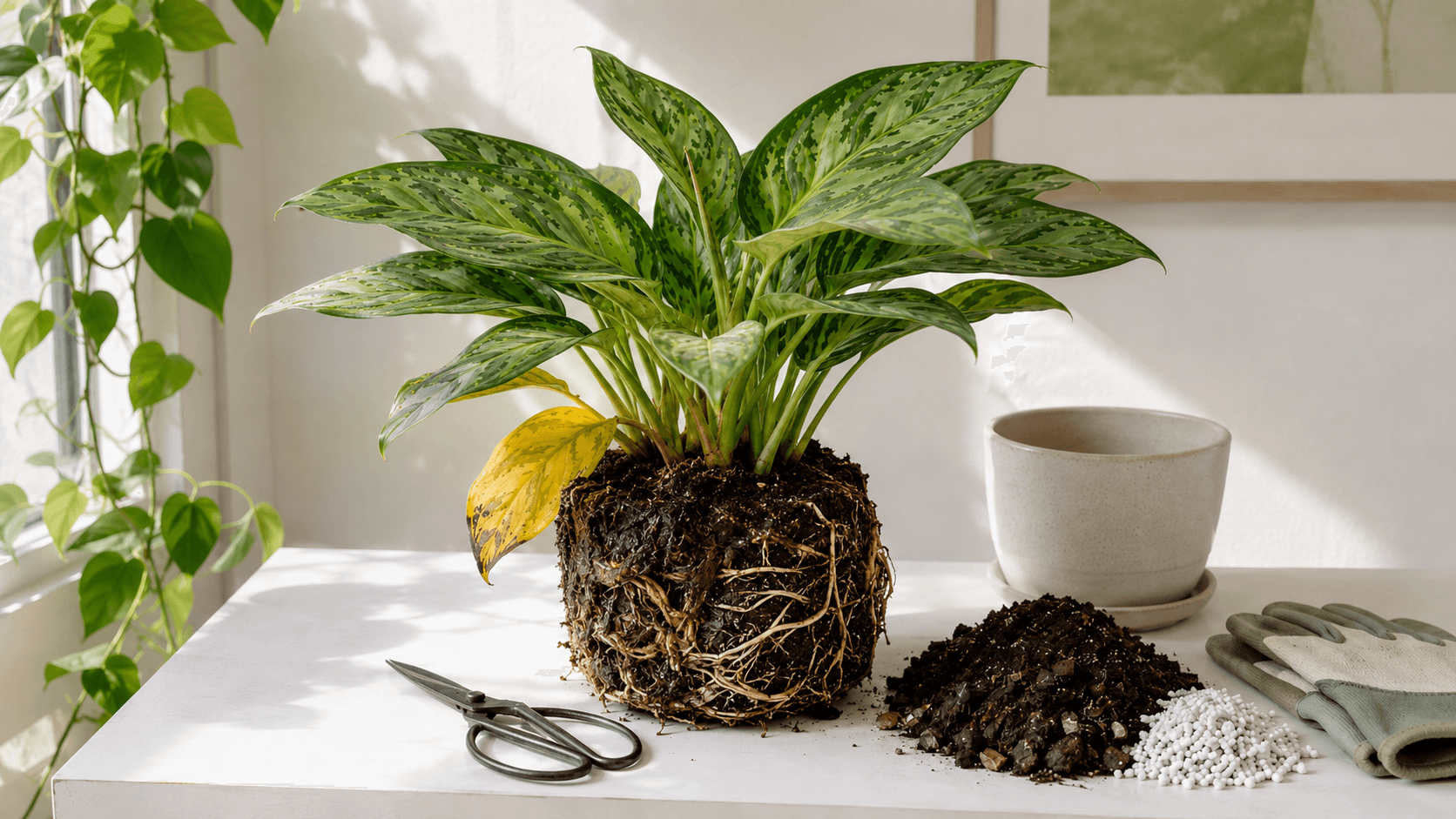
Your favorite Aglaonema, with its wide, green leaves and silver or white coloration, definitely creates a tropical atmosphere in your living room, on the balcony, or on the patio. But one day you notice that the Chinese evergreen plant is wilting and the leaves are yellowing, even with good care, using a houseplant identifier, namely regular watering, fertilizing, and placing it in the right place.
You might think that your plant needs more moisture and start watering it more. But in reality, the problem may lie underground. Aglaonema root rot is a widespread disease that silently but quickly kills the greenery.
In this guide, we consider how to recognize this problem, what causes it, and how to rescue your houseplant before the rot spreads to all the stems and leaves.
What Root Rot Looks Like in Aglaonema

The plant sends the first signals of root rot upwards. It may look a bit parched, weak, and exhausted, although the soil is quite moist to the touch. Instead, the main damage is done to the roots – they change their color, structure, and smell.
In such conditions, the underground part cannot support the plant at the proper level. And if no action is taken on Aglaonema root rot treatment, the greenery may die.
Early Warning Signs Above the Soil
If you learn to read the first warning signs of root rot that are visible on the surface, you can save the life of your houseplant.
Here are the most common symptoms to look out for:
- Yellowing and wilting leaves. These are the first signs of Chinese evergreen root rot that appears on the lower leaves after watering and gradually spreads throughout the entire plant. These symptoms are usually characteristic of a dehydrated plant, but in the case of your Aglaonema, the soil is sufficiently moist. This paradox can be explained by the fact that rotten roots are unable to absorb water and transport it to the stems and leaves. That’s why the plant becomes dehydrated.
- Soft lower stems. Since they are closer to the base, where extra moisture accumulates, and the rotting process begins, they are highly susceptible to stress. Due to a lack of water and nutrients, they lose their elasticity and weaken.
- Brown spots near the base of the plant. These Aglaonema root rot symptoms indicate that the underground plant part is affected by fungi.
- Slow growth. A healthy plant usually actively produces new leaves. But if this process has stopped, the root system is likely affected by rot and cannot supply the water, along with the nutrients necessary for growth.
- Musty or rotten smell from the potting mix. In the soil, organic matter undergoes decomposition, that is, the breakdown of plant tissue by bacteria and fungi. It is this process that causes the distinct, unpleasant smell of the soil.
If you have noticed yellow leaves only without all other symptoms, this does not necessarily mean that the problem is root rot. But if several signs are present at the same time, you should seriously pay attention to this problem.
.png&w=2880&q=75)
Identify Root Rot Before It Spreads
Scan your plant with Botan to detect signs of root rot early and get quick care guidance
Aglaonema Root Rot vs Other Common Problems
Root rot can easily be confused with other problems, such as a lack of moisture or nutrients, cold stress, or pest damage. After all, external symptoms are quite similar. The table below compares signs of typical problems related to care. It will help you to determine what the disease is in reality.
Problem | Typical signs | How it differs from root rot |
Underwatering | Dry soil, wilting and curling leaves, dead leaf tips | The soil feels dry on the touch. The roots are firm and have a typical earthy smell. |
Low humidity | Brown leaves, dry tips | The base of the stem remains firm, and there is no unpleasant smell. |
Lack of light | Yellow leaves, “leggy” stems, dropping | Roots remain firm without signs of rot. |
Transplant shock | Wilting, yellowing, and loss of firmness | Happens after repotting. This condition typically lasts a few days, after which the plant recovers. |
By learning these symptoms carefully, you avoid wrong treatment, which, in turn, can only make the situation worse.
How to Confirm If Your Aglaonema Has Root Rot

As you can see, root rot often looks similar to the symptoms of other care-related problems, such as insufficient watering, low humidity, lack of light, or transplant shock. That’s why a visual assessment of the symptoms is usually not enough to confirm root rot with certainty.
You should inspect the Aglaonema with your hand, additionally using a plant care scanner, such as BotanApp, which can compare visual symptoms, identify possible causes, and provide advice on what to do next.
Remove the infected Aglaonema from its pot. To prevent the plant from becoming stressed, start by gently tilting the container to the left or right. Loosen the soil around the roots while supporting the base of the stems with your fingers. Then, carefully remove the root ball along with the soil.
The next step is inspecting the root system visually, by touch, and by smell. Healthy roots are white or light beige in color, firm, sturdy, and have an earthy smell. Infected areas turn dark brown or black.
They feel soft and slippery to the touch with a mushy texture that may crumble when pressed lightly with the fingers. If you smell them, they give off a distinct sour, rotten, or musty odor.
Main Reasons Aglaonema Root Rot Happens
Root rot is often caused by improper plant care, most commonly overwatering. However, this condition can also result from poor drainage, high humidity, low temperatures, or other factors.
Below, we will consider the most common reasons for root rot:
- Overwatering and bad drainage. If you overwater your plant and the water has nowhere to drain because the pot lacks drainage holes, a damp, oxygen-deprived environment forms in the soil. This causes the plant to suffocate and gradually die. And such fungi as Phytophthora, Pythium, and Rhizoctonia, which thrive in moist soil, spread rot more quickly throughout the plant.
- Low soil temperature and watering with cold water. These factors can stress the plant’s roots, causing them to absorb water and nutrients less effectively. And if they remain damp for too long, they start to rot.
- Insufficient light. This is an indirect factor that promotes root rot. It causes the plant to consume less water. As a result, the soil remains moist longer after watering. And if it stays in these conditions for too long, the roots may become rotted.
It is worth noting that root rot can be caused not only by one factor, but by a combination of two or more factors.
How to Rescue an Aglaonema with Root Rot
If you notice that your Aglaonema’s roots are rotting, the good news is that the plant can be saved by removing damaged parts, reducing moisture in the soil, and creating more favorable conditions to recover.
Here is a step-by-step rescue plan:
- Cleaning. After removing the plant from the pot and carefully inspecting its root system, rinse the soil from the root ball under a gentle stream of warm water.
- Trimming infected roots. Disinfect the scissors with alcohol and use them to trim all affected areas until clean, healthy plant tissue to prevent the rot from spreading.
- Disinfection. Immerse the health root system into a fungicide solution (azoxystrobin, propiconazole, or natural in the form of ground cinnamon) or a mixture of hydrogen peroxide (1 part 3% solution to 2 parts of water). Then, leave the plant in the open air for 1 hour to dry it. Also, wash the pot thoroughly and disinfect it with a chlorine solution. These steps will kill fungi and other pathogens that could harm the plant.
- Repotting. Fill the prepared pot with fresh, well-draining, and sterile potting mix specifically designed for Aglaonema. Place the plant in the center of the container.
- Post-care. After repotting, water Aglaonema to help it settle in. Place the pot with the houseplant on a windowsill where it receives bright but indirect light so that the soil dries out thoroughly before the next watering. If the plant has settled into its new environment and recovered, new shoots should appear. Only then can you start fertilizing.
To avoid the worst-case scenario from unfolding, prevent root rot. Make sure your Aglaonema is growing in a special, well-drained potting mix with a pH between 5.6 and 6.5, and add perlite or orchid bark to improve drainage and airflow. Don’t overwater the plant to prevent the rot from returning.
Water it with warm water only when the top 2,5-5 cm of soil is dry. Make sure that the pot has well-drained holes to allow excess water to drain away in the saucer, from where it is also important to pour it into the sink. Another important tip for improving drainage and air circulation is to raise the pot using a special stand.
FAQ
Yes, but if the rot is mild. However, repotting is the more effective solution to remove rot and help the plant recover, especially if it is clearly visible that roots have softened, turned black, and started to smell unpleasantly.
Dariia Plaksina
Botanist
5 years of botanical research experience
Dariia Plaksina is a biologist, botanist, and writer of informational articles with over 5 years of experience exploring the world of plants, nature, and biology. She studied at Taras Shevchenko National University of Kyiv, Educational and Scientific Center “Institute of Biology and Medicine,” where she built a strong scientific foundation for her future work.
For Dariia, writing is a hobby, a calling, and a way to make reliable knowledge easier to understand. Her articles focus on plant care, plant health, and natural processes, helping readers learn more about the living world through clear, accessible, and science-based explanations.
Related Articles
5 min read · 16 Sept 2026
How to Keep Cats Away From Plants: 7 Safe and Effective Methods
Cats may dig in potting soil, chew leaves, or knock containers over. These seven methods combine safer placement, physical protection, a suitable chewing alternative, and play to help protect your plants without putting your cat at risk.
5 min read · 7 Sept 2026
Overwatering vs Underwatering: How to Tell the Difference
Overwatering and underwatering can look almost identical, so they're easy to confuse. In this guide, we'll cover the signs of each, simple ways to tell them apart, and how to treat your plant once you know what's wrong.
7 min read · 26 Aug 2026
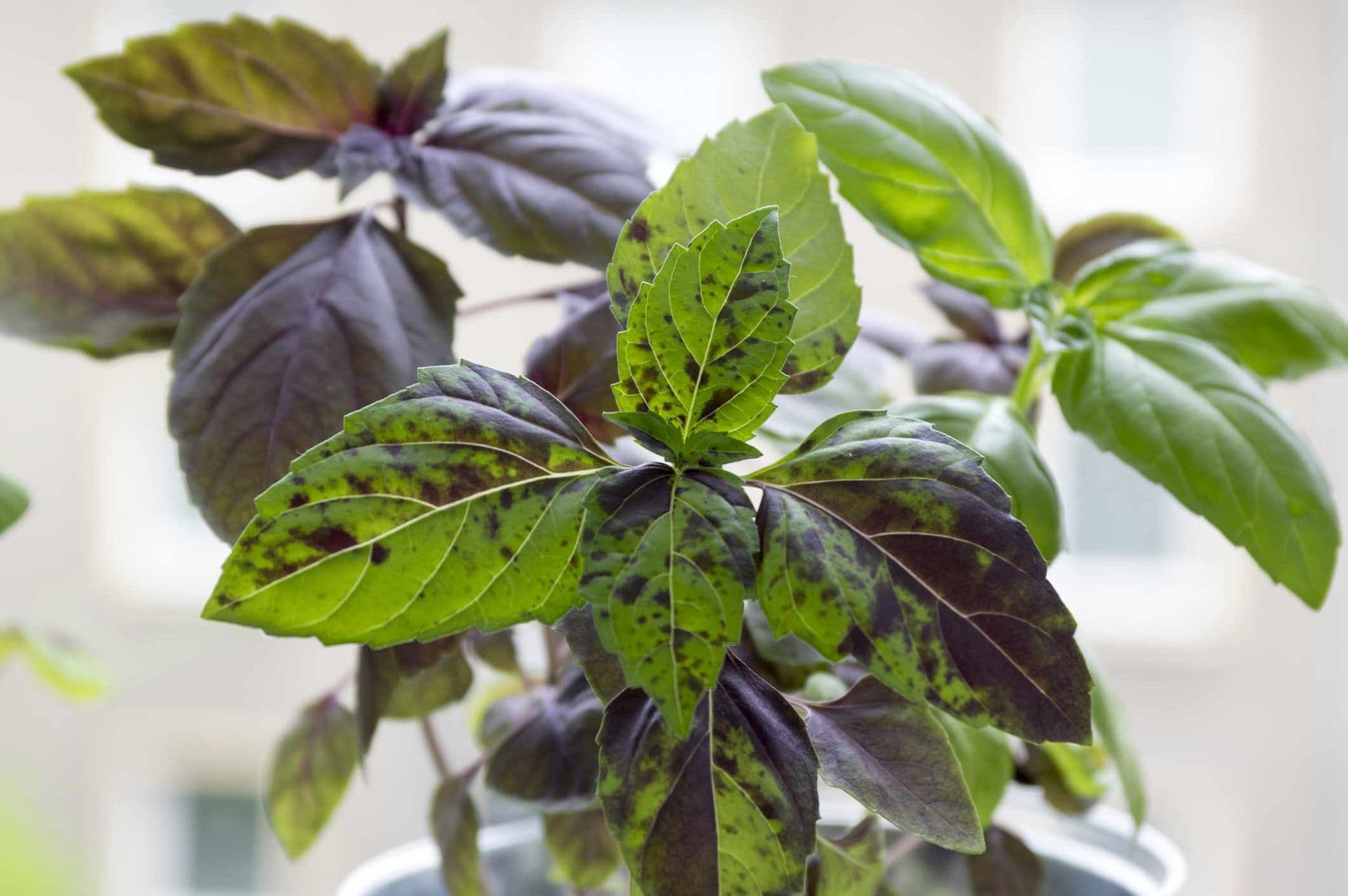
Brown Spots on Basil Leaves: Causes and How to Fix Them
Brown spots can appear after watering mistakes or disease. Cold exposure and pests leave a distinct pattern too. Learn how to diagnose damaged basil and prevent new marks.
Explore Plants by Care Needs
Identify the plant and problem. Help your plant recover
Identify plant problems early, understand what's wrong, and get clear care guidance. Botan helps you turn guesswork into confident plant care