Bamboo Identification
Identify Bamboo by Photo
Do you often ask yourself, "What kind of bamboo do I have growing in the yard?" Upload a photo to Botan and get a match in seconds.


Identify Bamboo by Photo
Do you often ask yourself, "What kind of bamboo do I have growing in the yard?" Upload a photo to Botan and get a match in seconds.

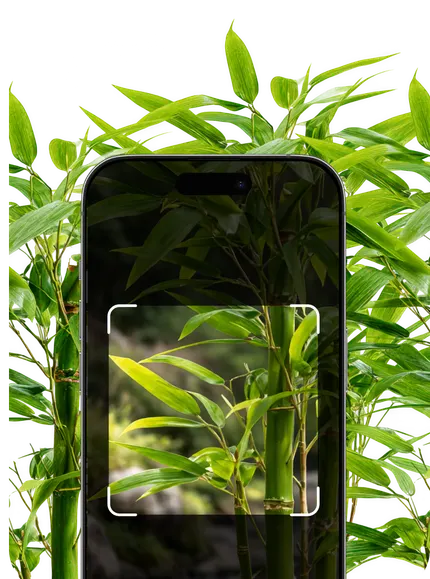

Plant Identifier Online for Free
Use easy-to-see images for the best plant ID results. Try not to take photos from very far away.
golden bamboo
Phyllostachys aurea
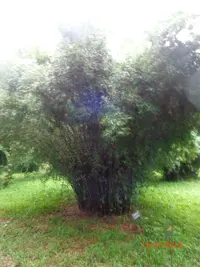
hedge bamboo
Bambusa multiplex
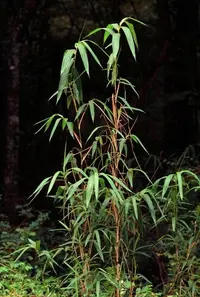
giant cane
Arundinaria gigantea
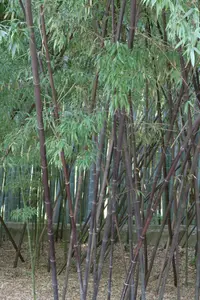
black bamboo
Phyllostachys nigra
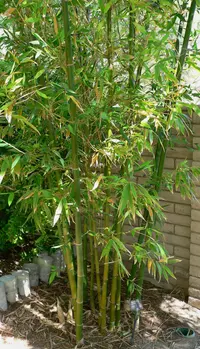
giant timber bamboo
Bambusa oldhamii
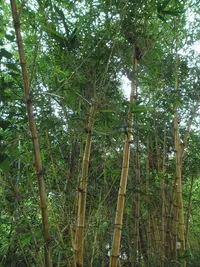
common bamboo
Bambusa vulgaris
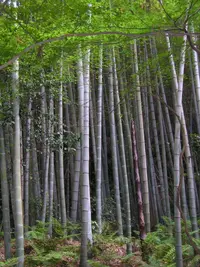
tortoise shell bamboo
Phyllostachys edulis
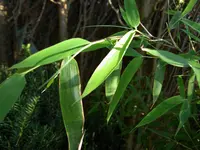
umbrella bamboo
Fargesia murielae
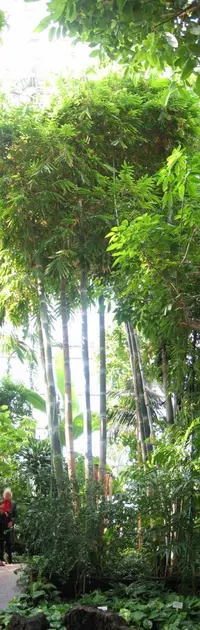
Giant Bamboo
Dendrocalamus giganteus
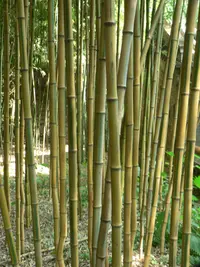
yellow grove bamboo
Phyllostachys aureosulcata
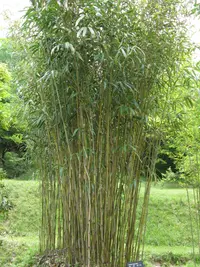
arrow bamboo
Pseudosasa japonica
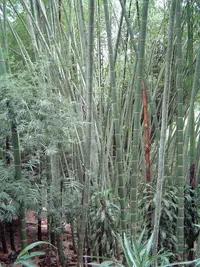
Colombian timber bamboo
Guadua angustifolia
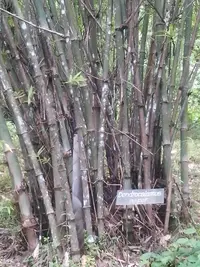
giant bamboo
Dendrocalamus asper
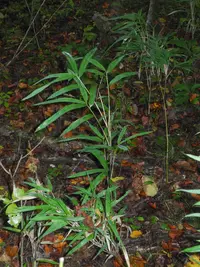
hill cane
Arundinaria appalachiana
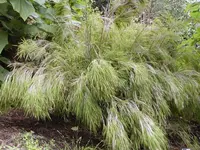
Mexican weeping bamboo
Otatea acuminata
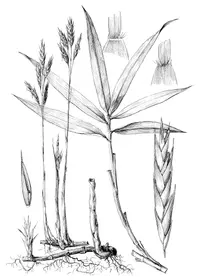
switch cane
Arundinaria tecta
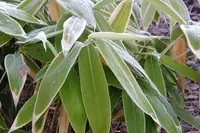
broadleaf bamboo
Sasa palmata
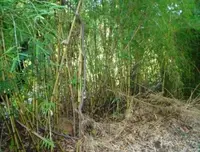
Chilean bamboo
Chusquea culeou
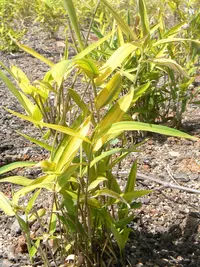
kamuro-zasa
Pleioblastus viridistriatus
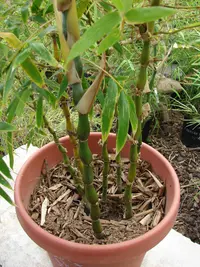
puntingpole bamboo
Bambusa tuldoides
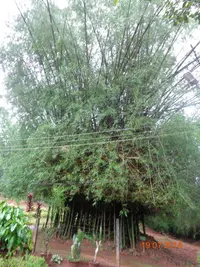
Indian Thorny Bamboo
Bambusa bambos
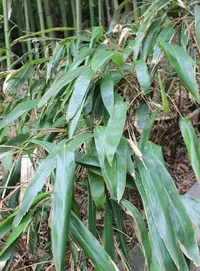
large-leaved bamboo
Indocalamus tessellatus
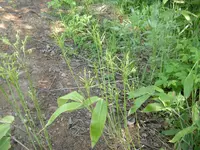
Kuril Bamboo
Sasa kurilensis
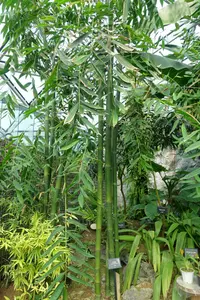
sweet bamboo
Dendrocalamus latiflorus
Accurate bamboo identification is based on a combination of several visible characteristics — culm color, culm shape, mature plant height, leaf width, and growth habit. Checking two or three of these features makes the process far more reliable than relying on any single characteristic.
The culm ( the woody stem of the bamboo plant) is usually the first feature that you must examine when identifying bamboo. This is because color varies and often provides an immediate shortlist for species ID. A single culm can also change during its lifespan as sunlight hardens the waxy coating, so comparing multiple stems will give more accurate results. Here are the most common culm colors:
Photograph the mature stem on a sunny day, but not in direct sunlight, as this will fade some of the yellow and pink tones. At the same time, the deep shadow will turn green to gray.
The cross-section and surface profile of a bamboo stem make it possible to identify the plant's genus at a glance, especially if the photograph captures the stem in good light. Clean, close-up bamboo identification pictures of the culm are often all the app needs to return a match. Below, check out the possible culm shapes:
Photograph the culm on the side at eye level and have at least two complete internodes plus the rings of the node between them — this angle shows the cross-section profile and any lengthwise grooves. Clean the surface before shooting, as dirt may obscure the sulcus and mislead the detector.
Mature height is a good supporting indicator, as soil, climate, and root space can hold a plant short of its genetic potential. Nevertheless, the combination of height, culm, and leaf characters can enhance the bamboo species identification. Here you can explore the most typical bamboo heights:
When shooting, move back so that the tallest culm will be within the frame, base to tip, and locate at the bottom of the frame a familiar object, a fence, a doorway, a person, to use as a measuring rod. A vertical orientation tends to give the entire height of the plant without cutting the crown.
What does bamboo look like up close? Most species have the same lance-shaped leaf silhouette, but blade width varies enough between genera. This serves as a useful additional characteristic when other characteristics are unclear. Bamboo leaves can be:
If you want to learn how to identify bamboo in a more effective way, take pictures for ID in the right manner. Take a leaf, in full blast, in the middle of the branch — not the youngest end or an old, shriveled fragment of a leaf. Take a picture of it on a plain surface like a piece of paper or your palm. A coin or ruler placed against it will give a good point of reference to the scanner.
How a bamboo spreads matters for both identification and landscape planning. The distinction also narrows the genus considerably, since most bamboos fall cleanly into one category or the other:
Take a photograph of the bottom of the plant at a few feet to make sure that the whole bottom of the stems is in view. In case new shoots are growing outside the main plant, add them to the frame to provide more context. This will help identify them more easily.
Identifying bamboo manually typically involves checking field guides, measuring culm and leaf sizes, and sometimes waiting until a certain season to confirm a match. Our Botan plant scanner and recognition engine eliminates all of that — upload one photo and the detector gives a confident species ID in seconds.
Aspect | Manual Identification | Botan Identification |
Time required | May take hours of research and checking multiple sources. | Gives results in seconds after uploading one photo. |
Lookalike species | Similar shapes of culms and leaves can be difficult to distinguish. | Automatically detects minor visual differences. |
Reference materials | Requires trustworthy bamboo guides or taxonomy resources. | No books or manuals needed. |
Seasonal growth stages | Some species are easier to confirm only during certain growth periods. | Works from visible features available in the current photo. |
Expertise needed | Often requires strong botanical and classification knowledge. | Easy to use for both beginners and experts |
Yes. Besides the species name, Botan also identifies the growth habit, and you can immediately tell whether your bamboo is a clumper or a running type.