Windbreak planning
Establish a sturdy windbreak such as a fence or hedge on exposed sites so tall culms are less likely to snap or lean in strong storms as the clump matures.

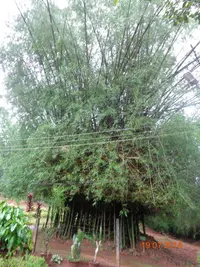
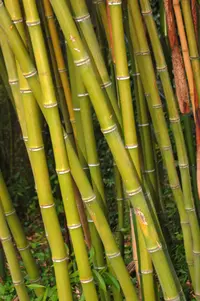
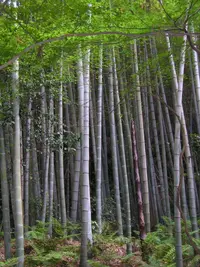
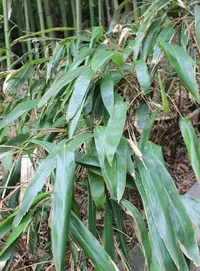
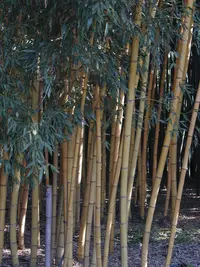
Indian thorny bamboo, Bambusa bambos, is a large, clump-forming bamboo known for its dense thickets and sharp spines on the lower branches. It is a woody grass, not a tree, and can form tall, impressive screens in suitable climates.
This species is native to the Indian subcontinent and parts of Southeast Asia, where it grows in tropical and subtropical regions. Thick culms and strong side branches make it useful as a structural and screening plant.
The plant is vigorous and fast-growing, which can be an advantage but also requires space and some control. It prefers warm conditions, bright light, and evenly moist but well-drained soil, which guides how to care for Indian Thorny Bamboo in gardens or larger outdoor spaces.

Care Difficulty
Moderate Care

Light Preference
Full Sun

Water Requirements
Regular Water

Temperature Preference
Tropical / Frost Sensitive

Hardiness Zone
10–11

Soil Texture
Sandy, Loamy, Organic-rich

Soil pH
Acidic (5.5–6.5), Slightly acidic (6.5–7.0)

Soil Drainage
Moist but well-drained

Fertilization
Minimal (feed rarely)
Scan your plant to receive care tips personalized for your specific plant
Available on iOS and Android
This large tropical bamboo thrives in strong light but benefits from some protection during the hottest hours.
This species prefers consistently moist, not soggy, soil to support rapid clump and shoot growth.
This tropical bamboo grows best in warm, frost-free conditions with moderate seasonal variation.
This bamboo prefers moderate to high humidity but tolerates short dry spells if roots are well watered.
This species performs best in deep, moist, well-aerated soil that drains freely yet holds consistent moisture.
This bamboo can be grown in large containers but demands careful management of root space and stability.
Bambusa bambos grows vigorously and benefits from moderate, consistent nutrition in active growth.
Pruning helps manage the size, density, and health of Bambusa bambos clumps.
Large Bambusa bambos plants are usually transplanted outdoors rather than repotted long-term in containers.
Propagation of Bambusa bambos is mainly done by division of established clumps rather than seed.
In warm climates Bambusa bambos needs little winter care, but it is sensitive to hard frost.

Plant Health Check
Not sure what's wrong with your plant? Check your plant's health inside the app.
This species forms dense clumps rather than running underground, with each clump capable of producing very tall, thick-walled culms that are widely used as a structural material in tropical and subtropical regions.
Its culms develop a tough, thick outer wall and a comparatively narrow hollow center, which gives them high mechanical strength and makes them suitable for scaffolding, poles, and heavy-duty construction uses.
In parts of South and Southeast Asia, this bamboo is planted on slopes and along riverbanks because its extensive fibrous root system helps bind soil and reduce erosion in monsoon climates.

The flowering of Bambusa bambos is gregarious and highly infrequent, meaning that many plants across wide areas can flower and set seed at roughly the same time after decades of vegetative growth, which can dramatically change local bamboo availability and habitat structure for some wildlife species.
This species is very fast-growing under warm, moist, fertile conditions. New culms can reach 6–15 m in 3–5 years, with noticeable height increases each growing season. Growth slows in poor soil, drought, or cool climates.
Keep your plants happy and healthy with plant identification, disease detection, and easy care guidance.