cyclanthera Care (Cyclanthera pedata)

Also known as: Slipper gourd
cyclanthera

About cyclanthera

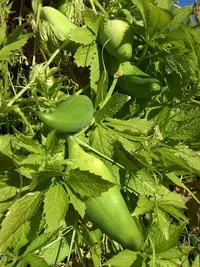
Cyclanthera pedata, often called achocha or stuffing cucumber, is a fast-growing annual vine in the cucumber family. It produces slender, soft-spined green fruits that are usually cooked or eaten young.

This climbing plant has light, divided leaves and tendrils that help it scramble over supports, giving it a light, airy look on trellises or fences. It is native to the Andes in South America, where it grows in mild, frost-free conditions.

Gardeners value it for its vigorous growth, productivity, and general resistance to common pests, which makes it relatively simple to care for cyclanthera. It prefers sun, regular moisture, and well-drained, reasonably fertile soil.

Main Plant Requirements

Care Difficulty

Moderate Care

Light Preference

Full Sun

Water Requirements

Regular Water

Temperature Preference

Tropical / Frost Sensitive

Hardiness Zone

9–11

Soil Texture

Loamy, Sandy, Organic-rich

Soil pH

Acidic (5.5–6.5), Slightly acidic (6.5–7.0)

Soil Drainage

Moist but well-drained

Fertilization

Moderate (every 2–4 weeks)

Get Personalized Care Plan

Scan your plant to receive care tips personalized for your specific plant

Available on iOS and Android

How to Care for the cyclanthera

This vigorous climbing annual prefers strong, consistent light to flower and fruit well outdoors.

  • Provide 6–8 hours of direct sun daily, ideally with morning sun and light afternoon shade in hot summers to reduce leaf scorch.
  • Tolerates partial shade (4–5 hours sun), but flowering and pod production may drop and vines may stretch more.
  • In short-day seasons or cloudy climates, choose the brightest, least shaded site and avoid dense overhead tree cover that blocks midday light.

This fast-growing vine needs steadily moist but not saturated soil to support rapid shoot and fruit development.

  • Water when the top 3–5 cm of soil feels dry, soaking the root zone deeply so moisture reaches 15–20 cm without leaving standing water.
  • In hot, dry weather, expect more frequent watering and monitor wilting at midday; in cool or rainy periods, extend intervals to prevent soggy soil.
  • Use well-drained, organic-rich ground or beds; yellowing, soft stems suggest overwatering, while dry, curling leaves and stalled growth indicate underwatering in Cyclanthera pedata.

This warm-season vine grows best in stable, frost-free conditions typical of late spring through summer.

  • Aim for 70–85°F (21–29°C) for strong growth and flowering; germination and early growth are slow below 65°F (18°C).
  • Avoid temperatures below 50°F (10°C); light frost kills foliage and repeated chills stunt vines even if they survive.
  • In hot spells above 90°F (32°C), provide soil mulch and some afternoon shade to limit heat stress and flower drop, especially in dry, windy sites.

This species handles typical outdoor humidity but grows best with moderately moist air.

  • Aim for 40–60% humidity to reduce leaf edge browning and support steady vine growth.
  • It tolerates periodic dry air, but extended hot, low-humidity wind can cause curled, papery leaves and flower drop.
  • Increase humidity around cyclanthera with dense companion planting, wind protection, and mulching to keep the root zone cooler.

Cyclanthera pedata prefers loose, well-aerated ground that drains freely yet holds consistent moisture.

  • Use a loamy structure: roughly 40% garden soil, 40% compost, 20% coarse material such as perlite or sharp sand.
  • Aim for slightly acidic to neutral pH, around 6.0–7.0, to keep nutrients available and avoid micronutrient lockout.
  • Incorporate plenty of mature compost or well-rotted manure to boost organic matter and water-holding capacity without creating heaviness.
  • Avoid compacted clay, heavy peat-only mixes, or spots where water lingers for more than 30 minutes after irrigation or rain.

This climbing vegetable is suitable for container growing if given enough volume and support.

  • Choose a sturdy 40–60 L container at least 40 cm deep so the vigorous root system can anchor the tall vine without tipping.
  • Use a heavier material like terracotta or thick plastic to stabilize the pot against wind once the vine loads a trellis or cage.
  • Position the container where it can be tied to a railing or fixed support so the combined weight of foliage and fruit does not pull the pot over.

Light, balanced feeding supports steady growth and fruiting in Cyclanthera pedata.

  • Use a balanced NPK granular or liquid fertilizer, or well-rotted compost, on fertile garden soils.
  • Feed every 3–4 weeks during the main growing season, adjusting frequency down on very rich soils.
  • Apply at half the label strength for liquids, or a light scattering of slow-release around the root zone.
  • Stop feeding in late season and avoid fertilizing during winter or when plants are not actively growing.

Thoughtful pruning keeps Cyclanthera pedata productive and manageable on its support.

  • Prune in late spring or early summer once vines are established and growing strongly.
  • Remove dead, damaged, or diseased stems first, then thin out weak or badly tangled growth.
  • Shorten excessively long shoots to maintain the desired size and improve light and air penetration.
  • Use clean, sharp pruners and make angled cuts just above a healthy bud or side shoot.

Transplanting is more common than repotting because Cyclanthera pedata is usually grown as an annual vine outdoors.

  • Transplant seedlings after frost when they have 2–3 true leaves and roots lightly fill starter cells or small pots.
  • Choose a sunny site with fertile, well-drained soil and install a trellis or other sturdy support before planting.
  • Plant at the same depth as in the container, water thoroughly, and shade lightly for a few days to reduce transplant shock.
  • If grown in containers, move to a 2–5 cm wider pot only when roots circle the drainage holes or growth slows.

Propagation of Cyclanthera pedata is most effective from fresh seed rather than vegetative methods.

  • Sow seeds in late spring after frost outdoors, or 4–6 weeks earlier under cover for an earlier crop.
  • Use a free-draining seed mix, keep temperatures around 70–80°F, and maintain even moisture without waterlogging.
  • Sow seeds 1–2 cm deep, then thin or pot on seedlings once they have 2–3 true leaves.
  • Provide bright light and gentle air movement to produce sturdy young plants ready for planting out.

Cyclanthera pedata is usually grown as a warm-season annual and does not tolerate hard frost.

  • Expect plants to decline and die back with the first frosts in most climates.
  • In mild regions, add 5–8 cm of organic mulch around the root zone to moderate soil temperature.
  • For container-grown plants, move pots indoors before frost and place in the brightest available spot.

Care Tips

Strong vertical support

Install a stable trellis, netting, or wires 1.8–2.4 m high before planting so vines can be guided upward early, which improves airflow, reduces disease, and keeps fruits clean and easy to harvest.

Early tendril training

Once vines reach 20–30 cm, loosely tie young shoots to the support with soft ties or garden clips so tendrils quickly attach in the desired direction and stems do not kink or break in wind.

Fruit load management

If plants set very heavily, remove misshapen or overcrowded young fruits and keep the vine well picked every 2–3 days to maintain steady production and reduce stress on the root system.

Preventing powdery mildew

To limit powdery mildew, avoid overhead watering, thin dense side shoots to open the canopy, and use preventive sulfur or potassium bicarbonate sprays if the variety has a history of mid to late season mildew issues when growing cyclanthera.

Crop rotation planning

Rotate planting sites on a 3–4 year cycle, avoiding locations where other cucurbits grew recently, to lower the risk of soil-borne diseases and pests that can gradually weaken vines.

Common Pests and Diseases

Cucumber beetles

These insects chew leaves, flowers, and young pods and can transmit bacterial wilt in cucurbit relatives, sometimes also feeding on Cyclanthera pedata foliage and fruit. Symptoms include small round holes, skeletonized leaves, and scarring on pods.

Solution

Hand-pick adults in the early morning, use yellow sticky traps near plants, and protect young vines with fine insect netting until flowering. Encourage beneficial predators and, if pressure is high, apply a targeted contact insecticide such as pyrethrin or spinosad in the evening, following label directions and avoiding open flowers to protect pollinators.

Spider mites

These pests thrive in hot, dry weather on the twining vines, causing stippling on leaves, bronzing, and fine webbing between leaf veins and tendrils. Heavy infestations can cause premature leaf drop and reduce flowering and pod set.

Solution

Rinse the foliage thoroughly with a strong but controlled stream of water, including the leaf undersides, and repeat several times per week. Increase humidity around plants where feasible, remove heavily infested leaves, and use insecticidal soap or horticultural oil, applied in the early morning or late afternoon to avoid leaf burn.

Powdery mildew

This disease appears as white, powdery patches on Cyclanthera pedata leaves, especially on older foliage and dense growth. Symptoms include yellowing, leaf distortion, and eventual leaf drop, which can weaken the vine late in the season.

Solution

Improve air circulation by spacing vines properly and training them on a trellis so foliage dries quickly, and avoid overhead watering in the evening. Remove and dispose of heavily infected leaves and, if needed, apply a sulfur or potassium bicarbonate fungicide labeled for cucurbits at the first sign of disease, repeating according to label directions.

Downy mildew

This disease causes pale yellow angular spots on leaves, which later turn brown and dry, with a gray or purple downy growth on the leaf undersides in humid conditions. Symptoms include rapid defoliation of vines in cool, wet weather, reducing flowering and yield when growing cyclanthera outdoors in susceptible regions.

Solution

Water at the soil level rather than over the foliage, and avoid watering in the evening to limit leaf wetness duration. Remove and discard infected leaves promptly, keep vines well spaced on supports, and consider preventive applications of copper-based fungicides during prolonged cool, humid periods if downy mildew is known to occur locally.

Aphids

These insects cluster on tender shoot tips, young leaves, and flower stalks, sucking sap and excreting sticky honeydew that can attract ants and support sooty mold. Symptoms include curling or distorted new growth and reduced vigor of the climbing vines.

Solution

Pinch or wash off colonies with a firm stream of water, focusing on shoot tips and the undersides of leaves, and repeat every few days. Encourage natural predators such as lady beetles, avoid excess nitrogen fertilization that drives soft growth, and use insecticidal soap or neem oil when populations remain high, ensuring thorough coverage of all infested surfaces.

Interesting Facts

Exploding seed mechanism

The fruits develop a strong internal tension and, when fully ripe, can burst open and eject seeds several meters away. This ballistic seed dispersal helps the plant colonize new areas along forest edges and disturbed sites.

Domesticated Andean vegetable

This species has been cultivated for centuries in the Andes as an edible crop, mainly for its tender young fruits that are eaten raw, stuffed, or cooked. It remains a regional food plant in Peru, Bolivia, and surrounding countries, where it is commonly grown in home gardens and small farms.

Hollow, spiny fruit structure

The mature fruits form a hollow, inflated pod with soft, flexible spines on the outside. The thin, crisp fruit wall and cavity inside make it suitable for stuffing and contribute to its use as a specialty vegetable in some traditional cuisines, which is central to many cyclanthera care instructions in agricultural contexts.

Botan icon

Did you know?

In traditional Andean agriculture, this species is often intercropped with maize or other tall plants, using their stalks as a living trellis; this practice reflects a long coevolution of local farming systems with the plant’s natural climbing habit and allows efficient use of vertical space in small mountain fields.

FAQs about cyclanthera

The immature green fruits, young shoots, and tender leaves are edible and commonly used in traditional Andean cuisine. Fruits are usually cooked or pickled, with a flavor similar to cucumber or mild pepper. Avoid eating overmature, tough fruits.

Grow Healthy Plants with Botan Care

Keep your plants happy and healthy with plant identification, disease detection, and easy care guidance.

Botan plant care app — identify plants on mobile

Explore More Plants