Early trellis setup
Install a sturdy trellis, wires, or netting 1.8–2.4 m high before planting so vines can climb immediately, which reduces stem damage and tangling later in the season.

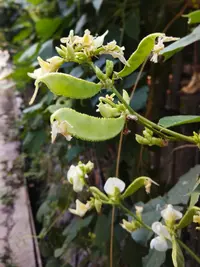
Hyacinthbean, Lablab purpureus, is a fast-growing twining vine grown for its ornamental purple flowers, colorful pods, and lush foliage. It is commonly used on trellises, fences, and arches to create quick vertical cover in warm climates.
This species is native to tropical Africa but is now widely cultivated in Asia and many warm regions worldwide. It is typically grown as an annual in cooler areas, although it is a short-lived perennial in frost-free zones.
The plant is generally vigorous and not difficult to grow if it receives full sun, moderate moisture, and well-drained soil. Understanding how to care for hyacinthbean helps prevent issues with weak growth and poor flowering in less-than-ideal conditions.

Care Difficulty
Moderate Care

Light Preference
Full Sun

Water Requirements
Regular Water

Temperature Preference
Tropical / Frost Sensitive

Hardiness Zone
10–11

Soil Texture
Sandy, Loamy, Organic-rich

Soil pH
Slightly acidic (6.5–7.0), Neutral (7.0)

Soil Drainage
Well-drained

Fertilization
Light (every 4–6 weeks)
Scan your plant to receive care tips personalized for your specific plant
Available on iOS and Android
Lablab purpureus grows best with strong, consistent sun exposure during the warm season.
This vine prefers steady soil moisture but does not tolerate waterlogged conditions.
This warm-season legume thrives in stable, frost-free conditions.
This species grows well in typical outdoor humidity and rarely needs special humidity management.
This climbing legume prefers loose, well-drained soil that still holds moderate moisture.
This species is well suited to container growing provided the pot supports its vigorous, climbing habit.
Lablab purpureus benefits from moderate feeding to support fast vegetative growth and abundant flowering.
Pruning Lablab purpureus focuses on managing vigorous vines and encouraging flowering on healthy growth.
This species is usually grown as an annual climber, so transplanting young plants matters more than long-term repotting.
Lablab purpureus is most commonly propagated by seed, which provides rapid and reliable new plants.
In most climates this vine behaves as a frost-tender annual, so winter care focuses on protection where possible.

Plant Health Check
Not sure what's wrong with your plant? Check your plant's health inside the app.
This species was domesticated in Africa thousands of years ago and later spread to Asia, where it became an important traditional crop for both food and forage.
Its immature pods and seeds are eaten as a vegetable in many cuisines, while the vigorous vines and leaves are widely used as high-protein fodder for livestock in tropical farming systems.
Like other legumes, it forms root nodules with Rhizobium bacteria that convert atmospheric nitrogen into a plant-available form, improving soil fertility when used in crop rotations or as green manure.

In traditional intercropping systems, this climbing bean is often grown with maize or sorghum, where it twines up the cereal stems, suppresses weeds with its dense foliage, and contributes nitrogen to the shared soil, creating a low-input, sustainable production system in many tropical regions.
Seeds and pods are edible only when young and thoroughly cooked, as they contain cyanogenic compounds that can release toxic cyanide. Mature raw seeds are unsafe. Always boil in fresh water and discard the cooking liquid.
Keep your plants happy and healthy with plant identification, disease detection, and easy care guidance.