dropwort Care (Filipendula vulgaris)

About dropwort

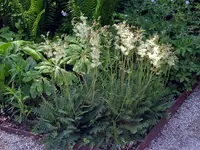
Dropwort (Filipendula vulgaris) is a hardy, clump-forming perennial from meadows and grasslands, especially in Europe and parts of western Asia. It forms low mounds of finely divided, fern-like leaves. In early to mid summer, tall stems carry loose clusters of small, creamy white flowers that give a light, airy look. The plant prefers sunny, open sites and well-drained, often slightly dry, soil. Once established, it tolerates drought better than many moisture-loving relatives. These traits make care for dropwort relatively straightforward in average garden conditions, as long as drainage is good and the site is not heavily shaded.

Main Plant Requirements

Care Difficulty

Easy Care

Light Preference

Full Sun

Water Requirements

Moderate Water

Temperature Preference

Cold Hardy

Hardiness Zone

3–8

Soil Texture

Sandy, Loamy, Organic-rich

Soil pH

Acidic (5.5–6.5), Slightly acidic (6.5–7.0)

Soil Drainage

Well-drained

Fertilization

Minimal (feed rarely)

Get Personalized Care Plan

Scan your plant to receive care tips personalized for your specific plant

Available on iOS and Android

How to Care for the dropwort

This sun-loving meadow perennial performs best with strong but not scorching light.

  • Provide 6–8 hours of direct sun daily; in hotter regions, prioritize morning sun with light afternoon shade to prevent leaf scorch.
  • Plant dropwort in an open site; it tolerates light partial shade (3–4 hours sun) but flowering and vigor decline as shade increases.
  • In summer, avoid reflected heat from walls or paving; in cooler months, ensure plants are not shaded by taller vegetation so they still receive several hours of sun.

This species prefers evenly moist, not saturated, soil during active growth.

  • In the ground, water when the top 3–5 cm of soil feels dry, aiming for thorough soaking that reaches the root zone, then allow excess to drain away.
  • Choose soil with good structure and drainage; heavy clay benefits from organic matter to reduce waterlogging, which causes root rot and yellowing leaves.
  • During cool or rainy seasons, reduce irrigation and watch for pale, soft growth from overwatering; in hot dry spells, leaves may droop slightly, signaling the need for deeper watering.

This hardy perennial tolerates a wide temperature range once established outdoors.

  • Optimal growth occurs around 60–75°F (16–24°C), with strong vegetative growth and flowering in mild spring and early summer conditions.
  • Mature plants survive winter cold down to about -20°F (-29°C) when crowns are in well-drained soil; frost is generally tolerated during dormancy.
  • In hot summers above 85°F (29°C), flowering may shorten and foliage can stress; provide mulch to moderate soil temperature and retain moisture through heatwaves.

This species prefers moderately moist air but usually adapts to typical outdoor humidity in temperate climates.

  • Target ambient humidity around 40–60% to support steady foliage and flower development.
  • Tolerates brief drier air, but prolonged hot, very dry wind can cause browning leaf edges and quicker wilting in dropwort.
  • Increase humidity locally by using mulch over the root zone and grouping plants near other perennials to reduce moisture loss.

Filipendula vulgaris needs moisture-retentive yet well-drained soil to prevent root stress and crown rot.

  • Use a loamy or sandy loam soil with high organic matter, such as a mix of garden loam, compost, and coarse sand in roughly equal parts.
  • Ensure drainage is free but not rapid; soil should stay evenly moist after watering without forming puddles or remaining waterlogged.
  • Aim for slightly acidic to neutral pH, roughly 6.0–7.0, as strongly alkaline soils can reduce nutrient availability and weaken growth.
  • Improve aeration and structure by incorporating coarse sand or fine gravel into heavy clay, and avoid low-lying sites where water stands.

This species can be grown in containers outdoors, though it performs best when provided with a deep, stable pot.

  • Select a container at least 30–35 cm deep to accommodate the fibrous root system and maintain more even moisture between waterings.
  • Choose a heavy, frost-resistant pot material like ceramic or stone to stabilize tall flowering stems in wind-exposed positions.
  • Use a potting mix that combines moisture retention and drainage, then elevate the container slightly on feet or bricks to keep drainage holes clear.

Filipendula vulgaris is adapted to low-nutrient soils and usually needs only light feeding in garden settings.

  • Apply a thin layer of garden compost or well-rotted manure in early spring to support flowering.
  • On poor soils, use a balanced slow-release fertilizer (around 10-10-10) once in spring at label rate or slightly weaker.
  • Avoid frequent feeding; excessive nutrients encourage lush foliage over flowers and may weaken stems.
  • Stop fertilizing by late summer and do not feed in winter dormancy.

Filipendula vulgaris benefits from light, well-timed pruning to maintain a tidy clump and strong flowering.

  • Cut back spent flower stems to the base after blooming to encourage a neater appearance and sometimes light rebloom.
  • Remove dead, damaged, or diseased foliage whenever noticed using clean, sharp hand pruners or snips.
  • In late autumn or very early spring, shear down old, brown growth to just above ground level to make way for new shoots.
  • Thin out overcrowded stems in dense clumps to improve air flow and reduce foliar disease risk.

This species is most often grown in the ground; focus on transplanting clumps rather than frequent repotting.

  • Transplant in early spring or early autumn when growth is slower and soil is moist but not waterlogged.
  • Move plants when growth weakens, flowering declines, or clumps become congested, dividing thick root masses as needed.
  • Lift the clump carefully, keep as much soil around the roots as possible, and replant at the same depth in well-drained soil.
  • Water thoroughly after transplanting, then keep evenly moist for several weeks to limit root stress and support re-establishment.

Filipendula vulgaris is commonly propagated by division or seed when expanding a planting.

  • Divide mature clumps in early spring or early autumn, cutting the root mass into sections with several buds each.
  • Replant divisions immediately into moist, well-drained soil, spacing to allow future spread and good air circulation.
  • Sow fresh seed in trays or directly outdoors in autumn; natural cold exposure helps break seed dormancy.
  • Keep seedbeds or pots consistently moist and in bright, indirect light until seedlings establish sturdy root systems.

This hardy perennial usually needs minimal winter care in most temperate gardens.

  • Tolerates typical frost in USDA zones where it is grown; crowns survive normal winter lows under soil cover.
  • After hard frosts, allow top growth to die back, then cut it to ground level to reduce disease carryover.
  • Apply a 5–7 cm layer of organic mulch around, but not on top of, the crowns to buffer freeze–thaw cycles.
  • For containers in colder regions, move pots to a sheltered, unheated area and insulate the root zone with extra mulch.

Care Tips

Divide aging clumps

Lift and divide dense clumps every 3–4 years in early spring or early fall, replanting only the healthiest, fattest root sections to maintain flowering vigor and reduce congestion-related disease.

Provide wind support

In open, windy sites, install discreet ring supports or low twine around the outer stems in late spring before they reach full height, which keeps the airy flower stems upright without looking artificial.

Use gravel mulch

Apply a 2–3 cm layer of fine gravel or grit around the crowns instead of organic mulch to keep the root zone cool and moist while preventing rot around the crown in heavier soils.

Targeted slug protection

Place rough grit, copper tape edging, or shallow beer traps around emerging shoots in early spring, since the young foliage is especially vulnerable to slug and snail damage before stems toughen.

Plan for self-seeding

If growing dropwort in a mixed border, deadhead most spent flower stems but leave a few in less formal areas to set seed, then mark and thin the seedlings the following spring so only well-placed, strong young plants remain.

Common Pests and Diseases

Powdery mildew

This disease often appears in warm, dry conditions with poor air movement. Symptoms include white, powdery patches on leaves and sometimes on stems and flower stalks.

Solution

Remove and discard heavily infected leaves, thin crowded clumps to improve airflow, and avoid overhead watering late in the day. If needed, apply a sulfur or potassium bicarbonate fungicide labeled for ornamentals at the first sign of white patches, repeating as directed during high-risk weather.

Leaf spot

This disease causes small, brown to purple spots that may merge into larger blotches on foliage, especially in humid, wet periods. Symptoms include premature yellowing and drop of lower leaves in dense plantings.

Solution

Cut off and dispose of affected leaves and any fallen debris around the plant, then water at soil level to keep foliage dry. Improve spacing for better air circulation and, in persistent cases, use a copper- or chlorothalonil-based fungicide labeled for ornamental leaf spots early in the season when spots first appear.

Rust

This disease produces orange to brown pustules on the undersides of leaves, with yellowing visible on the upper surface. Symptoms include weakened plants and reduced flowering if infections are repeated over several seasons.

Solution

Remove and destroy infected leaves as soon as pustules are seen and clear away plant debris at the end of the season to reduce overwintering spores. Improve air circulation by dividing and thinning clumps, and in severe, recurring cases, apply a rust-effective fungicide according to label directions during the early stages of infection.

Aphids

These insects cluster on young stems and flower stalks, sucking sap and causing distorted growth. This pest also excretes sticky honeydew that can lead to sooty mold on leaves and stems.

Solution

Spray colonies off with a strong stream of water and pinch out heavily infested soft tips if practical. For ongoing issues, use insecticidal soap or a light horticultural oil, coating the undersides of leaves and stems and repeating every 5–7 days until populations decline, while encouraging natural predators like lady beetles by avoiding broad-spectrum insecticides.

Sawfly larvae

These insects feed on foliage, creating skeletonized or chewed leaves in spring and early summer. This pest can thin the leaf canopy of clumps if populations are high, though mature plants usually survive the damage.

Solution

Inspect plants regularly and handpick or shake larvae into soapy water when damage first appears. If defoliation is significant, use a targeted contact insecticide such as insecticidal soap or pyrethrin, directed to the undersides of leaves where larvae often feed, and repeat as label directions recommend.

Interesting Facts

Root bead formation

The fine, threadlike roots often carry small, bead-like tubers that form natural chains in the soil, a trait that gave rise to the genus name Filipendula, meaning thread-hanging in Latin.

Calcareous grassland specialist

This species is strongly associated with dry, calcareous grasslands over chalk and limestone in Europe, where it contributes to species-rich meadow communities that depend on low soil fertility.

Insect-attracting foam flowers

The delicate white flower clusters produce abundant pollen and a light, sweet scent, making them valuable nectar and pollen resources for bees, hoverflies, and small beetles in mid to late summer.

Botan icon

Did you know?

Filipendula vulgaris has been used as a traditional indicator of ancient, long-unploughed grasslands in parts of Europe, so its presence can help botanists identify sites with a long history of extensive, low-intensity land use.

FAQs about dropwort

Lack of flowers usually comes from too much shade, nutrient-poor or very dry soil, or plants that are still immature. Avoid heavy spring fertilizing with high nitrogen and ensure full establishment; this species often blooms best from its second or third year.

Grow Healthy Plants with Botan Care

Keep your plants happy and healthy with plant identification, disease detection, and easy care guidance.

Botan plant care app — identify plants on mobile

Explore More Plants