Aquatic Plant Identification
Identify Aquatic Plants by Photo in Seconds
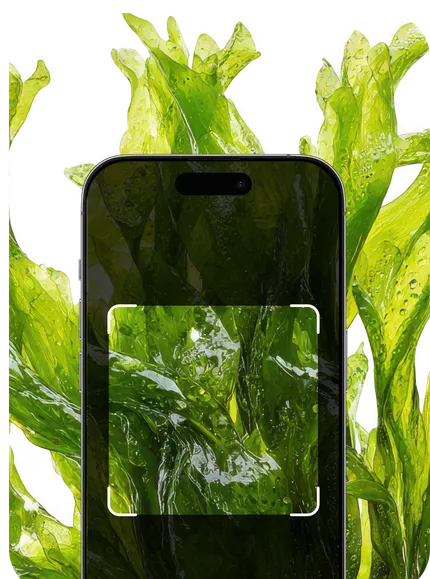
Take a photo, upload it, and the Botan scanner will check it against a database of thousands of species. The entire process takes about 5-10 seconds, so give it a try.


Identify Aquatic Plants by Photo in Seconds
Take a photo, upload it, and the Botan scanner will check it against a database of thousands of species. The entire process takes about 5-10 seconds, so give it a try.


Plant Identifier Online for Free
Use easy-to-see images for the best plant ID results. Try not to take photos from very far away.
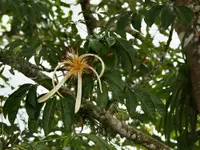 POPULAR
Money Tree
Pachira aquatica
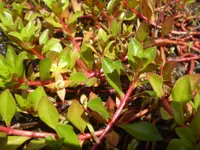 POPULAR
Creeping Primrose-willow
Ludwigia repens
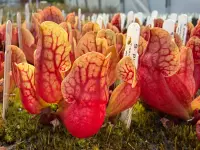 POPULAR
Purple pitcher plant
Sarracenia purpurea
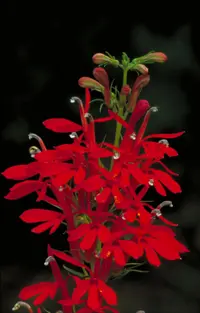 POPULAR
Cardinal flower
Lobelia cardinalis
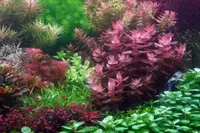 POPULAR
Lemon bacopa
Bacopa caroliniana
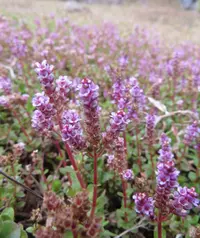 POPULAR
Dwarf rotala
Rotala rotundifolia
 POPULAR
Taro
Colocasia esculenta
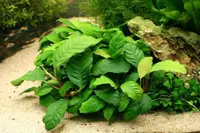 POPULAR
Anubias barteri
Anubias barteri
-1-200x150.webp) POPULAR
POPULARHydrocotyle Japan
Hydrocotyle tripartita
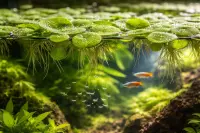
Water spangles
Salvinia minima
 POPULAR
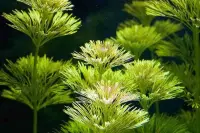
Asian marshweed
Limnophila sessiliflora
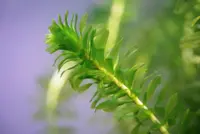
Brazilian waterweed
Elodea densa
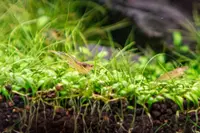
Small Mud-mat
Glossostigma elatinoides
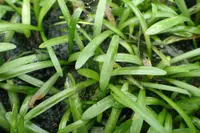
Dwarf Sagittaria
Sagittaria subulata
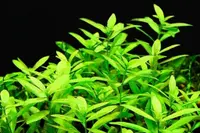
Indian swampweed
Hygrophila polysperma
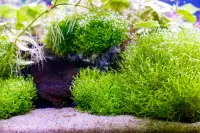
Crystalwort
Riccia fluitans
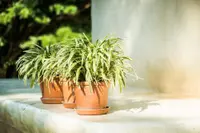
Umbrella Papyrus
Cyperus alternifolius
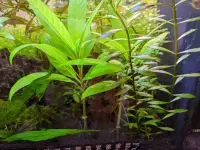
Temple Plant
Hygrophila corymbosa
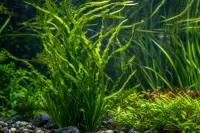
Tape grass
Vallisneria spiralis
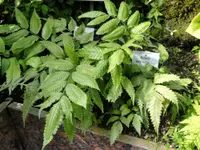
Bolbitis heteroclita
Bolbitis heteroclita
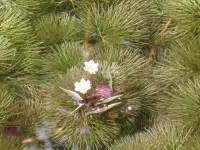
Carolina fanwort
Cabomba caroliniana
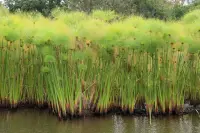
Paper Reed
Cyperus papyrus
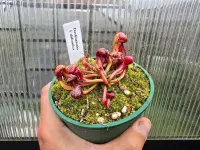
Cobra Lily
Darlingtonia californica
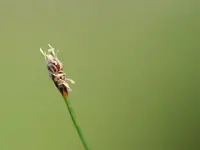
Needle Spikerush
Eleocharis acicularis
Aquatic plants are identified by examining four useful visual cues: growth form, leaf shape, color, and habitat. Learn to read these characteristics, and aquatic plant identification will no longer be a guessing game.
The growth form describes how the plant behaves in the water. Check it first, as it divides species into clear categories:
Growth form alone eliminates half the contenders, so always start the recognition process with it.
In order to identify aquarium plants correctly, you should analyze leaf structure. Several different shapes are found in aquariums:
The combination of a leaf shape and growth characteristics usually allows for determining the species ID with the greatest accuracy.
Color narrows the search and is best used in the aquatic plant identifier to distinguish species with similar leaf shapes. Light, CO2, and nutrient levels affect color, so consider it a supporting characteristic:
You should consider color as a last criterion and compare it with shape, since the same plant can change several shades depending on the environment.
The location itself is a clue in the process of aquarium plant identification. Pond species, such as water lilies, prefer an open surface, standing water, and sunlight. Aquarium species also follow a logical placement: carpets remain in the front of the tank, stem plants fill the back wall, and rhizomatous species, such as anubias, are attached to rocks or driftwood rather than buried in the substrate.
Marsh species, such as peace lilies, are often sold as aquarium plants but rot once they are completely submerged. If it dies in your aquarium, the culprit is usually an inappropriate habitat.
Aquarium plants can sometimes be confusing because leaf shape, growth form, color, and habitat can indicate different species. Below you'll find common mistakes in aquatic plant identification and how to avoid them.
Mistake | Why Does It Cause Wrong ID | What to Do Instead |
Judging by color alone | Light, CO2, and fertilizers quickly change color | Check leaf shape and growth form first |
Photographing a melted or damaged plant | Decomposition obscures the features needed by the detector | Photograph a section with intact leaves |
Ignoring the emersed vs. submerged form | Many species have two types of leaves | Note where it was grown before purchase |
Mixing similar species | Different species may have similar leaf shapes and growth forms | Zoom in on leaf arrangement along the stem |
Neglecting the roots | Root structure distinguishes floating species from rooted stems. | Include the root zone in your photo if possible |
Avoid these five mistakes, and you'll improve your chances for a confident identification.
Yes, Botan can detect aquarium plants directly through glass. Clean the glass, take a photo straight on to reduce glare, and the scanner will do the rest.