Control Runner Spread
Trim or remove extra runners with clean scissors during regular tank maintenance to prevent dense thickets that block flow and light for other plants.

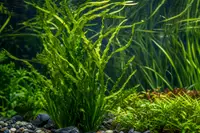
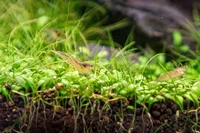
Tape grass, Vallisneria spiralis, is an aquatic perennial commonly used in freshwater aquariums and ponds. It forms dense underwater meadows of long, ribbon-like leaves. Leaves are usually bright to medium green, growing in rosettes from the base and spreading by runners, so it can quickly form a living background or ground cover. In nature, it occurs in slow-moving rivers, lakes, and canals across Europe, Asia, and parts of Africa. This species is considered easy to maintain, as it adapts to a wide range of water conditions and light levels. Those who want to learn how to care for Tape grass usually focus on stable water quality and moderate light rather than complex routines.

Care Difficulty
Easy Care

Light Preference
Partial Sun

Water Requirements
Aquatic

Temperature Preference
Warm Climate

Hardiness Zone
8–11

Soil Texture
Sandy, Loamy, Organic-rich

Soil pH
Slightly acidic (6.5–7.0), Neutral (7.0)

Soil Drainage
Waterlogged tolerant

Fertilization
Light (every 4–6 weeks)
Scan your plant to receive care tips personalized for your specific plant
Available on iOS and Android
This submerged aquatic plant depends on consistent, moderate light rather than intense, direct sun.
This species lives fully submerged and relies on stable, clean water rather than soil moisture management.
This aquatic plant prefers stable, mild water temperatures without sudden swings.
Humidity is not a care factor for Vallisneria spiralis because it lives fully submerged in water.
Vallisneria spiralis grows rooted in aquarium substrate rather than terrestrial soil.
This species is well suited to container growing in aquariums and tubs.
Vallisneria spiralis benefits from modest, water-safe fertilization in active growth, especially in planted aquariums.
Pruning Vallisneria spiralis focuses on removing tired foliage to maintain plant health and water clarity.
This species spreads as a rooted aquatic plant, so transplanting focuses on managing runners rather than classic repotting.
Vallisneria spiralis is commonly propagated by vegetative runners rather than by seed in home aquariums.
In indoor heated aquariums, Vallisneria spiralis needs minimal winter-specific care.

Plant Health Check
Not sure what’s wrong with your plant? Check your plant’s health inside the app.
This species forms long, narrow, ribbon-like leaves that can exceed 1–2 m in length under ideal conditions, creating dense submerged meadows in slow-moving freshwater.
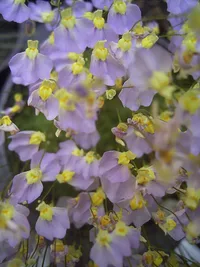
Male flowers detach from the plant and float to the surface, where they contact female flowers held at the water surface, a specialized form of hydrophily that relies on water movement.
After pollination, the female flower stalk coils like a spring and pulls the developing fruit back underwater, protecting seeds as they mature below the surface.

Vallisneria spiralis is one of the classic model plants used in early aquatic plant physiology studies, helping researchers understand underwater photosynthesis and carbon dioxide use in submerged leaves.
Browning leaves often result from low CO2, nutrient deficiencies (especially potassium), or sharp changes in water hardness or temperature. Check water parameters, improve circulation, and remove heavily damaged leaves to encourage new, healthy growth.
Keep your plants happy and healthy with plant identification, disease detection, and easy care guidance.