Shallow container choice
Use a wide, shallow pot or tray with drainage holes so the fine roots can spread in a thin, constantly moist layer rather than deep, compacted soil.

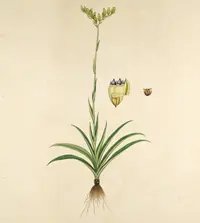
Burmannia disticha is a small, delicate, herbaceous plant often found in seasonally wet, open habitats. It typically shows slender, upright flowering stems with small, star-like blooms.
This species naturally occurs in parts of tropical Asia and northern Australia, usually in moist grasslands, wetlands, or damp sandy soils. It often grows in nutrient-poor substrates and may associate with soil fungi, which can make cultivation more challenging.
To care for Burmannia disticha, it helps to provide constantly moist conditions, bright but gentle light, and a low-nutrient, well-drained medium that mimics its natural habitat.

Care Difficulty
Hard Care

Light Preference
Partial Shade

Water Requirements
Aquatic

Temperature Preference
Tropical / Frost Sensitive

Hardiness Zone
10–11

Soil Texture
Sandy, Loamy, Organic-rich

Soil pH
Acidic (5.5–6.5)

Soil Drainage
Waterlogged tolerant

Fertilization
Minimal (feed rarely)
Scan your plant to receive care tips personalized for your specific plant
Available on iOS and Android
This wetland species prefers gentle, consistent light rather than intense direct sun.
This plant is adapted to saturated, low-nutrient habitats and does not tolerate drying out.
This tropical–subtropical species grows best in warm, frost-free conditions with modest temperature swings.
This semi-aquatic species needs constantly very high humidity to stay healthy.
This wetland plant prefers saturated, organic, acidic substrate rather than conventional potting soil.
This species can be grown in containers if they are managed as shallow, water-holding basins.
This nutrient-sensitive wetland species is usually not given additional fertilizer when grown in soil that mimics its natural, low-nutrient habitat.
Burmannia disticha needs minimal pruning, mainly to keep plants tidy and reduce disease risk in cultivation.
In containers or controlled wet beds, this shallow-rooted species resents disturbance, so any transplanting must be very gentle.
Propagation of Burmannia disticha is specialized and usually performed from seed under controlled, very moist conditions.
This tropical to subtropical species is not frost hardy and needs warm, frost-free conditions in winter.

Plant Health Check
Not sure what's wrong with your plant? Check your plant's health inside the app.
Burmannia disticha is considered partly mycoheterotrophic, meaning it relies in part on fungi in the soil to obtain nutrients rather than depending only on photosynthesis. Its reduced, pale foliage reflects this nutrient strategy in the nutrient-poor wet habitats where it grows.
This species typically grows in open, wet, nutrient-poor sites such as bogs, wet sandy flats, and margins of peat swamps across tropical Asia to northern Australia. It is usually small and inconspicuous, becoming noticeable mainly when in flower.
The species produces slender spikes of tubular blue to violet flowers with a pale or whitish interior. These flowers are adapted to small insect pollinators that visit the tubes for nectar and pollen.

Burmannia disticha belongs to Burmanniaceae, a family dominated by non-photosynthetic or weakly photosynthetic plants, and its unusual combination of reduced leaves, delicate stems, and fungal nutrient dependence has made it a model taxon in studies of the evolution of mycoheterotrophy in flowering plants.
This species is a short-lived perennial herb. Individual plants may behave almost like annuals in harsh conditions, but in stable, moist habitats, underground parts can persist and re-sprout for several growing seasons before declining.
Keep your plants happy and healthy with plant identification, disease detection, and easy care guidance.