Yellow iris Care (Iris pseudacorus)

Also known as: yellow flag, yellow iris, yellow flag iris, Yellow Flag
Yellow iris

About Yellow iris

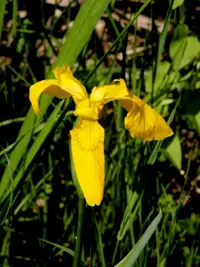
Yellow iris, Iris pseudacorus, is a hardy rhizomatous perennial often found along ponds, streams, and wetlands. It forms dense clumps of upright, sword-like leaves with bright yellow flowers in late spring to early summer.

In the wild, it is native to Europe, western Asia, and North Africa but has naturalized in many temperate regions. It spreads readily in moist or shallow water conditions, which makes it vigorous but sometimes invasive.

The plant prefers full sun to partial shade and consistently damp or boggy soil. Its toughness and strong growth habit can make it easy to establish, but gardeners should learn how to care for Yellow iris responsibly to prevent unwanted spreading.

Main Plant Requirements

Care Difficulty

Easy Care

Light Preference

Full Sun

Water Requirements

Aquatic

Temperature Preference

Cold Hardy

Hardiness Zone

4–9

Soil Texture

Loamy, Clay, Organic-rich

Soil pH

Slightly acidic (6.5–7.0), Neutral (7.0)

Soil Drainage

Waterlogged tolerant

Fertilization

Minimal (feed rarely)

Get Personalized Care Plan

Scan your plant to receive care tips personalized for your specific plant

Available on iOS and Android

How to Care for the Yellow iris

This wetland perennial prefers full sun but tolerates some shade, especially in hot regions.

  • Provide 6–8 hours of direct sun daily for strongest flowering and sturdy foliage, with at least morning sun exposure.
  • Allow light afternoon shade in climates with very hot summers to reduce leaf scorch and drying of shallow pond or bog margins.
  • In partial shade of 3–5 hours sun, Yellow iris will survive but bloom less; avoid deep shade, which leads to weak, leaning growth.

This species is adapted to consistently wet conditions and even shallow standing water.

  • In ponds or bogs, allow water to cover the rhizomes by 0–10 cm or keep soil saturated; never let the root zone dry out completely.
  • In garden soil, keep the top 0–2 cm from fully drying; water when surface looks dull and cracked, aiming for evenly moist, not puddled, conditions.
  • Watch for underwatering signs such as limp, browning leaf tips, and for overwatering in poorly drained beds such as foul odor and rhizomes turning mushy.

This hardy iris tolerates a wide temperature range but grows best in cool to warm conditions.

  • Active growth is strongest around 60–75°F (16–24°C), especially in spring and early summer when soil moisture is high.
  • Dormant rhizomes tolerate winter cold down to about 5–10°F (-15 to -12°C) if planted in the ground or submerged in unfrozen water.
  • Summer heat up to 90–95°F (32–35°C) is tolerated if the root zone stays wet; prolonged heat with low water can cause leaf tip scorch and weaker flowering the following year.

This wetland iris prefers very high humidity and saturated conditions rather than typical indoor air levels.

  • Target 70–100% humidity around roots and foliage, ideally by growing at a pond edge or in a water-filled container.
  • It tolerates brief lower humidity but sustained dry air with dry soil causes leaf tip browning and loss of vigor in Yellow iris.
  • Signs of humidity stress include rolled or flaccid leaves, crispy margins, and stalled growth even when light and nutrients are adequate.
  • Increase humidity by standing the pot in a shallow, constantly topped-up water tray or aquatic planter, not by misting foliage.

Iris pseudacorus thrives in saturated, organic-rich, heavy soils that hold water yet still allow some root oxygen.

  • Use a dense mix of 60–80% clay or loam topsoil with 20–40% compost to create a water-retentive, cohesive substrate.
  • Soil should stay submerged or at least waterlogged; avoid fast-draining sandy mixes that dry out and stress rhizomes.
  • A slightly acidic to neutral pH of about 6.0–7.5 supports nutrient uptake without causing micronutrient lockout.
  • To reduce floating soil in aquatic containers, top the mix with a 2–3 cm layer of washed gravel while keeping structure compact, not fluffy.

This species can be grown in containers, especially as a marginal aquatic plant in ponds or large water troughs.

  • Choose a wide, squat container so heavy waterlogged soil and tall flower stems do not topple the plant in wind.
  • Use a solid-sided pot without side slits to prevent soil loss when the container is submerged or semi-submerged.
  • Place the container where water depth remains stable, ensuring the rhizomes are just below the waterline rather than deeply submerged.

Iris pseudacorus grows vigorously and usually needs only light feeding, especially in nutrient-rich or wet soils.

  • Use a balanced, slow-release fertilizer or thin layer of compost in early spring as new growth starts.
  • Apply at low strength, about 1/2 label rate, to avoid overly lush foliage and weak stems.
  • Feed once more in midseason only if growth is pale or flowering is reduced, then stop by late summer.
  • Avoid fertilizing Yellow iris during winter dormancy, as inactive roots cannot use added nutrients.

Pruning Iris pseudacorus is mainly about removing old growth to maintain vigor and tidy clumps.

  • In late fall or very early spring, cut back dead or damaged leaves to 5–10 cm above the crown using clean pruners.
  • Snip off spent flower stalks at the base after blooming to reduce unwanted seeding and focus energy on rhizomes.
  • Thin crowded or congested fans every few years to improve airflow and reduce disease risk.
  • Disinfect tools before and after use to limit spread of fungal or bacterial problems.

Transplanting Iris pseudacorus focuses on managing vigorous rhizomes and preventing overcrowding in ponds or beds.

  • Plan to divide and transplant every 3–5 years, or when growth slows and clumps become dense or rootbound in containers.
  • Choose late summer to early fall, after flowering, so roots can reestablish before winter.
  • Lift clumps gently, wash off soil, then cut rhizomes into firm sections, each with several healthy fans and roots.
  • Replant divisions at the same depth, water well, and shade lightly for a week to reduce transplant stress.

Iris pseudacorus is commonly propagated by division, with seed used mainly for naturalizing or breeding.

  • Divide rhizomes in late summer to early fall, when flowering is finished and growth is slowing.
  • Lift clumps, trim foliage to 10–15 cm, and cut rhizomes into firm, disease-free sections with active buds.
  • Replant divisions into moist, fertile soil or shallow water, spacing pieces to allow future expansion.
  • For seeds, sow fresh in containers of wet soil outdoors to allow natural cold exposure that improves germination.

Iris pseudacorus is cold hardy in most temperate climates and usually needs minimal winter care.

  • In garden beds, leave rhizomes in place; they tolerate freezing and typical winter conditions.
  • Cut back browned foliage in late fall or early spring rather than midwinter to avoid exposing crowns too early.
  • In very cold or exposed sites, apply a light mulch over the root zone after the ground cools, then remove in spring.
  • Move container-grown plants into an unheated but frost-free space or sink pots into the ground to insulate roots.

Care Tips

Containment management

In garden ponds or wet soil, plant in heavy-duty aquatic baskets or set rhizomes inside buried bottomless containers to limit spread and make division and removal of offsets much easier.

Rhizome monitoring

Inspect rhizomes each spring and late summer, cutting out any soft, dark, or foul-smelling sections with a clean knife and replanting only firm, light-colored pieces to reduce rot problems.

Seed pod control

Remove spent flower stalks before seed pods fully develop if you want to prevent self-seeding and reduce the risk of this species becoming invasive along natural waterways.

Bank stabilization use

On artificial or managed shorelines, plant clumps at intervals along pond or ditch edges to help bind soil and reduce erosion, but avoid using it near natural wetlands where it can outcompete native species.

Safe handling practice

Wear gloves when dividing or removing plants, avoid touching your face, and wash hands afterward, since sap and rhizomes can irritate skin for some people when growing Yellow iris.

Common Pests and Diseases

Iris borer

This pest is the larva of a moth that tunnels into rhizomes and leaf bases, causing foliage streaking, wilting, and rotting of clumps.

Solution

Cut and destroy any leaves with reddish or water-soaked streaks in spring, remove and discard mushy or tunneled rhizomes, keep old foliage and plant debris cleaned up in fall, and use a targeted caterpillar control product on emerging foliage if borers are a recurring problem in your area.

Soft rot

This disease is a bacterial infection that causes rhizomes to become soft, foul-smelling, and water-soaked, often starting where damage or standing water occurs.

Solution

Dig up affected rhizomes, cut away and discard all soft tissue, allow healthy pieces to dry for 1–2 days, then replant in shallow, well-drained soil with good water movement; avoid overcrowding, remove dead foliage, and prevent fertilizer or mechanical damage to rhizomes.

Leaf spot

This disease, usually fungal, leads to brown or tan spots with darker margins on leaves, which may merge and cause premature dieback of foliage.

Solution

Remove and discard spotted or heavily damaged leaves, thin crowded clumps to improve air circulation, avoid overhead watering, and if needed apply a labeled ornamental fungicide early in the season when new foliage appears, following all product directions carefully.

Aphids

These insects cluster on young shoots and flower stalks, sucking sap and causing distortion, sticky honeydew, and sometimes sooty mold on leaves and buds.

Solution

Spray colonies off with a firm stream of water, encourage or introduce natural predators like lady beetles, and if populations remain high use insecticidal soap or a horticultural oil, ensuring thorough coverage of leaf undersides and new growth.

Slugs and snails

These pests chew irregular holes in leaves and young shoots, especially in damp, dense plantings, and may disfigure new fans as they emerge.

Solution

Hand-pick at night or in the early morning, reduce hiding spots by removing dense debris, use barriers such as copper tape around small plantings, and place iron phosphate slug baits around but not directly on rhizomes according to label instructions.

Interesting Facts

Semi-aquatic specialist

This species naturally grows along pond edges, ditches, and slow streams, with rhizomes adapted to tolerate both standing water and periodically dry soil. It can form dense stands in shallow water that displace other wetland plants.

Seed raft dispersal

The seeds have internal air spaces that make them buoyant, allowing them to float and spread long distances by water. This adaptation helps the plant colonize new wetlands and shorelines downstream.

Toxic plant tissues

All parts of this iris contain bitter compounds that can irritate the digestive system of humans and livestock if eaten. The sap may also cause mild skin irritation in sensitive individuals after prolonged contact.

Botan icon

Did you know?

In several regions outside its native range, especially in North America, this species is listed as a noxious or invasive weed because it escapes cultivation, clogs waterways and irrigation channels, and alters wetland habitats used by native wildlife.

FAQs about Yellow iris

This species spreads quickly through rhizomes and abundant seeds, especially in wet soils and along shorelines. In many regions it is considered invasive and can outcompete native wetland plants if not carefully contained and regularly thinned.

Grow Healthy Plants with Botan Care

Keep your plants happy and healthy with plant identification, disease detection, and easy care guidance.

Botan plant care app — identify plants on mobile

Explore More Plants