Avicennia schaueriana Care

Avicennia schaueriana

About Avicennia schaueriana

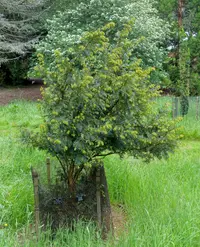
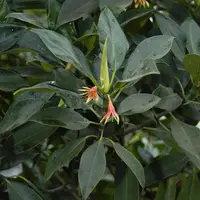
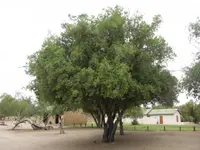
Avicennia schaueriana is a mangrove tree native to tropical and subtropical Atlantic coasts of South America, especially estuaries and tidal flats. It forms dense coastal stands that stabilize shorelines and provide habitat for fish, birds, and invertebrates.

The tree usually has a multi-stemmed, shrubby to medium-tree habit with thick, salt-tolerant leaves and visible aerial roots that help it cope with waterlogged, low-oxygen soils. It is adapted to full sun, brackish water, and muddy, periodically flooded substrates, which makes it unsuitable for typical indoor or garden settings.

Understanding its need for saline, tidal conditions is essential to know how to care for Avicennia schaueriana in specialized coastal restoration or large outdoor water-edge projects.

Main Plant Requirements

Care Difficulty

Hard Care

Light Preference

Full Sun

Water Requirements

Aquatic

Temperature Preference

Tropical / Frost Sensitive

Hardiness Zone

11–13

Soil Texture

Sandy, Silty, Organic-rich

Soil pH

Neutral (7.0), Slightly alkaline (7.0–7.5)

Soil Drainage

Waterlogged tolerant

Fertilization

Minimal (feed rarely)

Get Personalized Care Plan

Scan your plant to receive care tips personalized for your specific plant

Available on iOS and Android

How to Care for the Avicennia schaueriana

This coastal mangrove thrives in strong light but benefits from protection during the harshest afternoon sun on exposed sites.

  • Provide 6–8 hours of direct sun daily, ideally with morning sun and light afternoon shade in very hot, inland locations.
  • Tolerates partial shade (3–4 hours direct sun) but growth becomes more open and flowering may reduce if light stays low.
  • In open, salt-exposed coasts Avicennia schaueriana handles full sun, but young plants can scorch; use temporary shade cloth in the first growing season.

This mangrove is adapted to tidal saturation and highly saline conditions, so soil moisture and drainage management are critical in cultivation.

  • In non-tidal settings, keep soil consistently moist; do not let the top 2–3 cm fully dry, especially during active growth in warm months.
  • Use coarse, fast-draining, sandy or loamy substrate that holds moisture but never stays stagnant; standing, foul-smelling water signals poor aeration.
  • Wilting, crispy leaf margins, and slowed growth indicate underwatering, while yellowing leaves, soft stems, and sulfurous odors suggest chronic overwatering and root stress.

This species is a true tropical to subtropical mangrove, functioning best in warm, frost-free conditions year-round.

  • Aim for 77–93°F (25–34°C) for fastest growth; growth slows noticeably below about 68°F (20°C).
  • Short exposures down to about 41–45°F (5–7°C) may be tolerated, but frost or freezes below 32°F (0°C) can cause severe leaf and stem damage or death.
  • In hot periods above 100°F (38°C), ensure ample soil moisture and, inland, some afternoon shade to limit heat and salt stress on foliage.

This coastal mangrove tolerates wide humidity ranges but grows best in consistently humid air.

  • Aim for 60–80% humidity, similar to coastal conditions, especially for young plants in containers.
  • Dry air can slow growth; leaf edges may brown or curl when humidity stays below 40%.
  • Increase humidity by grouping plants, using a nearby water tray, or placing the container outdoors in sheltered, moist microclimates when temperatures allow.

Soil for this mangrove must stay wet and oxygen-poor, mimicking tidal mud.

  • Use a heavy, fine-textured mix dominated by clay or silt with 20–30% organic matter such as composted leaf mold.
  • Maintain constant saturation with slow-draining conditions; the root zone should never dry out between waterings.
  • A slightly acidic to neutral pH around 6.5–7.2 suits Avicennia schaueriana, avoiding highly alkaline substrates.
  • For container culture, line the pot base with a shallow water reservoir and limit coarse materials like perlite or bark that increase drainage too much.

This species can be grown in containers for specialized projects, but the setup must support a permanently saturated root zone.

  • Choose a deep, heavy pot that will not tip when the plant develops a spreading crown and waterlogged substrate.
  • Use an outer, water-tight basin to hold standing water around the inner pot, creating a mini-tidal or swamp-like environment.
  • Select a non-porous container material such as plastic or glazed ceramic to slow evaporation and keep the soil continuously saturated.

In most natural or coastal plantings, Avicennia schaueriana needs little added fertilizer once established.

  • For young or container plants, use a balanced slow-release fertilizer (around 10-10-10) at half strength at the start of the warm growing season.
  • Apply a light top-dressing of compost around the root zone instead of heavy synthetic feeding in sensitive coastal soils.
  • Feed at most 1–2 times during active growth, then stop in cooler months when growth slows.
  • Always water well before and after feeding to reduce salt and nutrient burn in the roots.

Pruning Avicennia schaueriana focuses on safety, structure, and removing weak growth rather than frequent shaping.

  • Carry out main pruning at the end of the cool, dry season before vigorous new growth begins.
  • Remove dead, damaged, rubbing, or crossing branches with clean, sharp loppers or a pruning saw.
  • Thin overly crowded inner branches to improve airflow and light penetration through the canopy.
  • Limit heavy structural cuts to young wood to guide trunk form and stable branching in exposed, windy sites.

This coastal mangrove is usually grown in the ground, so management focuses on careful transplanting of young plants.

  • Transplant when plants are small and root systems are still compact, ideally during warm, moist weather with mild temperatures.
  • Look for roots circling a nursery container or slowed top growth as signs that a move into the ground or a larger pot is needed.
  • Prepare a site with consistently moist, saline-tolerant soil and plant at the same depth, gently loosening circling roots without tearing.
  • Water deeply before and after transplanting, shade for 1–2 weeks if possible, and avoid strong wind exposure while roots re-establish.

Propagation of this mangrove is possible from seeds and nursery-cut material but is usually handled by specialist growers.

  • Use fresh, mature seeds or propagules collected from healthy parent trees at the natural fruiting season.
  • Sow into shallow trays or pots of saturated, sandy to silty substrate with brackish water, keeping temperatures warm (around 75–86°F).
  • Maintain constant moisture, gentle water movement if possible, and bright light to encourage strong seedling development.
  • For advanced growers, semi-hardwood cuttings can be rooted under high humidity and bottom warmth, but success is variable.

This tropical mangrove is not frost hardy and needs protection in regions with cool winters.

  • Avoid planting outdoors where temperatures drop near or below 32°F; choose frost-free coastal locations only.
  • In marginal climates, grow Avicennia schaueriana in large containers that can be moved into a bright, sheltered, above-50°F space for winter.
  • Keep the root zone damp but not stagnant in winter, reducing watering slightly as growth slows while never allowing complete drying.

Care Tips

Salinity Management

Maintain brackish to saline conditions by mixing marine salt into irrigation water and gradually adjusting salinity so roots adapt without shock, especially if plants are started in nursery substrate.

Tidal Irrigation Mimic

If grown in containers or controlled beds, partially flood the root zone with saline water for a few hours and then drain it to imitate tidal cycles that improve oxygenation and root health.

Pneumatophore Protection

Mark and protect the area around aerial roots (pneumatophores) from trampling and soil compaction, and avoid mulching over them so they can exchange gases effectively.

Wind-Shaping Support

In very windy coastal sites, use low, flexible staking and windbreaks for young plants, then gradually remove supports so trunks develop the sturdy, leaning habit typical of mature mangroves.

Sediment Monitoring

Regularly check for accumulating silt or debris around the base and gently clear it so lower stems and pneumatophores are not buried, which can reduce gas exchange and stress the plant when growing Avicennia schaueriana.

Common Pests and Diseases

Leaf spot

This disease causes irregular brown to black lesions on leaves that may coalesce and lead to premature leaf drop, especially on seedlings and young trees in mangrove nurseries.

Solution

Remove and discard heavily spotted leaves, reduce overhead watering in nursery settings, and improve spacing for better airflow; if needed, apply a copper-based fungicide labeled for woody seedlings, especially during warm, humid periods as part of Avicennia schaueriana care instructions.

Shoot dieback

This disease leads to blackening and death of young shoots and twig tips, often following mechanical damage or salt and flooding stress.

Solution

Prune out affected twigs back to healthy wood and dispose of the material, then maintain stable moisture and avoid additional mechanical injury; in nurseries or plantations, disinfect pruning tools and monitor stressed plants closely for recurring symptoms.

Scale insects

These insects appear as small, fixed bumps on stems and leaf midribs, sucking sap and causing yellowing, stunting, and sooty mold from their honeydew in sheltered estuary or nursery conditions.

Solution

Wipe or gently scrub infested stems with a soft brush and mild soapy water, encourage natural predators where possible, and in nursery or landscape settings use a targeted horticultural oil spray, ensuring thorough coverage of stems and leaf undersides.

Wood-boring beetles

This pest group tunnels into branches and trunks, leaving small exit holes, frass, and localized branch dieback in stressed or wounded trees.

Solution

Prune and remove heavily infested branches, avoid unnecessary trunk injuries, and keep trees healthy to reduce susceptibility; in managed plantings, monitor for new borer holes and remove affected material promptly to interrupt the life cycle.

Leaf miners

These insects create winding, pale tunnels within leaves, which can reduce photosynthesis and weaken nursery-grown seedlings when infestations are heavy.

Solution

Remove and destroy affected leaves early to reduce larval populations, avoid excessive nitrogen fertilization that promotes soft new growth, and if damage continues, use a systemic insecticide approved for tree seedlings, applied according to local regulations and label directions.

Interesting Facts

Specialized mangrove distribution

This species is naturally restricted to the Atlantic coasts of tropical and subtropical South America, especially along estuaries of Brazil, Uruguay, and parts of northern Argentina, where it often forms nearly pure stands in mangrove belts exposed to strong tidal influence.

Salt-excreting leaves

Leaves possess specialized salt glands that actively excrete excess salt taken up from seawater, forming visible salt crystals on the leaf surface that can be tasted or washed away by rain.

Propagules shaped by currents

Its elongated buoyant propagules (seedlings that germinate while still attached to the parent) are adapted to drift with coastal currents, which helps maintain genetic connectivity among mangrove populations along the South American Atlantic coast.
Botan icon

Did you know?

This species has been used as a climate change indicator in scientific studies because its current and historical distribution along the South American Atlantic coast reflects shifts in sea level, temperature, and ocean circulation over recent decades, making it valuable for tracking the landward or poleward migration of mangrove ecosystems.

FAQs about Avicennia schaueriana

This mangrove is relatively fast-growing under warm, tidal, nutrient-rich conditions, often adding 30–100 cm in height per year. Growth slows in cooler climates, low salinity, or where tidal flushing and sediment supply are limited.

Grow Healthy Plants with Botan Care

Keep your plants happy and healthy with plant identification, disease detection, and easy care guidance.

Botan plant care app — identify plants on mobile

Explore More Plants