


Early Vine Training
Install a sturdy trellis or wires at planting time and gently spiral new shoots around the support every 3–5 days to build a strong, well-shaped framework before stems become woody and brittle.

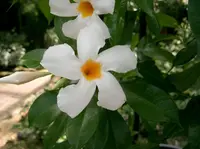
White mandevilla, Mandevilla boliviensis, is a tropical flowering vine valued for its glossy green leaves and clusters of white, trumpet-shaped blooms with soft yellow centers. It grows as a twining climber, often trained on trellises, arches, or containers in warm climates or protected spaces. In nature, it occurs in parts of South America, where it grows in bright, warm conditions with good air movement. This species is moderately easy to grow when its preferences are met, but it resents cold, waterlogged soil, and deep shade. Understanding how to care for white mandevilla starts with providing bright light, regular but not excessive moisture, and a free-draining, fertile substrate.

Care Difficulty
Moderate Care

Light Preference
Full Sun

Water Requirements
Moderate Water

Temperature Preference
Tropical / Frost Sensitive

Hardiness Zone
10–11

Soil Texture
Sandy, Loamy, Organic-rich

Soil pH
Acidic (5.5–6.5), Slightly acidic (6.5–7.0)

Soil Drainage
Moist but well-drained

Fertilization
Moderate (every 2–4 weeks)
Scan your plant to receive care tips personalized for your specific plant
Available on iOS and Android
This tropical vine thrives in bright, warm conditions with several hours of direct sun daily.
This plant prefers evenly moist, well-drained soil that never stays soggy for long periods.
This warm-climate vine grows best in stable, frost-free conditions.
This species prefers moderate to slightly high humidity and reacts if air stays very dry.
This vine prefers loose, well-aerated, sharply draining soil to protect its roots from rot.
This species is well-suited to container growing when the pot supports its climbing, top-heavy habit.
Mandevilla boliviensis responds well to consistent, moderate feeding during the warm growing season.
Mandevilla boliviensis benefits from planned pruning to control size and encourage flowering.
Container-grown Mandevilla boliviensis needs periodic repotting to maintain vigorous growth and flowering.
New Mandevilla boliviensis plants are most often produced from stem cuttings under warm, humid conditions.
Mandevilla boliviensis is frost-tender and needs protection in regions with freezing winters.

Plant Health Check
Not sure what's wrong with your plant? Check your plant's health inside the app.
This species produces elongated white trumpet-shaped flowers with a yellow throat that open mainly in warm conditions and tend to close or pause flowering when temperatures drop, reflecting its adaptation to subtropical climates.
Unlike many vigorous Mandevilla hybrids, this species often has a more compact, semi-woody, shrub-like framework with twining shoots, which allows it to be maintained more easily in containers and small spaces.
The leaves are relatively narrow, thick, and glossy compared with many other ornamental vines, an adaptation that helps reduce water loss and tolerate strong sun in its native habitats and in cultivation.
Poor flowering usually comes from insufficient light, low nutrients, or heavy pruning at the wrong time. Use a balanced fertilizer during active growth, avoid cutting off young buds, and provide consistent warmth to support repeat blooming.
Keep your plants happy and healthy with plant identification, disease detection, and easy care guidance.


sweet granadilla
Passiflora ligularis
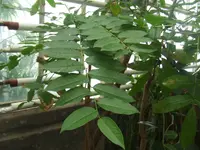
Tahitian gooseberry tree
Phyllanthus acidus
Chinese yam
Dioscorea oppositifolia
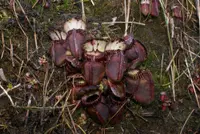
Australian pitcher plant
Cephalotus follicularis
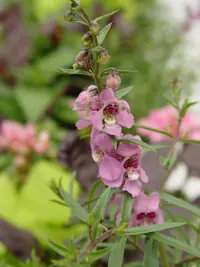
Narrowleaf angelon
Angelonia angustifolia
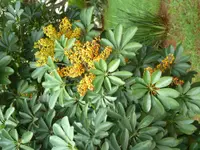
Dwarf umbrella tree
Heptapleurum arboricola
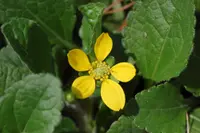
Green and Gold
Chrysogonum virginianum
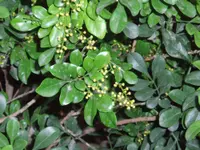
Chinese perfume plant
Aglaia odorata