Besleria solanoides Care

Besleria solanoides

About Besleria solanoides

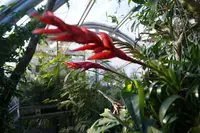
Besleria solanoides is a tropical flowering shrub in the Gesneriaceae family, related to African violets. It typically forms a compact to arching plant with soft green foliage. Tubular orange to red flowers are produced along the stems and attract hummingbirds in its native habitat.

This species occurs in humid forests of Central and South America, often growing in shaded understory conditions. It prefers warm temperatures, high humidity, gentle airflow, and evenly moist but well-drained substrate.

Because it dislikes dry air and irregular watering, it can be more demanding than common houseplants. Understanding how to care for Besleria solanoides helps reduce leaf stress, poor flowering, and root problems.

Main Plant Requirements

Care Difficulty

Hard Care

Light Preference

Partial Shade

Water Requirements

Keep Soil Moist

Temperature Preference

Tropical / Frost Sensitive

Hardiness Zone

11–12

Soil Texture

Loamy, Peaty, Organic-rich

Soil pH

Acidic (5.5–6.5)

Soil Drainage

Moist but well-drained

Fertilization

Light (every 4–6 weeks)

Get Personalized Care Plan

Scan your plant to receive care tips personalized for your specific plant

Available on iOS and Android

How to Care for the Besleria solanoides

This understory shrub prefers soft, filtered light similar to bright forest shade.

  • Provide bright, indirect light or light dappled shade, with 3–4 hours of gentle morning sun and protection from intense midday and afternoon sun.
  • Grow Besleria solanoides under taller plants, shade cloth, or a bright porch where sunlight is filtered through leaves or fabric.
  • Watch leaves for feedback: pale, scorched patches indicate too much direct sun, while long, weak stems and few flowers suggest insufficient light.

This species prefers evenly moist but not waterlogged soil around its roots.

  • Water when the top 2–3 cm of soil feels slightly dry, aiming for consistently damp soil without standing water.
  • Use loose, organic-rich soil with good drainage so excess water can escape, reducing the risk of root rot and sour odors.
  • In cooler seasons or cloudy periods, allow a little more surface drying; in warm, active growth, watch for drooping, crisp edges, or light soil color as cues to water.

This tropical shrub needs warm, stable temperatures to maintain healthy growth and flowering.

  • Aim for 65–80°F (18–27°C) during active growth, avoiding sudden swings that stress foliage and roots.
  • Protect from cold; growth slows below about 60°F (16°C), and tissue damage occurs near 40°F (4°C), so frost exposure should be completely avoided.
  • In hot weather above 85°F (29°C), increase shade and airflow and monitor soil moisture, as heat plus strong sun can cause leaf scorch and rapid wilting.

This species prefers consistently high humidity and reacts quickly to dry indoor air.

  • Aim for 60–80% humidity; growth slows and leaf edges brown below about 50%.
  • Watch for curled, crispy margins or dull, drooping foliage as signs of humidity stress.
  • Increase moisture with a nearby humidifier, grouped plants, and a pebble tray that allows air to circulate under the pot.

This plant needs a loose, well‑aerated, organic-rich substrate that drains quickly but does not dry out instantly.

  • Use a mix of roughly 40% peat or coco coir, 30% fine bark, and 30% perlite to imitate a loose forest floor texture.
  • Ensure rapid drainage; water should flow through within seconds and the pot should never sit in collected runoff.
  • Target slightly acidic conditions around pH 5.5–6.5, which support nutrient uptake and healthy root growth.
  • Avoid dense garden soil, heavy clay, or mixes that stay waterlogged, which encourage root rot in Besleria solanoides.

This species adapts well to container culture when moisture and root space are managed precisely.

  • Select a slightly wider, shallow to medium‑depth pot to match its fibrous, spreading roots rather than a very tall container.
  • Choose plastic or glazed ceramic if slower drying is needed, or unglazed terracotta where excess moisture is a recurring issue.
  • Secure the container or use a heavier pot base if stems elongate so the plant does not tip when foliage becomes one‑sided.

This species benefits from light, consistent feeding during the warm growing season.

  • Use a balanced liquid fertilizer (for example 10-10-10) at 1/4–1/2 strength every 3–4 weeks in spring and summer.
  • Alternatively, apply a thin topdressing of fine compost or a low-dose slow-release fertilizer at the start of the growing season.
  • Ensure the soil is moist before feeding to prevent root burn and avoid applying to dry substrate.
  • Stop or reduce feeding to 1 light application for the whole period during fall and winter when growth slows.

Pruning supports compact growth and tidy form in Besleria solanoides grown under cultivation.

  • Carry out light pruning in late winter or early spring before strong new growth begins.
  • Remove dead, diseased, or damaged stems first, then thin any weak or crowded shoots.
  • Tip back overly long stems to encourage branching and a fuller overall shape.
  • Use clean, sharp scissors or pruning shears and make cuts just above a node to reduce stress.

Container-grown plants benefit from occasional repotting to maintain root health and stable growth.

  • Check for roots circling the pot, emerging from drainage holes, or unexplained slow growth as signals to repot.
  • Plan to repot every 2–3 years in late winter or early spring, just before active growth resumes.
  • Move into a container only 2–5 cm wider, using a well-drained, humus-rich mix to limit waterlogging.
  • Gently loosen circling roots, keep the original root ball largely intact, water thoroughly, and then keep shaded for several days to reduce transplant shock.

This species is typically propagated vegetatively to maintain desired traits and predictable flowering.

  • Take 8–12 cm semi-ripe stem cuttings in late spring or summer from healthy, non-flowering shoots.
  • Remove lower leaves, optionally dip the cut end in a mild rooting hormone, and insert into a light, moist, sterile mix.
  • Maintain high humidity (60–80%) and warm temperatures around 70–75°F in bright, indirect light until roots form.
  • Sow seeds only when available, using a fine, well-drained medium and very shallow coverage, as small seeds often require light for germination.

Besleria solanoides is not frost hardy and needs protection in regions with cold winters.

  • Grow in containers in temperate climates so plants can be moved indoors before temperatures drop below 55°F.
  • Overwinter in a bright, frost-free space with stable temperatures around 60–70°F and good air circulation.
  • Reduce watering slightly in winter, keeping the mix just barely moist and never waterlogged.
  • In mild, frost-free areas, use a light organic mulch around the root zone to buffer short cool spells.

Care Tips

Encourage Bushier Growth

Pinch out soft shoot tips every 4–6 weeks during active growth to promote branching and create a fuller, more compact plant with more flowering points.

Use Gentle Structural Support

Install thin, smooth stakes or a small hoop support and loosely tie longer stems with soft ties so arching shoots do not snap under their own weight or when moved for watering.

Rotate For Even Flowering

Turn the pot by 90° every 1–2 weeks so all sides receive similar light exposure, which reduces lopsided growth and encourages more uniform bud and flower development.

Plan For Seasonal Rest

If flowering and growth naturally slow in late autumn, reduce feeding and allow slightly cooler, stable conditions rather than forcing new growth, which supports healthier flowering cycles the following season.

Monitor For Mites Early

Inspect the undersides of leaves and young shoots weekly with a hand lens and increase local humidity and treat promptly if fine webbing or stippling appears, as spider mites can damage foliage quickly when growing Besleria solanoides indoors.

Common Pests and Diseases

Leaf spot fungi

This disease causes small brown or dark purplish spots on leaves that may expand, coalesce, and lead to yellowing and premature leaf drop. Symptoms include greater damage on older foliage and in plants kept in very humid, poorly ventilated conditions.

Solution

Remove and discard heavily spotted leaves and avoid overhead watering so foliage dries quickly. Improve air circulation around the plant, keep humidity moderate rather than extreme, and if spotting continues, apply a copper-based or chlorothalonil fungicide labeled for ornamental gesneriads, following directions carefully.

Botrytis blight

This disease produces soft, water-soaked patches on leaves, stems, or flowers that soon develop a gray, fuzzy mold, especially under cool, stagnant, very humid conditions. Symptoms include collapsing shoots and rotting flower buds in dense, shaded growth.

Solution

Promptly remove all affected flowers and tissue, reducing plant density by pruning to improve airflow. Keep leaves and flowers dry, increase ventilation, and in persistent cases use a Botrytis-targeted fungicide and avoid crowding when growing Besleria solanoides in enclosed spaces or terrariums.

Foliar nematodes

These microscopic worms feed inside the leaf tissue, causing irregular tan or brown blotches often confined between the veins, leading to distorted or stunted foliage. Symptoms include patchy damage that slowly spreads from older to newer leaves in very moist, tight growing conditions.

Solution

Remove and discard all visibly affected leaves and avoid overhead watering or leaf wetness that facilitates nematode spread. If damage is extensive, discard the entire plant and growing medium, then start again with clean stock and sterile substrate, maintaining better airflow and sanitation to prevent reinfestation.

Mealybugs

These insects appear as white, cottony clusters in leaf axils, on stems, and sometimes on roots, feeding on sap and causing leaf yellowing, distortion, and sticky honeydew. This pest thrives on soft, tender growth in warm indoor or greenhouse conditions.

Solution

Isolate the plant, then dab visible mealybugs with cotton swabs dipped in 70% isopropyl alcohol and rinse the foliage gently after treatment. Repeat inspections weekly, and if the population persists, use a horticultural soap or a light horticultural oil spray labeled for indoor ornamentals, ensuring thorough coverage of stems and leaf undersides.

Spider mites

These pests are tiny, often reddish or yellowish, and create very fine webbing on the undersides of leaves, leading to stippled, dull, and eventually bronzed foliage. This pest is favored by warm, dry air and can spread quickly on thin, soft leaves.

Solution

Shower the plant gently with lukewarm water to wash off mites and webbing, then maintain higher ambient humidity without wetting foliage for long periods. For continued infestations, apply horticultural soap or neem oil to both leaf surfaces at 5–7 day intervals, and reduce plant stress by avoiding excessive heat and dryness indoors.

Interesting Facts

Cloud-forest specialist

This species is naturally found in humid tropical premontane and montane forests from Costa Rica to Colombia, often on shaded slopes and ravine edges where mist and high humidity are constant.

Showy tubular flowers

It produces bright tubular flowers with contrasting calyx and corolla colors that are adapted for pollination by hummingbirds, which can easily access the nectar while transferring pollen between plants.

Velvety ornamental foliage

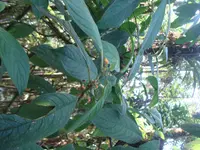
Many forms of this species develop softly pubescent, sometimes slightly textured leaves that help reduce water loss in moving air while also giving the plant strong ornamental value for Besleria solanoides indoor care.

FAQs about Besleria solanoides

Lack of flowering usually comes from insufficient light intensity, cool temperatures, or low humidity. Old, exhausted potting mix and skipped feeding can also reduce bud formation. Light pruning after a flush of blooms encourages new flowering shoots.

Grow Healthy Plants with Botan Care

Keep your plants happy and healthy with plant identification, disease detection, and easy care guidance.

Botan plant care app — identify plants on mobile

Explore More Plants