Monstera 'Karstenianum' Care

About Monstera 'Karstenianum'

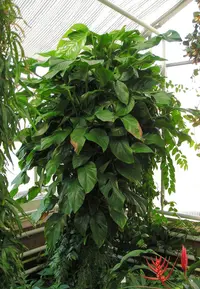
Monstera 'Karstenianum', often called the Peru monstera, is a compact climbing aroid prized for its thick, heavily textured leaves. The foliage is dark green with a quilted surface that gives the plant a sculpted look.

In nature, it grows as an epiphyte on trees in Central and South American rainforests, using aerial roots to cling and climb. Indoors it usually stays small to medium in size and appreciates a support, such as a moss pole or stake.

Most growers find it moderately easy, as long as it receives bright, filtered light, evenly moist but well-drained soil, and stable warmth. Learning how to care for Monstera 'Karstenianum' helps maintain dense growth and strong leaf texture.

Main Plant Requirements

Care Difficulty

Moderate Care

Light Preference

Bright Indirect Light

Water Requirements

Moderate Water

Temperature Preference

Tropical / Frost Sensitive

Hardiness Zone

11–12

Soil Texture

Loamy, Peaty, Organic-rich

Soil pH

Acidic (5.5–6.5), Slightly acidic (6.5–7.0)

Soil Drainage

Moist but well-drained

Fertilization

Light (every 4–6 weeks)

Get Personalized Care Plan

Scan your plant to receive care tips personalized for your specific plant

Available on iOS and Android

How to Care for the Monstera 'Karstenianum'

This plant prefers bright, indirect light that mimics a filtered tropical understory.

  • Provide 6–8 hours of bright, filtered light each day, such as near an east or north window or behind a sheer curtain in stronger exposures.
  • Morning sun for 1–3 hours is usually tolerated, but avoid direct midday or afternoon sun, which can scorch and fade the textured leaves of Monstera 'Karstenianum'.
  • In lower light or partial shade, growth slows and leaves may become smaller; move slightly closer to the light source in winter when days are shorter.

Watering should keep the root zone lightly moist but never saturated for healthy growth.

  • Allow the top 2–4 cm of soil to dry before watering again, using your finger to feel moisture rather than following a fixed schedule.
  • Use a free-draining mix and a pot with drainage holes so excess water escapes; yellowing, soft leaves and a sour smell indicate overwatering and possible root rot.
  • In spring and summer, watering is usually needed more often, while in cooler, darker months extend the drying period to prevent soggy conditions for Monstera 'Karstenianum'.

Stable, warm conditions support steady growth and reduce stress for this species.

  • Aim for 65–80°F (18–27°C) for best growth; short dips are tolerated, but avoid sudden swings of more than 10°F (6°C) in a day.
  • Protect from cold; growth slows below 60°F (16°C), tissue damage can occur near 50°F (10°C), and frost exposure can kill foliage and stems.
  • In hotter periods above 85°F (29°C), increase air movement and humidity while keeping the plant out of direct sun to prevent leaf scorch and heat stress.

This species prefers moderately high humidity for stable growth.

  • Aim for 50–70% humidity to support dense foliage and minimize brown leaf edges.
  • Tolerates short periods around 40%, but prolonged dry air causes crispy tips, curling, and slowed growth.
  • Increase humidity with a nearby humidifier, grouped plants, or a water-filled pebble tray rather than misting leaves heavily.

This plant performs best in a loose, airy, organic-rich potting medium.

  • Use a peat- or coco-based mix amended with chunky orchid bark, perlite, and a small amount of compost for structure and nutrients.
  • Ensure very fast drainage; the mix should feel springy and coarse, never dense, sticky, or compacted after watering.
  • Target slightly acidic to neutral pH around 5.5–7.0, which supports nutrient availability and healthy root development.
  • Avoid pure garden soil, heavy clay-based mixes, or fine sand that holds water and restricts aeration around the roots.

This species is well suited to container culture for both small and mature plants.

  • Choose a pot just 2–4 in wider than the root mass to balance root space with consistent moisture retention.
  • Use a stable, heavier container or add weight at the base if using a moss pole, since the plant becomes top-heavy as it climbs.
  • Select slightly porous materials like terra-cotta when the mix stays wet for long, or non-porous plastic if the plant dries out too quickly.

Nutrient inputs support compact, healthy growth for Monstera 'Karstenianum' in containers.

  • Use a balanced liquid fertilizer (around 10-10-10 or 20-20-20) at 1/4–1/2 strength for active plants.
  • Feed every 4–6 weeks in spring and summer when growth is noticeable.
  • Pause or reduce feeding to 1 light application in midwinter if growth slows under low light.
  • Optionally mix in a small amount of compost or use a slow-release formulation at the start of the growing season.

Light pruning keeps Monstera 'Karstenianum' compact and encourages fuller growth.

  • Best time is late winter to early spring, before strong new growth starts.
  • Remove yellowing, dead, or damaged leaves with clean, sharp scissors or pruners.
  • Thin crowded or tangled stems to improve airflow and maintain a manageable size or shape.
  • Cut just above a node to direct new growth and avoid leaving long bare stubs.

Container-grown Monstera 'Karstenianum' benefits from periodic repotting to refresh soil and manage roots.

  • Plan to repot every 2–3 years in spring when roots circle the pot or growth slows.
  • Choose a container 2–5 cm wider with drainage and a chunky aroid mix for good aeration.
  • Water lightly before repotting, then gently loosen circling roots without tearing large sections.
  • After transplanting, water thoroughly once, then keep slightly drier for 1–2 weeks while roots re-establish.

Stem cuttings are the most reliable way of growing Monstera 'Karstenianum' for home growers.

  • Take cuttings in late spring or summer, including at least 1 node and preferably 1 leaf.
  • Root in water or a moist, airy mix at 70–80°F with bright, indirect light.
  • Maintain high humidity (60–80%) and avoid waterlogging to reduce rot risk.
  • Pot into well-draining soil once several roots reach about 3–5 cm long.

This tropical species needs warm, frost-free winter conditions when grown in temperate climates.

  • Move containers indoors before temperatures drop below 55°F, as foliage is frost sensitive.
  • Place in bright, indirect light away from cold drafts and heating vents.
  • Reduce watering, letting the top 3–5 cm of mix dry between waterings to prevent root rot.
  • Avoid fertilizing in midwinter unless the plant receives strong light and shows active growth.

Care Tips

Encourage Climbing

Provide a sturdy, narrow moss pole or coco pole and loosely tie the vines with soft plant tape so the leaves can press flat against the support, which promotes thicker, more textured foliage and steadier growth.

Rotate For Even Growth

Turn the pot 90° every 2–3 weeks so the shingling stems do not lean heavily in one direction, which reduces the risk of the plant pulling itself off the support or becoming lopsided.

Control Internode Length

If stems begin stretching with long gaps between leaves, trim back to just above a healthy node and reattach the cutting to the support to maintain a dense, compact growth habit.

Strategic Repot Timing

Plan repotting for late spring, just as new growth starts, and move up only 2–5 cm in pot diameter to reduce transplant shock and keep roots active rather than sitting in excess substrate.

Quarantine And Inspect

When bringing in new aroids, keep them in a separate area for 2–3 weeks and inspect leaf undersides and stem joints with a hand lens so any scale, mites, or thrips are detected before caring for Monstera 'Karstenianum' nearby.

Common Pests and Diseases

Spider mites

This pest feeds on the undersides of the thick, textured leaves, causing fine stippling, dull patches, and delicate webbing, especially in warm, dry indoor air. Symptoms include slowed growth and leaves that feel rough and look dusty or faded.

Solution

Rinse foliage thoroughly in the shower or with a hose, focusing on leaf undersides, then let the plant dry in bright, indirect light. For ongoing spider mite control on Monstera 'Karstenianum' indoor care, repeat washes weekly and use a neem oil or insecticidal soap spray on both sides of the leaves, while increasing humidity and reducing heat stress.

Thrips

These insects scrape and suck plant cells, leaving silvery streaks, rough patches, and distorted new leaves on the plant’s puckered foliage. Symptoms include black specks of frass and reduced vigor, often starting on new growth and along leaf veins.

Solution

Isolate the plant, remove heavily damaged leaves, and gently rinse foliage to dislodge adults and larvae. Follow with repeated applications of insecticidal soap or neem oil every 5–7 days and use sticky traps near the plant to monitor flying adults, checking especially around new leaves and petiole bases.

Mealybugs

This pest appears as white, cottony clusters tucked into leaf axils, along stems, and sometimes in the textured leaf folds. Symptoms include sticky honeydew, sooty mold growth, and gradual yellowing or wilting as sap is removed from the plant.

Solution

Inspect all growth points and wipe visible mealybugs with cotton swabs dipped in isopropyl alcohol, then rinse the plant with lukewarm water. Repeat inspections weekly, treating new clusters promptly and, for heavier infestations, use an insecticidal soap spray directed into crevices and under any climbing support the plant uses.

Bacterial leaf spot

This disease creates water-soaked, translucent patches on leaves that later turn brown with a yellow halo, often following overwatering, leaf wetness, or poor air circulation. Symptoms include rapidly expanding lesions that can merge and cause sections of the thick leaves to collapse.

Solution

Remove and discard affected leaves, sterilizing pruning tools between cuts, and avoid splashing water on foliage or misting directly onto leaves. Improve air movement around the plant, allow the top of the soil to dry between waterings, and, in severe or spreading cases, discard heavily infected plants to protect nearby aroids.

Edema

This physiological disorder occurs when roots absorb water faster than leaves can transpire, leading to small corky blisters or raised, rough patches on the thick leaves. Symptoms include localized, tan or brown bumps that do not spread like a typical infection and often appear after watering changes or cool, low-light conditions.

Solution

Allow the top layer of the potting mix to dry more between waterings, and ensure the container drains freely with a chunky, airy aroid mix. Provide stable temperatures, brighter indirect light, and avoid sudden shifts from dry to very wet soil to prevent new edema lesions, noting that existing marks will not disappear but new leaves should emerge normal.

Interesting Facts

Shingle-climbing growth

This species naturally grows as a shingling vine, pressing its thick leaves flat against tree trunks or rough surfaces to maximize support and access to light in shaded tropical forest understories.

Unfenestrated mature leaves

Unlike many Monstera relatives, its adult leaves normally remain solid and do not develop the familiar perforations, reflecting its adaptation to lower light microhabitats where intact blades capture more light.

Highly textured foliage

The leaf surface is notably bullate, meaning strongly blistered and puckered between the veins, which increases surface complexity and may help manage water on the leaf surface in humid rainforest conditions.

FAQs about Monstera 'Karstenianum'

This species is a natural climber. It produces aerial roots that attach to bark, moss poles, or other rough supports. Without vertical support it tends to sprawl and produce smaller leaves, so a sturdy trellis or pole is recommended.

Grow Healthy Plants with Botan Care

Keep your plants happy and healthy with plant identification, disease detection, and easy care guidance.

Botan plant care app — identify plants on mobile

Explore More Plants