


Renew plants annually
Treat this plant as a short-lived perennial and plan to replant from cuttings or nursery stock every 2–3 years, as older plants become woody, sparse, and much less floriferous.

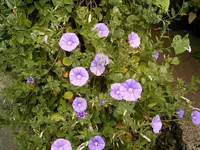
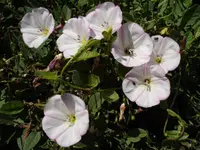
Blue rock bindweed, Convolvulus sabatius, is a low, trailing perennial often grown as a summer annual in cooler regions. It forms loose mounds or cascades, making it useful for containers, rock gardens, or walls. Its small, funnel-shaped blue to lilac flowers open in daylight and close at night or in dull weather, giving a neat but relaxed look. Rounded gray-green leaves add a soft texture that suits many garden styles. This species comes from rocky coastal areas of the Mediterranean, so it prefers sun, good drainage, and moderate moisture. These natural adaptations make it relatively simple to care for Blue Rock Bindweed in well-drained soil with ample light.

Care Difficulty
Easy Care

Light Preference
Full Sun

Water Requirements
Moderate Water

Temperature Preference
Warm Climate

Hardiness Zone
8–10

Soil Texture
Sandy, Loamy, Rocky

Soil pH
Acidic (5.5–6.5), Slightly acidic (6.5–7.0)

Soil Drainage
Well-drained

Fertilization
Light (every 4–6 weeks)
Scan your plant to receive care tips personalized for your specific plant
Available on iOS and Android
Convolvulus sabatius thrives in bright, direct light for strong flowering and compact growth.
Convolvulus sabatius prefers slightly dry conditions and is prone to root problems in soggy soil.
This plant grows best in mild, Mediterranean-like conditions with cool nights and warm days.
Humidity is rarely a concern for Convolvulus sabatius, which thrives in typical dry household or outdoor air.
Convolvulus sabatius prefers light, well-drained soil that never stays wet for long.
This species is well suited to containers and hanging baskets.
Convolvulus sabatius stays compact and flowers well with light, controlled feeding during the growing season.
Pruning Convolvulus sabatius keeps plants dense, tidy, and flowering well.
Convolvulus sabatius suits containers and ground planting, but dislikes frequent disturbance of its roots.
Convolvulus sabatius is commonly propagated from softwood cuttings for uniform, vigorous plants.
Convolvulus sabatius is only moderately frost tolerant and benefits from simple winter protection in colder areas.

Plant Health Check
Not sure what's wrong with your plant? Check your plant's health inside the app.
This species is naturally native to rocky coastal slopes and sea cliffs around the western Mediterranean, where it tolerates wind, salt spray, and poor, stony soils better than many other bindweeds.
The funnel-shaped blue flowers typically open fully in the morning and start to close by late afternoon or early evening, following a day–night rhythm that helps protect pollen and nectar overnight.
In mild Mediterranean-type climates it behaves as a long-lived, woody-based perennial, but in colder regions it is often grown as a tender perennial or annual because sustained frost can kill the plant to the roots.
Poor flowering usually comes from low light, excess nitrogen fertilizer, or old, unpruned stems. Give it strong outdoor light, use a balanced fertilizer sparingly, and trim back straggly growth to stimulate new, flower-bearing shoots.
Keep your plants happy and healthy with plant identification, disease detection, and easy care guidance.

Acianthera pubescens
Acianthera pubescens
Lemon-scented jasmine
Jasminum azoricum
Black-eyed Susan vine
Thunbergia alata
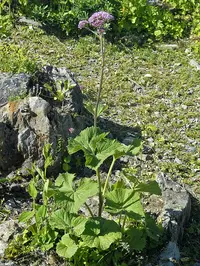
hedge-leaved adenostyle
Adenostyles alliariae
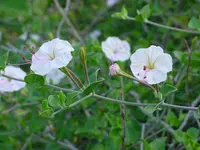
Berlandier's trumpets
Acleisanthes obtusa
lily of the Incas
Alstroemeria psittacina
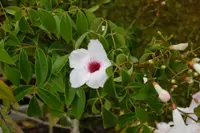
Bower vine
Pandorea jasminoides
Field Bindweed
Convolvulus arvensis