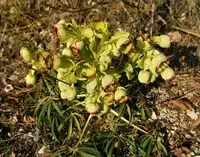
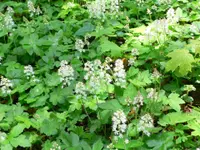
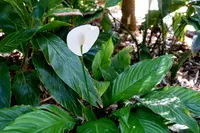
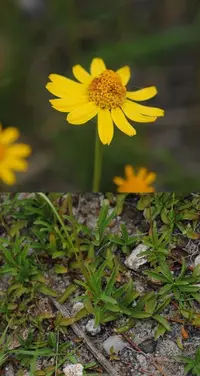
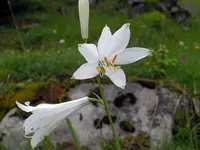
hedge-leaved adenostyle Care (Adenostyles alliariae)

hedge-leaved adenostyle

About hedge-leaved adenostyle

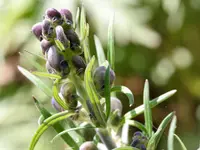
Hedge-leaved adenostyle (Adenostyles alliariae) is a hardy perennial herb from mountain regions of central and southern Europe. It usually grows in moist meadows, forest clearings, and along stream banks. The plant forms leafy clumps with large, somewhat triangular, serrated leaves that resemble garlic mustard, and in summer it sends up tall stems topped with soft clusters of pinkish to mauve flower heads. It has a robust, slightly informal look that suits naturalistic or woodland-style plantings. Gardeners who want to care for hedge-leaved adenostyle should note its preference for cool conditions, consistent moisture, and humus-rich soil that does not dry out for long periods.

Main Plant Requirements

Care Difficulty

Moderate Care

Light Preference

Partial Shade

Water Requirements

Keep Soil Moist

Temperature Preference

Cold Hardy

Hardiness Zone

4–8

Soil Texture

Loamy, Silty, Organic-rich

Soil pH

Acidic (5.5–6.5), Slightly acidic (6.5–7.0)

Soil Drainage

Moist but well-drained

Fertilization

Minimal (feed rarely)

Get Personalized Care Plan

Scan your plant to receive care tips personalized for your specific plant

Available on iOS and Android

How to Care for the hedge-leaved adenostyle

This mountain woodland perennial prefers cool, bright conditions with protection from harsh midday sun.

  • Provide dappled or open shade with only 1–3 hours of gentle morning sun; avoid strong afternoon exposure that can scorch leaves.
  • Aim for bright shade under high tree canopy or on a north or east-facing slope, similar to natural hedge-leaved adenostyle habitats.
  • In hotter summers, increase shade cover or use taller companion plants to filter light, especially from June to August when sun intensity peaks.

This species favors consistently moist, cool soil similar to its native streamside and woodland sites.

  • Water when the top 2–3 cm of soil feels slightly dry but deeper soil still feels moist, avoiding both dust-dry and soggy conditions.
  • In spring and early summer, increase watering frequency during active growth, then reduce slightly in late summer as temperatures drop and growth slows.
  • Watch for yellowing, soft stems as a sign of overwatering, and drooping, papery leaves or curling edges as indicators of underwatering or heat stress.

This hardy perennial is adapted to cool, montane climates and tolerates significant winter cold once established.

  • Best growth occurs around 50–70°F (10–21°C), with cool nights promoting sturdy stems and broad, healthy foliage.
  • Established plants usually tolerate down to about 0°F (-18°C) in well-drained soil, especially with insulating snow cover or light mulch.
  • Heat above 80°F (27°C), especially if dry, can stress plants, so provide extra shade and moisture during hot spells to limit leaf scorch and wilting.

This species tolerates a fairly wide humidity range and usually does not need special humidity management outdoors.

  • Aim for ambient humidity around 40–70% when grown in sheltered or courtyard sites, similar to moist woodland air.
  • Plants handle brief dry air but prolonged humidity below 35% combined with heat can cause leaf edges to brown and curl.
  • Increase humidity locally by mulching the soil surface and grouping plants near other leafy perennials rather than using misting.

This woodland perennial prefers consistently moist, deep, humus-rich soil with reliable drainage.

  • Use a loamy structure with plenty of organic matter, such as garden loam mixed with 40–60% well-rotted compost or leaf mold.
  • Ensure free drainage by avoiding compacted clay; if needed, lighten heavy ground with coarse sand or fine gravel in the top 20–30 cm.
  • A slightly acidic to neutral pH around 5.5–7.0 suits Adenostyles alliariae, so avoid liming unless soil is very acidic.
  • Keep the surface mulched with leaf mold or shredded bark to maintain moisture, improve aeration over time, and prevent surface crusting.

This species can be grown in large containers but needs careful management of moisture and root space.

  • Choose a deep, wide, heavy pot to provide stable anchoring for tall leafy growth and to buffer rapid drying of the root zone.
  • Use a moisture-retentive but draining mix, such as 60% composted bark or peat-free compost with 40% perlite or grit, to mimic cool woodland soil.
  • Raise the container on feet or bricks so drainage holes remain clear and excess water exits quickly after heavy rain or irrigation.

This mountain perennial is adapted to low-nutrient soils, so hedge-leaved adenostyle needs only modest feeding in cultivation.

  • Apply a light layer of well-rotted compost around the clump in early spring as the main nutrient source.
  • If growth is weak, use a balanced liquid NPK fertilizer at 1/2 strength every 4–6 weeks in the growing season.
  • Avoid fertilizing in late fall and winter to prevent soft, frost-sensitive growth.
  • Water before and after any fertilizer application to reduce root burn risk.

Adenostyles alliariae needs only light pruning to stay tidy and healthy.

  • Cut back spent flowering stems near the base in late summer to keep the clump compact.
  • Remove dead, damaged, or diseased leaves as noticed using clean, sharp hand pruners or scissors.
  • Thin out crowded stems in early spring to improve air circulation and reduce fungal issues.
  • Leave some old stems over winter if desired, then clear them at the end of the dormant season.

This species is usually grown in the ground, so focus on careful transplanting rather than frequent repotting.

  • Transplant in early spring or early fall when temperatures are mild and soil is moist but not waterlogged.
  • Move plants only when clumps become crowded or growth declines, typically every several years.
  • Lift with a generous root ball, keeping as much soil attached as possible to limit root disturbance.
  • Replant at the same depth, water thoroughly, and shade for a few days to reduce transplant stress.

This plant is most reliably propagated by division, with seed used mainly for larger-scale or specialist growing.

  • Divide mature clumps in early spring just as new shoots emerge, retaining several buds and roots on each piece.
  • Replant divisions immediately into moist, cool soil and water well to settle soil around roots.
  • Grow from seed by sowing fresh seed in fall outdoors, allowing natural cold stratification.
  • Keep seed trays evenly moist and in bright, indirect light; seedlings may take 1–2 seasons to reach planting size.

This is a cold-hardy perennial that usually needs minimal winter care in temperate climates.

  • Tolerates typical freezing conditions once established, with top growth dying back naturally in late fall.
  • Apply a 5–7 cm layer of organic mulch after the ground cools to insulate the root zone.
  • In very cold or exposed sites, increase mulch depth and avoid disturbing the soil until spring.
  • Move container-grown plants to a sheltered, unheated spot to reduce freeze–thaw stress on roots.

Care Tips

Cool root zone

Apply a 5–7 cm layer of leaf mold or fine bark mulch around the clump to keep roots cool and moist, mimicking its natural mountain habitat and reducing summer stress.

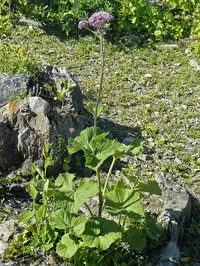
Shelter from wind

Site plants where they are protected from strong wind or use low windbreaks, because the tall, hollow stems can bend or snap in exposed positions, especially on wet or saturated soils.

Moisture buffering

On sloped or free-draining sites, form a shallow basin or contour berm around the planting to slow runoff and help retain consistent soil moisture during dry spells.

Slug exclusion ring

Install a 5–10 cm wide sharp grit or crushed lava rock ring around young shoots in early spring to deter slugs and snails from feeding on emerging foliage.

Self-seeding management

Deadhead flower heads just as they fade if you want to limit self-seeding, or leave a few on robust plants to naturalize a small area when growing hedge-leaved adenostyle in woodland-style plantings.

Common Pests and Diseases

Powdery mildew

This disease often appears in warm, humid conditions when air movement is poor, coating leaves with a white or grayish powder. Symptoms include distorted foliage and reduced vigor if the infection is heavy.

Solution

Remove and discard heavily infected leaves, avoid overhead watering, and thin or space plants to increase airflow. If needed, apply a sulfur- or potassium bicarbonate-based fungicide according to label directions to protect new growth, especially in dense plantings or shaded garden beds where Adenostyles alliariae care can be more challenging.

Leaf spot

This disease causes brown, tan, or purplish spots on leaves, sometimes with a lighter center or yellow halo. Symptoms include premature leaf drop in wet summers or crowded plantings.

Solution

Prune and dispose of affected leaves to reduce inoculum, keeping foliage as dry as possible by watering at soil level. Improve spacing and airflow, and in recurring cases use a copper- or chlorothalonil-based fungicide early in the season to limit spread.

Aphids

These insects feed on sap from young shoots and undersides of leaves, leading to curled or distorted foliage. This pest often produces sticky honeydew that can attract sooty mold on the large leaves.

Solution

Rinse colonies off with a firm stream of water and remove heavily infested shoot tips. For persistent infestations, use insecticidal soap or a neem oil spray, applied thoroughly to leaf undersides and repeated as needed, while encouraging natural predators such as lady beetles by avoiding broad-spectrum insecticides.

Slugs and snails

These pests are drawn to the moist, shady habitats where hedge-leaved adenostyle commonly grows and chew irregular holes in the large leaves. Symptoms include shredded foliage, slime trails, and damage near ground level or under dense cover.

Solution

Hand-pick slugs and snails in the evening, and reduce hiding places such as thick mulch or boards in close contact with the crowns. Use iron phosphate bait around plants as needed, and consider copper barriers or rough mulches to make the area less favorable to these soft-bodied pests.

Interesting Facts

Garlic-scented foliage

When crushed, the leaves release a mild garlic or alliaria-like smell, which is reflected in the species name alliariae referring to the genus Alliaria.

Alpine snowbed specialist

This species often grows near late-lying snowbeds in European mountain ranges, where it takes advantage of the moist, nutrient-enriched soils revealed as the snow melts.

Butterfly and moth host

The plant serves as a larval food source for certain alpine Lepidoptera (butterflies and moths), contributing to the specialized insect communities of high-elevation forests and meadows.

Botan icon

Did you know?

In many central and southern European mountain regions, this species is considered a characteristic indicator of cool, moist beech and spruce forest understories, so its presence is often used by botanists to help classify and map specific forest plant communities.

FAQs about hedge-leaved adenostyle

This species spreads slowly by short rhizomes and self-seeding, but it is not usually aggressive in cool, moist, partially shaded beds. In rich soil, seedlings may appear nearby and can be thinned or transplanted easily.

Grow Healthy Plants with Botan Care

Keep your plants happy and healthy with plant identification, disease detection, and easy care guidance.

Botan plant care app — identify plants on mobile

Explore More Plants