Rotate sowing spots
Change the planting location every 2–3 years to reduce soil-borne disease buildup and nutrient depletion, especially if other legumes have been grown in the same bed.

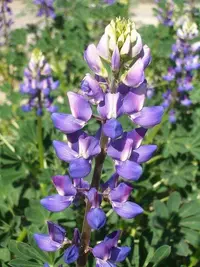
Hollowleaf annual lupine, Lupinus succulentus, is a cool-season annual wildflower native to California and parts of the western United States. It often grows in open fields, roadsides, and moist grasslands.
The plant forms upright clumps with thick, succulent stems, palmate leaves, and dense spikes of blue to purple pea-like flowers. These traits give it a lush, almost meadow-like presence in the landscape.
It is generally easy to grow where winters are mild and soils stay moist but not waterlogged. Light, well-drained soil and full sun to light shade usually support healthy growth.
Gardeners who want to learn how to care for hollowleaf annual lupine benefit from understanding its preference for cool seasons and evenly moist conditions from germination through flowering.

Care Difficulty
Moderate Care

Light Preference
Full Sun

Water Requirements
Moderate Water

Temperature Preference
Cool Climate

Hardiness Zone
6–10

Soil Texture
Sandy, Loamy, Organic-rich

Soil pH
Acidic (5.5–6.5), Slightly acidic (6.5–7.0)

Soil Drainage
Well-drained

Fertilization
Minimal (feed rarely)
Scan your plant to receive care tips personalized for your specific plant
Available on iOS and Android
Lupinus succulentus grows best in open, bright locations with cool to mild conditions.
This annual lupine prefers consistently moist but sharply drained soil, especially during active growth and flowering.
This species performs best in mild conditions and is typically grown as a cool-season annual in many regions.
Humidity is not a major factor for Lupinus succulentus, which adapts well to typical outdoor air levels in its range.
Lupinus succulentus prefers lean, fast-draining soil that mimics open, sandy or gravelly habitats.
This species can be grown in containers, but it performs best when pots replicate its naturally dry, well-drained rooting conditions.
Lupinus succulentus usually needs minimal feeding, especially in native or well-prepared soils.
Lupinus succulentus benefits from light, well-timed pruning to maintain appearance and flowering.
This species is usually grown as an annual in the ground, so transplanting young plants is more relevant than repotting.
New Lupinus succulentus plants are most reliably raised from seed rather than vegetative methods.
In mild-winter regions, Lupinus succulentus needs little specific winter care as it behaves as a cool-season annual.

Plant Health Check
Not sure what's wrong with your plant? Check your plant's health inside the app.
This annual lupine is naturally most abundant in lowland valleys and moist grasslands of central and southern California, where it often forms dense, showy spring displays after winter rains.
Unlike many lupine species that prefer dry, well-drained sites, this plant is adapted to heavier, seasonally moist soils and can thrive in areas that stay damp into late spring.
As a legume, it hosts nitrogen-fixing bacteria in root nodules and, because it grows quickly in late winter and early spring, it can enrich the soil for later-blooming annuals and grasses in its native habitats.

In California vernal pool and swale ecosystems, this species can act as a key early nectar and pollen source for native solitary bees and other pollinators emerging at the end of winter, helping bridge the gap before many other wildflowers come into bloom.
Lack of blooms often comes from too much shade, excess nitrogen fertilizer, or stress from heat or drought. Ensure full sun, moderate nutrients, and consistent moisture during early growth to support flower bud formation and development.
Keep your plants happy and healthy with plant identification, disease detection, and easy care guidance.