Pre-emergent timing
Apply a suitable pre-emergent herbicide in late summer or very early fall, just before soil temperatures drop into the cool season range, to greatly reduce new seedlings when caring for field burrweed in turf or paths.

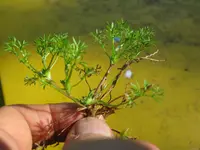
Field burrweed (Soliva sessilis) is a low, mat-forming annual often found in lawns, paths, and disturbed ground. It stays very close to the soil surface, creating a fine, feathery carpet of foliage.
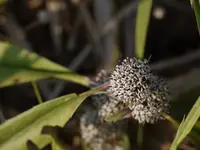
The plant produces small, inconspicuous flowers followed by hard, spiny burrs that can be sharp underfoot. It is native to South America but now occurs widely in temperate regions, including many parts of the US.
Field burrweed grows easily in compacted, nutrient-poor soils and spreads quickly where turf is thin. Understanding how to care for field burrweed is mainly useful for those managing lawns or studying low-growing groundcover species.

Care Difficulty
Easy Care

Light Preference
Full Sun

Water Requirements
Low Water

Temperature Preference
Warm Climate

Hardiness Zone
8–11

Soil Texture
Sandy, Loamy

Soil pH
Slightly acidic (6.5–7.0), Neutral (7.0)

Soil Drainage
Well-drained

Fertilization
Minimal (feed rarely)
Scan your plant to receive care tips personalized for your specific plant
Available on iOS and Android
Soliva sessilis thrives in open, sunny lawn or groundcover conditions with moderate tolerance to shade.
Soliva sessilis prefers evenly moist but not soggy soil, especially during active growth.
This low-growing annual performs best in mild climates with cool to warm temperatures.
Humidity is rarely a limiting factor for Soliva sessilis, which adapts well to typical outdoor conditions in most regions.
Soliva sessilis thrives in light, well-drained mineral soils that do not stay wet for long periods.
This low, spreading species can be grown in containers, though it is more commonly used as a ground-covering lawn weed than a feature plant.
This low-growing annual needs minimal feeding, as Soliva sessilis thrives even in lean soils.
Pruning Soliva sessilis is mainly done for appearance and spread control rather than plant health.
This species is rarely kept in pots, so care focuses on transplanting young plants in open ground.
Soliva sessilis spreads most commonly by seed, which establishes new patches quickly under the right conditions.
This small annual or short-lived plant is generally cold tolerant and needs little targeted winter care.

Plant Health Check
Not sure what's wrong with your plant? Check your plant's health inside the app.
This species produces small, spiny seed heads that easily lodge in bare feet, socks, and animal paws, which helps the plant disperse its seeds over short distances in lawns and recreation areas.
Field burrweed usually germinates in cool, moist conditions of autumn or winter, then completes its life cycle and sets seed before summer heat stresses turfgrass, giving it a competitive timing advantage in lawns.
The plant forms a very flat rosette close to the soil surface, allowing it to grow under mowing heights that would remove many other weeds, and enabling it to persist in closely cut turf and compacted ground.

In regions where it has become naturalized, field burrweed is considered a nuisance in sports fields and playgrounds specifically because its spiny seed heads can cause minor injuries to people and pets, leading to targeted management programs in public turf areas.
This species spreads quickly by seed, especially in thin or disturbed turf. The spiny seed heads attach to shoes, fur, and clothing, helping it colonize new areas. Regular removal before seed set limits spread effectively.
Keep your plants happy and healthy with plant identification, disease detection, and easy care guidance.