Low-Grow Training
In open ground, lightly pinch back young shoot tips once or twice early in the season to encourage a denser, ground-hugging habit that suppresses weeds and reduces lodging in wind or rain.

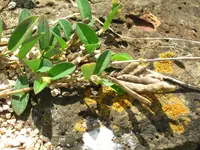
White moneywort, Alysicarpus vaginalis, is a low-growing herbaceous plant in the legume family, often forming loose mats or small clumps. Its slender stems carry small, simple leaves and tiny pink to reddish flowers that give it a delicate, understated look.
This species occurs widely in tropical and subtropical regions, especially in Asia and parts of Africa, where it grows in grasslands, open fields, and disturbed sites. It is generally resilient and can tolerate poor soils, which makes it relatively easy to establish in suitable climates.
Those who want to learn how to care for white moneywort should note that it usually prefers bright light, moderate moisture, and well-drained soil rather than heavy, waterlogged conditions.

Care Difficulty
Easy Care

Light Preference
Full Sun

Water Requirements
Moderate Water

Temperature Preference
Tropical / Frost Sensitive

Hardiness Zone
10–12

Soil Texture
Sandy, Loamy

Soil pH
Acidic (5.5–6.5), Slightly acidic (6.5–7.0)

Soil Drainage
Well-drained

Fertilization
Minimal (feed rarely)
Scan your plant to receive care tips personalized for your specific plant
Available on iOS and Android
This sun-loving legume grows best in open, bright conditions in warm climates.
This species prefers consistently moist but not waterlogged soil once established outdoors.
This warm-season species performs best in stable, frost-free conditions.
This species tolerates a wide humidity range and rarely needs special humidity management.
This species prefers light, well-drained mineral soils that do not stay waterlogged.
This species can be grown in containers, especially for controlled spreading or in managed outdoor spaces.
This low-maintenance legume needs only modest feeding to stay healthy in typical garden soil.
Pruning Alysicarpus vaginalis is mainly done to keep the plant tidy and encourage compact, flowering growth.
This species is usually grown in the ground, so attention focuses more on transplanting than on frequent repotting.
This plant is most commonly propagated from seed, with some potential for soft stem cuttings in warm conditions.
In mild, frost-free climates this species needs little winter care, but it is sensitive to hard freezes in colder regions.

Plant Health Check
Not sure what's wrong with your plant? Check your plant's health inside the app.
This species forms root nodules with rhizobia bacteria that fix atmospheric nitrogen, improving soil fertility and making it useful as a forage or cover crop in tropical and subtropical regions.
It naturally occurs in disturbed sites such as roadsides, cropped fields, and grazed grasslands, showing strong tolerance to trampling, periodic mowing, and relatively poor soils.
The plant produces many small pink to purplish flowers along slender racemes, often flowering over an extended season in warm climates and providing nectar resources for various pollinating insects.
Yellowing leaves often result from water imbalance, root stress, or nutrient deficiency rather than disease. Check for soggy or very dry soil, compacted roots, and lack of fertilizer. Correcting these usually restores normal foliage color over time.
Keep your plants happy and healthy with plant identification, disease detection, and easy care guidance.