Chameleon plant Care (Houttuynia cordata)

Also known as: Chameleon Plant, Fishwort, Fishy-smell herb
Chameleon plant

About Chameleon plant

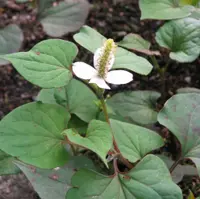
Chameleon plant, Houttuynia cordata, is a low-growing perennial herb often used as a groundcover. It spreads by creeping rhizomes, forming dense mats of heart-shaped leaves.

Foliage can show patches of green, yellow, orange, and red, especially in sun, which gives the plant its common name. Small white flowers appear in late spring to early summer.

This species is native to moist, partially shaded areas of East and Southeast Asia. It thrives in damp soil and can tolerate both full sun and shade, depending on climate.

Because it spreads aggressively, it is easy to grow but can become invasive without root barriers or containers. Understanding how to care for Chameleon plant helps keep it attractive and controlled in the garden.

Main Plant Requirements

Care Difficulty

Easy Care

Light Preference

Partial Shade

Water Requirements

Keep Soil Moist

Temperature Preference

Cold Hardy

Hardiness Zone

4–10

Soil Texture

Loamy, Clay, Organic-rich

Soil pH

Acidic (5.5–6.5), Slightly acidic (6.5–7.0)

Soil Drainage

Waterlogged tolerant

Fertilization

Minimal (feed rarely)

Get Personalized Care Plan

Scan your plant to receive care tips personalized for your specific plant

Available on iOS and Android

How to Care for the Chameleon plant

This vigorous groundcover thrives in bright locations but tolerates a range of light conditions.

  • Provide 4–6 hours of morning sun with afternoon shade; strong late-day sun can scorch leaves, especially in hot summers.
  • The Chameleon plant grows well in partial shade, where colors stay strong but leaves are less likely to burn in heatwaves.
  • In cooler climates it can handle near full sun if soil stays moist; in dense shade, expect looser growth and less intense leaf coloration.

This moisture-loving perennial prefers consistently damp soil without long dry spells.

  • Aim for soil that feels evenly moist; the top 1–2 cm should not dry out completely, especially during active summer growth.
  • In heavy clay or poorly drained beds, improve drainage slightly to avoid stagnant water that can cause root rot in Houttuynia cordata.
  • Wilting or crisp leaf edges signal underwatering, while yellowing, limp leaves and a sour soil smell often indicate chronic overwatering.

This hardy perennial tolerates a wide temperature range once established in the ground.

  • Optimal growth occurs around 65–80°F (18–27°C), with the strongest foliage and spread in late spring and early summer.
  • Plants survive winter dormancy to about -20°F (-29°C) when roots are in the ground and mulched, even though top growth dies back with hard frosts.
  • During hot spells above 90°F (32°C), combine partial shade with ample moisture to limit stress, leaf scorch, and temporary growth slowdown.

Humidity is rarely a limiting factor for Houttuynia cordata, which tolerates a wide range of conditions.

  • Performs well in 40–80% humidity and comfortably handles typical outdoor air fluctuations.
  • Tolerates brief dry air, but prolonged arid, hot winds can cause leaf edge browning and curl.
  • In very dry, exposed sites, reduce humidity stress by mulching the root zone and providing light wind protection.

Houttuynia cordata prefers consistently moist, nutrient-rich soil that still allows some air around the roots.

  • Use a loamy or clay-loam soil with high organic matter from compost or well-rotted leaf mold.
  • Aim for slightly acidic to neutral pH around 6.0–7.0 to support strong root and foliage growth.
  • Improve aeration and structure by blending garden soil with compost and a small amount of coarse sand, not fine builders’ sand.
  • Avoid dry, sandy mixes that drain too quickly and very compacted, anaerobic soil where water stands for long periods.

This vigorous spreader is suitable for container growing, which also helps contain its rhizomes.

  • Choose a wide, sturdy pot at least 30–40 cm across so creeping rhizomes have lateral space instead of circling tightly.
  • Select heavier materials like ceramic or thick plastic to stabilize dense, top-heavy foliage in wind-exposed positions.
  • Ensure large, unobstructed drainage holes and keep the pot in a tray that can hold shallow water without submerging all holes.

Houttuynia cordata grows vigorously and usually needs only light feeding in garden soil.

  • Apply a thin layer of garden compost or well-rotted manure in spring to support strong growth.
  • In containers, use a balanced slow-release fertilizer or diluted liquid feed (about 1/2 strength) every 4–6 weeks in the growing season.
  • Avoid high-nitrogen products that may cause overly lush, sprawling growth with weaker stems.
  • Stop feeding in late summer so plants can harden off before winter dormancy.

Pruning Houttuynia cordata helps manage its spreading habit and keep patches tidy.

  • Cut back dead or damaged stems in early spring before new shoots elongate.
  • Shear or trim crowded, overgrown clumps after flowering to encourage fresh, compact growth.
  • Use clean hand pruners or shears, cutting stems close to the base without injuring new shoots.
  • Remove unwanted runners at the edges of beds to limit spread and maintain a defined planting area.

Most gardeners manage this spreading perennial by transplanting or dividing clumps rather than traditional repotting.

  • Transplant or divide in early spring or early fall when temperatures are mild and soil is moist.
  • Lift congested or thinning clumps every 2–3 years, especially if growth slows or centers die out.
  • Replant divisions at the same depth, spacing them 20–30 cm apart in prepared, moist soil.
  • Water thoroughly after transplanting and keep soil evenly moist for 1–2 weeks to reduce root stress.

Houttuynia cordata is commonly propagated by division and stem sections of its creeping rhizomes.

  • Divide healthy clumps in early spring or early fall, when temperatures are cool and soil is workable.
  • Cut rhizome pieces with at least 1–2 buds, then plant them just below the soil surface in moist ground.
  • Keep the planting zone evenly moist and lightly shaded until strong new shoots establish.
  • In containers, plant divisions in a wide pot with rich, damp substrate to control spread when growing Chameleon plant.

This perennial is cold hardy in much of the US and usually needs minimal winter care.

  • Top growth dies back to the ground after hard frosts, but underground rhizomes typically survive.
  • Leave some faded stems until late winter in very cold areas to trap insulating snow around the crown.
  • Apply a light mulch layer (2–5 cm) over roots in exposed sites, avoiding heavy, soggy cover.

Care Tips

Contain The Roots

Plant in a large nursery pot or bottomless container sunk into the ground to keep the spreading rhizomes from invading nearby beds and lawns.

Rhizome Monitoring

Once or twice a year, gently dig around the clump edge and remove any rhizomes that have jumped the intended boundary to prevent uncontrolled spread.

Water-Edge Use

For water gardens or pond margins, place the plant in a perforated aquatic basket filled with heavy loam so it enjoys constant moisture while remaining easy to lift and divide.

Timely Cutback

Shear stems back hard after flowering if growth becomes tangled or invasive, then water well to encourage a fresh, compact flush of foliage.

Selective Site Choice

Use this species in problem areas such as wet, compacted corners where other ornamentals fail, but avoid planting near mixed borders or lawns unless actively managing and caring for Chameleon plant with barriers and regular checks.

Common Pests and Diseases

Leaf spot

Symptoms include small brown or black spots on leaves that may merge into larger patches, often starting on older foliage in dense, wet clumps.

Solution

Remove and dispose of affected leaves, thin crowded patches to improve air circulation, and avoid overhead watering so foliage dries quickly; in persistent wet conditions, a copper-based fungicide can be used according to label directions as part of broader Houttuynia cordata care.

Rust

This disease causes orange to brown powdery pustules on the undersides of leaves, sometimes with yellowing or distortion on the upper surface.

Solution

Cut and discard infected leaves, reduce leaf wetness by watering at soil level, and keep plantings less crowded; for severe cases, apply a labeled rust-control fungicide and repeat at intervals recommended on the product label until new growth remains clean.

Spider mites

These pests create fine webbing and cause tiny pale speckles on leaves, which can lead to dull, stippled foliage in hot, dry weather.

Solution

Rinse foliage thoroughly with a strong but gentle stream of water, focusing on leaf undersides, then maintain higher humidity around the planting; if numbers stay high, use insecticidal soap or a horticultural oil, repeating weekly until the population drops.

Aphids

These insects cluster on soft stems and leaf undersides, sucking sap and leaving sticky honeydew that can attract sooty mold on dense groundcover mats.

Solution

Spray plants with a firm stream of water to dislodge colonies, pinch or cut back heavily infested tips, and use insecticidal soap or neem oil on remaining clusters, ensuring full coverage of undersides and repeating as needed.

Interesting Facts

Distinct fishy aroma

Crushed leaves release a strong odor often described as fishy or like coriander and citrus combined, caused by volatile compounds such as decanoyl acetaldehyde. This unusual scent is a key reason the plant is called fish mint in some regions of Asia.

Highly variable leaf colors

Many cultivated forms show striking variegation, with green, cream, yellow, and red patches appearing on the same leaf, especially in full sun. This color variation is due to differing amounts of chlorophyll and anthocyanin pigments in different parts of the blade.

Rhizomes form dense mats

The plant spreads through underground rhizomes that can create dense colonies, especially in moist soil. These rhizome networks allow the plant to recover quickly after cutting or frost and make Houttuynia cordata care more about containment than survival in suitable climates.

Botan icon

Did you know?

In several East and Southeast Asian cuisines, especially in parts of China and Vietnam, the fresh, pungent leaves and young shoots are eaten raw as a salad herb or garnish, making it one of the few strongly fish-scented plants used as a regular leafy vegetable.

FAQs about Chameleon plant

This species spreads very aggressively through underground rhizomes. In mild climates it can quickly form dense colonies and overwhelm nearby plants. Use root barriers, edging, or containers to confine it and prevent unwanted spread.

Grow Healthy Plants with Botan Care

Keep your plants happy and healthy with plant identification, disease detection, and easy care guidance.

Botan plant care app — identify plants on mobile

Explore More Plants