Daffodil Care (Narcissus 'Geranium')

Also known as: Tazetta Daffodil
Daffodil

About Daffodil

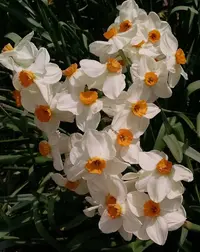
Narcissus 'Geranium' is a spring-flowering bulb in the amaryllis family, grown mainly for its clusters of white petals and small orange cups. It forms compact clumps from underground bulbs and returns yearly in suitable climates, making it a reliable garden perennial.

This cultivar is usually planted in borders, naturalized lawns, or mixed spring displays and can also be forced in containers. It originates from cultivated forms of wild Narcissus species native to Europe and North Africa.

The plant generally prefers sun to light shade, well-drained soil, and moderate moisture, which simplifies how to care for Daffodil in most home gardens.

Main Plant Requirements

Care Difficulty

Easy Care

Light Preference

Full Sun

Water Requirements

Moderate Water

Temperature Preference

Cold Hardy

Hardiness Zone

4–9

Soil Texture

Sandy, Loamy, Organic-rich

Soil pH

Acidic (5.5–6.5), Slightly acidic (6.5–7.0)

Soil Drainage

Well-drained

Fertilization

Minimal (feed rarely)

Get Personalized Care Plan

Scan your plant to receive care tips personalized for your specific plant

Available on iOS and Android

How to Care for the Daffodil

Narcissus 'Geranium' needs bright outdoor light to flower well without scorching its foliage.

  • Provide 4–6 hours of direct sun daily, ideally with morning sun and light afternoon shade, especially in warmer climates.
  • Tolerates partial shade, but in less than 3–4 hours of sun, flower count and stem strength decrease noticeably.
  • Avoid intense reflected heat from walls or pavement; in hot summers, use dappled or filtered light to reduce leaf burn and premature bloom fade when caring for Daffodil.

Narcissus 'Geranium' prefers evenly moist but never waterlogged soil during active growth and blooming.

  • Water when the top 3–5 cm of soil feels dry, then soak the root zone thoroughly, allowing excess to drain away quickly.
  • From sprouting to about 3 weeks after flowering, keep moisture steady; later, reduce watering as leaves yellow and bulbs enter dormancy.
  • Watch for yellowing, limp leaves and a sour smell as signs of overwatering, while drooping, papery foliage and cracked soil indicate underwatering in well-drained beds.

This bulb thrives in cool to mild outdoor climates with a distinct winter chill followed by a gentle spring warm-up.

  • Optimal spring growth occurs around 50–65°F (10–18°C), which supports sturdy stems and long-lasting flowers.
  • Bulbs need a winter chilling period, usually 35–45°F (2–7°C) for several weeks, and tolerate down to about 10–15°F (-12–-9°C) when planted deeply and mulched.
  • Once foliage emerges, protect from sudden hard freezes below 25°F (-4°C) and from prolonged heat above 80°F (27°C), which can shorten bloom life and stress bulbs.

Narcissus 'Geranium' grows well in typical household or outdoor humidity and does not have specific humidity needs.

Narcissus 'Geranium' prefers loose, well-drained, moderately fertile soil that does not stay wet after watering or rain.

  • Use a loamy mix with roughly equal parts garden soil, compost, and sharp sand to keep texture open.
  • Ensure fast drainage by avoiding heavy clay or adding coarse sand or fine gravel to break up compacted ground.
  • Aim for slightly acidic to neutral pH around 6.0–7.0, which supports nutrient uptake and healthy bulb development.
  • Raise beds or plant on a slight slope if the site tends to stay damp, to prevent bulb rot in winter.

This daffodil is well suited to container growing when the pot is deep and drains quickly.

  • Choose a container at least 20–25 cm deep so bulbs can sit 10–15 cm below the rim with space for roots.
  • Use a heavier material like ceramic or clay outdoors to prevent tall flowering stems from tipping the pot in wind.
  • Elevate the pot slightly on risers so drainage holes stay clear and excess water does not pool under the container.

Narcissus 'Geranium' needs only light feeding because bulbs store much of their own energy.

  • Use a balanced, diluted liquid fertilizer (around 10-10-10 at 1/2 strength) or a light top-dressing of compost in early spring as shoots emerge.
  • Feed every 4–6 weeks during active growth until flowering finishes, then stop.
  • Avoid high-nitrogen products, which push soft leaf growth at the expense of flowers in this Daffodil.
  • Do not fertilize during dormancy; allow foliage to yellow and die back naturally.

Narcissus 'Geranium' benefits from simple, targeted pruning focused on spent flowers and aging foliage.

  • Deadhead individual flower stems after blooms fade, cutting them low with clean scissors or hand pruners.
  • Leave green leaves intact until they yellow naturally, since they feed the bulb for next year’s flowering.
  • Remove only damaged, diseased, or badly bent foliage during the season to maintain plant health and appearance.
  • Avoid cutting foliage into neat clumps; this reduces photosynthesis and can weaken bulbs over time.

Narcissus 'Geranium' is usually grown in the ground, with transplanting focused on overcrowded clumps of bulbs.

  • Watch for reduced flowering, very dense clumps, or bulbs pushing up to the soil surface as signs that division is needed.
  • Lift and divide bulbs every 3–5 years, ideally in late summer to early fall when foliage has fully died back.
  • Use a fork or spade to gently loosen soil, then separate bulbs by hand, keeping basal plates and roots intact.
  • Replant at roughly 2–3 times bulb height deep, water once to settle soil, then keep disturbance minimal to reduce stress.

Narcissus 'Geranium' is most reliably propagated by bulb division rather than seed.

  • Divide mature clumps in late summer to early fall after leaves have completely died back.
  • Lift bulbs carefully, separate offsets from the parent bulb, discarding any soft or diseased material.
  • Replant offsets in well-drained soil, spacing 10–15 cm apart at 2–3 times their height in depth.
  • Water thoroughly after planting, then keep soil just lightly moist until consistent cool weather returns.

Narcissus 'Geranium' is generally cold hardy in typical temperate climates and needs minimal winter care in the ground.

  • In zones with reliable frost and snow, bulbs overwinter in soil without special covering.
  • In colder or exposed sites, apply a 5–7 cm mulch after the ground cools to buffer freeze–thaw cycles.
  • For container-grown bulbs, move pots to a sheltered, cold but not deeply freezing spot, such as an unheated garage.

Care Tips

Staggered Bulb Planting

Plant bulbs in small groups at slightly different depths (about 2–3 cm variation) so flowering is naturally staggered and the display lasts longer in spring.

Support In Windy Sites

In exposed gardens, insert low, unobtrusive wire hoops or short twigs around clumps in late winter to keep stems from lodging (bending over) in strong wind or heavy rain.

Deadhead With Care

Remove spent flower heads promptly by snapping off the stem just below the flower but leave all foliage intact until it yellows naturally, which directs energy back into the bulb for next year’s blooms.

Mark Dormant Clumps

After foliage dies back, mark bulb locations with small labels or companion perennials so you do not accidentally dig into clumps during summer planting or soil work.

Divide At Correct Time

Lift and divide congested clumps only after the foliage has fully died back and the soil has cooled slightly, then replant offsets immediately at the same depth to maintain strong flowering when growing Daffodil.

Everything About Daffodil

Common Pests and Diseases

Narcissus bulb fly

This pest attacks narcissus bulbs, tunneling inside and destroying the central tissue so foliage emerges weak, distorted, or not at all. Symptoms include stunted growth, yellowing leaves, and bulbs that feel soft or hollow when squeezed.

Solution

Lift and inspect suspect bulbs, discarding any that are soft, hollow, or infested. In future seasons, plant healthy, firm bulbs deeply (15–20 cm), promptly remove and destroy fading foliage, and consider using fine mesh or fleece over newly planted bulbs in spring and early summer to reduce egg-laying on the soil surface.

Narcissus basal rot

This disease is caused by the fungus Fusarium oxysporum f. sp. narcissi, leading to brown, dry rot starting at the basal plate of the bulb. Symptoms include poor or failed emergence, yellowing, and bulbs that show brown, sunken areas with a dry, crumbly interior.

Solution

Discard all affected bulbs and do not replant narcissus in the same spot for several years to reduce fungal carryover in the soil. Before planting, choose only firm, unblemished bulbs, avoid mechanical damage, ensure well-drained soil, and if needed dust bulbs with a labeled fungicidal bulb treatment to limit infection.

Narcissus smoulder

This disease, also called neck rot and caused by Botrytis species, leads to brown, water-soaked lesions on leaves and stems that may become covered with gray, fuzzy mold. Symptoms include leaf collapse from the tip or neck and shriveling of bulbs in storage.

Solution

Promptly remove and destroy all infected foliage and plant debris, and avoid overhead watering that keeps leaves wet for long periods. Space clumps to improve airflow, store lifted bulbs in a cool, dry, well-ventilated place, and use only clean tools and containers to limit spread.

Bulb mite

These pests are tiny, pale mites that feed inside or on the surface of narcissus bulbs, often entering through wounds or rot. Symptoms include poor sprouting, weak or twisted shoots, and bulbs that feel light, with powdery or crumbly tissue inside.

Solution

Discard heavily infested bulbs and improve storage conditions with low humidity and good ventilation to make bulbs less attractive to mites. Before storage and planting, clean bulbs, remove loose scales and debris, and if infestations are recurrent, consider a hot-water treatment (around 44–45°C for a carefully timed period) following precise Narcissus 'Geranium' care instructions from a trusted horticultural source to avoid heat damage.

Narcissus yellow stripe virus

This disease is a virus that causes pale yellow striping, mottling, or streaks on leaves and flower stems, as well as reduced vigor and distorted flowers over time. Symptoms include clumps that slowly decline, with more pronounced striping on newer growth each season.

Solution

Remove and destroy symptomatic plants and their bulbs, as there is no cure for viral infections. Control sap-sucking insects such as aphids that can spread the virus, avoid reusing tools between plants without cleaning, and propagate only from healthy, symptom-free clumps.

Interesting Facts

Clustered flower heads

This cultivar produces multiple small, white-and-orange flowers on each stem, typically 3–6 blooms, creating a dense, bouquet-like cluster rather than a single large flower.

Strong, complex fragrance

The flowers are known for a strong, sweet fragrance with a somewhat spicy note, which is noticeably more intense than many large-cupped daffodil cultivars.

Award-winning heirloom

First introduced in the early 20th century, this division 8 tazetta-type daffodil has remained in cultivation for decades and has received the Royal Horticultural Society Award of Garden Merit for reliable performance.

Botan icon

Did you know?

In mild–winter regions, established clumps of this tazetta-type daffodil can naturalize and return for many years, often forming large, fragrant drifts that bloom earlier than many other daffodil groups.

FAQs about Daffodil

Lack of flowers usually comes from planting bulbs too shallow, overcrowded clumps, or cutting foliage too early in previous seasons. Poor nutrition and deep shade also reduce bud formation, so regular division and balanced feeding help restore blooms when growing Daffodil.

Grow Healthy Plants with Botan Care

Keep your plants happy and healthy with plant identification, disease detection, and easy care guidance.

Botan plant care app — identify plants on mobile

Explore More Plants