Mulch Root Zone
Apply a 3–5 cm layer of leaf mold or fine bark around the crown each autumn, keeping it 2–3 cm away from the stems to conserve moisture, buffer soil temperature, and reduce weed competition without risking rot.

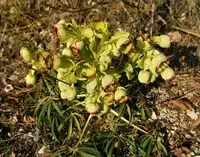
Stinking hellebore (Helleborus foetidus) is an evergreen perennial valued for its winter and early spring flowers. It forms clumps of deeply divided, dark green leaves and nodding, bell-shaped, green flowers often edged in purple. Native to rocky woodlands and scrub in Western and Central Europe, it thrives in cool, temperate climates with mild winters. This species prefers partial shade, consistent moisture, and well-drained, humus-rich soil. Once established, it is long-lived and generally low-maintenance, though it dislikes disturbance and very wet or very dry sites. Understanding how to care for Stinking Hellebore helps it stay healthy and flower reliably each year.

Care Difficulty
Easy Care

Light Preference
Partial Shade

Water Requirements
Moderate Water

Temperature Preference
Cold Hardy

Hardiness Zone
5–9

Soil Texture
Loamy, Sandy, Organic-rich

Soil pH
Acidic (5.5–6.5), Slightly acidic (6.5–7.0)

Soil Drainage
Moist but well-drained

Fertilization
Minimal (feed rarely)
Scan your plant to receive care tips personalized for your specific plant
Available on iOS and Android
This shade-tolerant perennial prefers cool light conditions rather than strong, direct sun.
This species prefers consistently moist but not waterlogged soil, especially during active growth and flowering.
This hardy perennial tolerates significant cold but grows best in cool to mild conditions.
Humidity is rarely a concern for Helleborus foetidus in typical outdoor conditions.
This species prefers a moist, crumbly, well-aerated soil that does not stay waterlogged.
This species can be grown in containers if the pot is prepared for its deep, clumping root system.
This woodland perennial needs only light feeding, as Stinking Hellebore is adapted to moderately fertile soils.
Thoughtful pruning keeps Helleborus foetidus tidy and helps maintain healthy flowering clumps.
This hellebore prefers staying undisturbed, so transplant only when clearly necessary.
Propagation is usually done from seed, as this species dislikes frequent division.
This species is cold hardy and generally needs minimal winter care in most temperate gardens.

Plant Health Check
Not sure what's wrong with your plant? Check your plant's health inside the app.
The pale green, nodding flowers have inflated, lantern-shaped sepals with a narrow maroon rim, which stay on the plant for months and continue to photosynthesize like small leaves.
Crushed leaves release an unpleasant, animal-like odor that helps deter herbivores, a trait reflected in the species name foetidus, meaning foul-smelling in Latin.
This species flowers in late winter to very early spring, offering nectar and pollen to cold-tolerant insects such as early bees and hoverflies when few other plants are in bloom.

Although evergreen in mild climates, this plant is a short-lived perennial that often relies on abundant self-seeding to maintain long-term colonies in woodlands and shaded gardens, so older clumps may disappear but be replaced around them by younger seedlings.
All parts of this plant contain toxic compounds that can irritate skin and cause stomach upset, drooling, or more serious symptoms if eaten. Children and pets should not chew the foliage, stems, or seeds.
Keep your plants happy and healthy with plant identification, disease detection, and easy care guidance.