Lily magnolia Care (Magnolia liliiflora)

Also known as: Flowering Magnolia
Lily magnolia

About Lily magnolia

Lily magnolia (Magnolia liliiflora) is a small, deciduous ornamental shrub or tree valued for its early spring flowers. It usually stays compact, making it suitable for modest gardens.

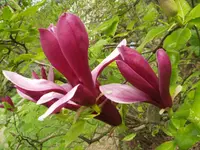
The plant produces goblet-shaped blooms in shades of purple and pink, often before the leaves fully emerge. Its branching habit is upright to spreading, forming a rounded outline over time.

Magnolia liliiflora is native to China and has been widely cultivated in temperate regions as a landscape feature. It is generally considered moderately easy to grow if given suitable conditions.

It prefers sun to light shade, moisture-retentive but well-drained soil, and shelter from harsh winds, which simplifies how to care for Lily magnolia in home gardens.

Main Plant Requirements

Care Difficulty

Moderate Care

Light Preference

Full Sun

Water Requirements

Moderate Water

Temperature Preference

Cool Climate

Hardiness Zone

5–9

Soil Texture

Loamy, Sandy, Organic-rich

Soil pH

Acidic (5.5–6.5), Slightly acidic (6.5–7.0)

Soil Drainage

Moist but well-drained

Fertilization

Minimal (feed rarely)

Get Personalized Care Plan

Scan your plant to receive care tips personalized for your specific plant

Available on iOS and Android

How to Care for the Lily magnolia

This deciduous shrub performs best with bright, gentle sun exposure and some protection from harsh conditions.

  • Provide 4–6 hours of direct morning sun with light afternoon shade; strong late-day sun can scorch tender flower buds and young leaves.
  • Allow light, shifting shade (from trees or structures) in hotter climates to reduce heat stress while still maintaining good blooming.
  • In cooler regions, choose a site with more open sun; insufficient light leads to sparse flowering and leggy Lily magnolia growth.

This shrub prefers evenly moist, well-drained soil and reacts clearly to both excess and shortage of water.

  • Water when the top 3–5 cm of soil feels dry, soaking the root zone deeply rather than giving light surface splashes.
  • During the first 2–3 growing seasons, monitor closely in dry spells; drooping or dull leaves signal thirst, while yellowing leaves and soggy soil suggest overwatering.
  • Plant in soil that drains within 1–2 hours after heavy watering; avoid compacted or waterlogged sites to reduce root rot risk for Magnolia liliiflora.

This species thrives in temperate climates with cool winters and mild to warm summers.

  • Aim for active growth in 60–80°F (16–27°C); buds and flowers develop best when spring temperatures warm gradually within this range.
  • The shrub tolerates winter lows to about -10°F (-23°C) once established, but late frosts around 28–32°F (-2–0°C) can damage swelling buds.
  • In hot summers above 90°F (32°C), mulch the root zone and provide light afternoon shade to limit heat stress and leaf scorch.

This shrub tolerates a wide humidity range and rarely needs special humidity management outdoors.

Magnolia liliiflora prefers deep, moist, well‑drained loam with high organic matter content.

  • Aim for a loamy mix made from garden soil, compost, and sharp sand to balance moisture retention and drainage.
  • Keep drainage strong; avoid compacted or waterlogged sites, which quickly lead to root decline and reduced flowering.
  • Target a slightly acidic to neutral pH around 5.5–7.0; add composted pine bark or leaf mold to acidify alkaline ground.
  • Improve aeration in heavy clay by incorporating 30–40% coarse sand or fine gravel through the top 30–40 cm before planting.

This species can be grown in containers for several years, especially dwarf or smaller selections.

  • Choose a tall, heavy container to anchor the plant against wind and support the naturally spreading canopy.
  • Use a deep pot that allows a broad, shallow root system to extend laterally without circling tightly.
  • Select a thicker-walled material such as glazed ceramic to buffer root temperature swings and slow water loss in hot weather.

Magnolia liliiflora benefits from modest, well-timed feeding rather than heavy fertilization.

  • Apply a balanced slow-release fertilizer (around 10-10-10) or well-rotted compost in early spring, just before new growth starts.
  • Feed once more in late spring if growth is weak; established trees on decent soil often need no extra fertilizer.
  • Use at 1/2–3/4 of the label rate to avoid salt buildup and soft, weak shoots.
  • Stop feeding by late summer and do not fertilize in winter dormancy to prevent tender growth that can be damaged by cold.

Pruning Magnolia liliiflora is mainly about light shaping and removing problem wood after flowering.

  • Time pruning for late spring, immediately after blooms fade, so flower buds for next year are not removed.
  • Use clean, sharp bypass pruners or loppers to cut out dead, diseased, or storm-damaged branches back to healthy wood.
  • Thin a few crossing or crowded interior branches to improve airflow and maintain an open, balanced framework.
  • Avoid hard cutting into old, thick wood; focus on minor heading or thinning cuts on younger shoots to guide shape.

Magnolia liliiflora is usually planted in the ground, so focus on correct site planting and minimal root disturbance.

  • Transplant young trees in early spring or early fall, when temperatures are mild and soil is workable.
  • Move only if necessary; choose a sunny to lightly shaded site with well-drained, slightly acidic soil before digging up the plant.
  • Dig a wide root ball and replant at the same depth, backfilling with native soil and watering deeply to settle air pockets.
  • Mulch a 5–8 cm layer around the root zone, keep soil evenly moist, and avoid heavy pruning during the first year to reduce stress.

Magnolia liliiflora is most often propagated by semi-hardwood cuttings or layering rather than by division.

  • Take semi-hardwood cuttings in mid to late summer, 10–15 cm long, with 2–3 leaf nodes from healthy, non-flowering shoots.
  • Remove lower leaves, dip the base in rooting hormone, and place in a moist, well-draining medium under high humidity and bright, indirect light.
  • Use simple layering in spring: bend a low branch to the soil, wound slightly, pin it down, cover with soil, and keep moist until roots form.
  • Sow fresh seeds in fall after cold stratification, understanding that seedlings vary and take several years to reach flowering size.

Magnolia liliiflora is reasonably cold hardy but benefits from some winter protection in colder regions.

  • Hardy roughly to USDA zone 5–6, flower buds are more frost-sensitive than woody stems.
  • Apply 5–8 cm of organic mulch over the root zone in late fall, keeping it a few cm away from the trunk.
  • Shelter young trees from harsh winter winds using windbreaks or by planting in a protected spot.
  • Move container-grown plants into an unheated garage or sheltered area where temperatures stay mostly above 25°F and soil does not freeze solid.

Care Tips

Root flare check

Expose the root flare at the base of the trunk slightly above soil level and keep mulch a few cm away from the bark to reduce rot risk and improve oxygen access to the roots.

Bud frost protection

During late cold snaps, cover the shrub with a breathable frost cloth or old sheet overnight to protect swelling flower buds from freeze damage and browning.

Branch training early

In the first 3–5 years, gently remove or shorten inward-crossing or very low branches to build a strong, open framework that supports heavy flowering without breakage.

Mulch for pH buffering

Apply a 5–8 cm layer of shredded bark or pine needle mulch in the drip zone to help maintain slightly acidic conditions, moderate soil temperature, and reduce weed competition when growing Lily magnolia.

Post-flower clean up

Rake up fallen petals and old leaves promptly after flowering to reduce mold growth and discourage pests that can overwinter in dense, decaying organic material around the plant base.

Common Pests and Diseases

Magnolia scale

This pest is a large, sap-sucking scale insect that often covers branches with waxy bumps and leads to sticky honeydew and sooty mold. Symptoms include yellowing leaves, reduced vigor, and blackened surfaces from mold growth.

Solution

Prune and destroy heavily infested twigs, then wash remaining branches with a strong stream of water to remove scales and honeydew. For heavier infestations, use horticultural oil during the dormant season or a light summer oil when leaves are present, ensuring thorough coverage of all branches and undersides of twigs.

Leaf spot

This disease causes tan to brown spots on leaves, often with purple or darker margins, leading to premature leaf drop in wet seasons. Symptoms include scattered spots that may merge, giving foliage a scorched or tattered look.

Solution

Remove and discard fallen leaves to reduce disease carryover, and avoid overhead watering to keep foliage dry. In sites with repeated problems, improve air circulation by thinning dense growth and, if needed, apply a labeled ornamental fungicide at bud break and early leaf expansion according to Magnolia liliiflora care instructions.

Canker

This disease produces sunken, discolored areas on branches or the main stem, sometimes accompanied by oozing sap and dieback of twigs beyond the infected zone. Symptoms include wilting or death of affected branches while other parts of the shrub look healthy.

Solution

Cut out infected branches several inches below visible damage, disinfecting pruning tools between cuts with a 10% bleach solution or alcohol. Improve plant vigor by watering during dry periods and mulching the root zone, and avoid trunk injuries that create entry points for pathogens.

Aphids

These insects cluster on new shoots and the undersides of young leaves, sucking sap and causing curling, distortion, and sticky honeydew. This pest can attract ants and encourage sooty mold growth on leaves and stems.

Solution

Spray affected shoots with a firm stream of water to dislodge aphids, repeating as needed. For persistent populations, use insecticidal soap or a light horticultural oil, applied in the early morning or evening and directed at the undersides of leaves and tender new growth.

Spider mites

This pest is a tiny sap-feeding arachnid that thrives in hot, dry conditions and causes fine stippling, bronzing, and dulling of leaves. Symptoms include very light webbing and leaves that may drop prematurely when infestations are severe.

Solution

Increase humidity around the shrub by regular, gentle hosing of foliage and surrounding area, focusing on the undersides of leaves to wash off mites. If populations remain high, apply insecticidal soap or a miticide labeled for ornamentals, repeating at intervals specified on the product label to break the life cycle.

Interesting Facts

Ancient Chinese cultivar

Magnolia liliiflora is thought to have originated as a garden selection in China rather than a wild species, with written records and illustrations dating back several centuries in traditional Chinese horticulture.

Genetic parent of hybrids

This species is one of the two main parents of the popular saucer magnolia (Magnolia × soulangeana), contributing its rich purple flower color and shrubby form to many modern ornamental hybrids.

Frost-avoiding bloom strategy

Flower buds of this species often open slightly later than those of some other magnolias, a trait that helps reduce damage from late spring frosts in temperate climates.

Botan icon

Did you know?

In traditional East Asian art and garden design, this species has been used as a symbolic courtyard and temple plant, chosen for its upright purple blossoms that stand out clearly against white plaster walls and dark roof tiles, creating high visual contrast even in low light.

FAQs about Lily magnolia

Lack of flowers usually comes from immature age, heavy pruning at the wrong time, insufficient light, or late frosts damaging buds. Avoid pruning after midsummer, protect from hard late frosts, and keep nutrition balanced, not high in nitrogen.

Grow Healthy Plants with Botan Care

Keep your plants happy and healthy with plant identification, disease detection, and easy care guidance.

Botan plant care app — identify plants on mobile

Explore More Plants