book-leaf mallee Care (Eucalyptus kruseana)

book-leaf mallee

About book-leaf mallee

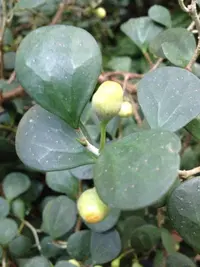
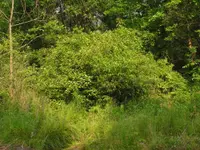
Book-leaf mallee, Eucalyptus kruseana, is a small evergreen eucalyptus shrub or compact tree, valued for its rounded, silvery blue leaves arranged in opposite pairs. It typically forms a dense, multi-stemmed shape and is often grown as an ornamental feature, foliage plant, or for cutting gardens.

This species is native to arid regions of Western Australia, where it naturally experiences strong light, dry air, and poor, rocky soils. Its drought tolerance and resilience to heat make it relatively low-maintenance once established, though good light and sharp drainage are important for success.

Understanding how to care for book-leaf mallee starts with providing bright light, low to moderate watering, and a fast-draining, mineral-rich potting mix or garden soil.

Main Plant Requirements

Care Difficulty

Moderate Care

Light Preference

Full Sun

Water Requirements

Low Water

Temperature Preference

Warm Climate

Hardiness Zone

8–10

Soil Texture

Sandy, Loamy, Rocky

Soil pH

Acidic (5.5–6.5), Slightly acidic (6.5–7.0)

Soil Drainage

Well-drained

Fertilization

Minimal (feed rarely)

Get Personalized Care Plan

Scan your plant to receive care tips personalized for your specific plant

Available on iOS and Android

How to Care for the book-leaf mallee

Eucalyptus kruseana prefers bright, open conditions that mimic its native sunny habitat.

  • Provide full sun for 6–8 hours per day; morning sun with some light afternoon shade works well in hotter regions.
  • The book-leaf mallee tolerates light partial shade, but dense shade leads to leggy growth and sparse foliage over time.
  • In summer, young plants may scorch in intense afternoon sun; in winter, choose the brightest, least shaded spot to maintain compact growth.

This species prefers drying between waterings and is sensitive to prolonged wet soil.

  • Outdoors in the ground, allow the top 3–5 cm of soil to dry before watering; established plants in well-drained soil often rely mostly on rainfall.
  • Use sharply draining, gritty soil so water runs through quickly; standing water or heavy clay greatly increases root rot risk for Eucalyptus kruseana.
  • Wilting, crisp leaf edges, and slowed growth suggest underwatering, while yellowing leaves, soft stems, or a sour smell from the soil indicate overwatering.

This eucalyptus prefers warm, dry conditions and tolerates a moderate range of outdoor temperatures.

  • Optimal growth occurs around 65–80°F (18–27°C), with steady airflow to reduce fungal issues and heat stress.
  • Mature plants handle brief dips to about 20–25°F (-7 to -4°C), but young trees are more cold-sensitive and benefit from protection during frosts.
  • In hot spells above 95°F (35°C), ensure soil does not fully dry out and avoid reflected heat from walls or pavement that can scorch foliage.

Humidity is rarely a limiting factor for Eucalyptus kruseana in home conditions.

  • Best growth occurs in 30–50% relative humidity, matching most heated and air-conditioned homes.
  • Dry indoor air is usually tolerated, but very hot, stagnant rooms can cause marginal leaf crisping and earlier leaf drop.
  • If air is extremely dry, increase humidity by grouping plants together and avoiding direct heater or AC airflow on book-leaf mallee.

Soil for Eucalyptus kruseana must be fast-draining and relatively lean to prevent root problems.

  • Use a gritty, sandy-loam mix such as 50% peat-free potting mix with 30% coarse sand and 20% small bark or perlite for strong aeration.
  • Ensure water runs through freely; the mix should feel loose, not sticky or compacted after watering.
  • Aim for slightly acidic to neutral pH (6.0–7.0), avoiding very alkaline or strongly acidic conditions that limit nutrient uptake.
  • Avoid heavy clay, waterlogged sites, or mixes with large amounts of uncomposted manure, which hold excess moisture and promote root rot in Eucalyptus kruseana.

This species adapts well to container growing when its strong root system and height are managed.

  • Choose a deep, heavy container that resists tipping as the plant becomes woody and top-heavy in windy spots.
  • Use a pot with multiple low-side drainage holes so water exits quickly and does not pool around the taproot area.
  • Select unglazed clay or other porous materials to allow faster evaporation and prevent prolonged saturation of the root zone.

Eucalyptus kruseana grows acceptably in poor soils but benefits from light, controlled feeding in containers or very lean ground.

  • Use a balanced, slow-release fertilizer (for example 10-10-10) in spring for potted or nutrient-poor plantings, following label rates.
  • Apply once at the start of the growing season; in long seasons a second light dose in midsummer is enough.
  • Reduce feeding in late fall and winter to avoid soft, frost-tender growth, especially in cooler climates.
  • For book-leaf mallee in containers, use half-strength liquid feed monthly in spring–summer instead of heavy granular products.

Eucalyptus kruseana responds well to moderate pruning that controls size and encourages dense, rounded growth.

  • Carry out main pruning in late winter or very early spring before strong new growth starts.
  • Remove dead, damaged, crossing, or inward-growing branches first to maintain a healthy, open framework.
  • Shorten or thin crowded shoots to shape the canopy and keep desired height, especially in small gardens or containers.
  • Use clean, sharp bypass pruners or loppers, making smooth cuts just above a bud or side branch to speed healing.

This species is most often grown in the ground, but young Eucalyptus kruseana can start in containers or be moved while still small.

  • Plan transplanting or up-potting for late winter to early spring, once hard frosts have passed but before strong growth.
  • Look for roots circling the pot drainage holes or noticeably slowed growth as signals to move up 1 pot size.
  • Lift with as much root ball as possible, keep roots shaded and moist, and replant at the same soil depth to limit stress.
  • Water thoroughly after planting, then keep soil slightly moist, not waterlogged, for 2–3 weeks while roots re-establish.

Eucalyptus kruseana is most reliably propagated from seed, as cuttings root inconsistently.

  • Sow fresh seed in late winter–early spring in a sterile, free-draining mix kept at 65–75°F.
  • Lightly cover seed or press into the surface, then maintain steady moisture and bright, indirect light.
  • Provide good airflow and avoid overwatering to limit damping-off, a fungal disease that kills seedlings at soil level.
  • Transplant seedlings carefully once they have several true leaves, disturbing roots as little as possible.

Mature Eucalyptus kruseana shows moderate frost tolerance but young or potted plants benefit from simple winter protection in colder areas.

  • In regions colder than about 15–20°F, grow in large containers and overwinter in a bright, cool, frost-free space.
  • Apply a 5–8 cm mulch layer around the root zone in fall, keeping it slightly away from the trunk.
  • Shelter young outdoor plants from harsh wind with fencing or temporary screens to reduce desiccation and stem damage.

Care Tips

Staking young stems

Provide a slim, sturdy stake and loosely tie the main stem while it is under 60–80 cm tall to help it form a straight, wind-resistant framework before the wood fully hardens.

Controlled height management

If grown in a container, remove or pinch out the soft tip of the leader in late winter to slow vertical growth and encourage a denser crown that is easier to manage on patios or small gardens.

Root confinement strategy

Use a deep, heavy container or a buried root barrier sleeve when planting near structures so the plant stays more compact and root spread is limited, which simplifies long-term maintenance.

Summer wind protection

In very exposed sites, use a low windbreak such as a mesh panel or existing shrub on the windward side during the first 1–2 summers to reduce rocking of the root ball while the anchoring roots establish.

Propagation timing

For growing book-leaf mallee in new spots, sow fresh seed in late winter to early spring under bright, cool conditions, then transplant only once seedlings have a firm root plug to avoid transplant shock.

Common Pests and Diseases

psyllids

This pest feeds on new shoots and leaves, causing pitting, curling, and small raised blisters on the foliage. Symptoms include distorted juvenile leaves and sticky honeydew that can lead to sooty mold growth.

Solution

Prune and dispose of badly infested shoot tips, then hose down the plant to remove remaining insects and honeydew. For ongoing problems, use a horticultural oil or insecticidal soap thoroughly on young foliage during active growth, and avoid high nitrogen fertilization that promotes very soft new growth.

lerp psyllids

These insects form small, white, shell-like covers (lerps) on leaves and suck sap, which can lead to yellowing, leaf drop, and overall thinning of the canopy. This pest is often more noticeable on stressed plants grown in containers or in humid, sheltered sites.

Solution

Gently scrape off or wash off lerps with a strong water spray, focusing on the undersides of leaves. Encourage natural predators such as lady beetles, and in heavy infestations apply insecticidal soap or horticultural oil repeatedly, ensuring good coverage of all leaf surfaces.

leaf spot

This disease causes small brown to gray spots on leaves that may merge into larger blotches, sometimes with a yellow halo and premature leaf drop. Symptoms include a generally sparse crown and unattractive, blemished foliage, especially in humid or overcrowded conditions.

Solution

Remove and discard affected leaves from the plant and the soil surface to reduce spore spread, and improve airflow by thinning nearby vegetation or light pruning. Avoid wetting the foliage when watering and, if the problem is persistent in damp climates, consider a preventive copper-based fungicide applied according to label directions as part of Eucalyptus kruseana care.

powdery mildew

This disease appears as white, powdery patches on young leaves and stems, which can cause distortion, reduced growth, and a dull, grayish cast to the foliage. Symptoms include affected juvenile leaves becoming misshapen and more prone to premature drop.

Solution

Increase light and airflow around the plant and avoid overhead watering to keep foliage dry. Remove heavily infected shoots and, if needed, apply a sulfur or potassium bicarbonate-based fungicide labeled for ornamental trees, treating new growth early to prevent spread.

longhorn borers

These insects bore into stems and branches, creating internal tunnels that weaken the plant and can cause branch dieback or sudden wilting of sections of the canopy. Symptoms include exit holes in bark, frass (sawdust-like material), and dead twigs on an otherwise healthy plant.

Solution

Promptly prune and destroy affected branches below the visible damage to remove larvae from the plant. Keep the tree healthy with appropriate watering and avoid wounding the trunk, and in areas with known borer issues consider using trunk wraps or physical barriers on young stems and remove nearby dead eucalyptus wood that can harbor the insects.

Interesting Facts

Distinct book-page foliage

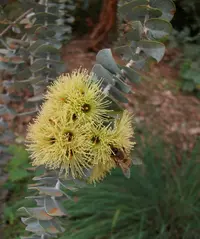
This species has small, almost circular juvenile leaves that stack closely along the stems, giving rise to the common name book-leaf mallee because the leaves resemble the pages of an open book.

Naturally dwarf mallee form

Eucalyptus kruseana is a naturally small mallee, usually forming a multi-stemmed shrub rather than a tall tree, which makes it unusually compact compared with many other eucalypts native to Western Australia.

Silver-blue leaf coating

Its blue-grey foliage color comes from a waxy surface layer called epicuticular wax, which reflects light and reduces water loss, an adaptation to the high light and low-moisture conditions of its arid habitat near Kalgoorlie in Western Australia.

Botan icon

Did you know?

Eucalyptus kruseana has been used in ornamental floristry for its long-lasting, rounded, silvery juvenile stems, which are often harvested and dried because they retain their distinctive color and form for extended periods.

FAQs about book-leaf mallee

This species grows at a moderate rate, usually adding around 20–40 cm of height per year once established. Growth is slower in poor, dry soils and faster in deep, well-drained ground with full sun.

Grow Healthy Plants with Botan Care

Keep your plants happy and healthy with plant identification, disease detection, and easy care guidance.

Botan plant care app — identify plants on mobile

Explore More Plants