Bengal kino Care (Butea monosperma)

Also known as: Flame Of The Forest
Bengal kino

About Bengal kino

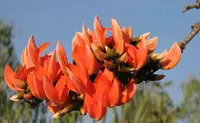
Bengal kino (Butea monosperma) is a deciduous flowering tree known for its bright orange-red blooms that cover bare branches before new leaves appear. It typically grows with a broad, spreading crown and thick, gray bark.

This species is native to the Indian subcontinent and parts of Southeast Asia, where it occurs in dry forests and open woodland. Its tough nature and drought tolerance make it a relatively resilient choice in warm climates.

The tree prefers full sun, well-drained soil, and moderate watering once established. Understanding these basic needs helps plant owners know how to care for Bengal kino in suitable outdoor conditions.

Main Plant Requirements

Care Difficulty

Moderate Care

Light Preference

Full Sun

Water Requirements

Moderate Water

Temperature Preference

Tropical / Frost Sensitive

Hardiness Zone

10–12

Soil Texture

Sandy, Loamy, Clay

Soil pH

Slightly acidic (6.5–7.0), Neutral (7.0)

Soil Drainage

Well-drained

Fertilization

Minimal (feed rarely)

Get Personalized Care Plan

Scan your plant to receive care tips personalized for your specific plant

Available on iOS and Android

How to Care for the Bengal kino

This sun-loving tree thrives in open, bright conditions with strong direct light.

  • Provide 6–8 hours of direct sun daily; full sun promotes dense flowering in Bengal kino and sturdy branching.
  • Tolerates light or dappled shade for part of the day, but prolonged shade leads to sparse blooms, lanky growth, and smaller leaves.
  • In very hot regions, give light afternoon shade to young trees to prevent leaf scorch, while ensuring unshaded morning sun, especially from late winter to early summer.

This drought-tolerant tree prefers deep, infrequent watering and well-drained soil.

  • Water thoroughly only when the top 5–8 cm of soil feel dry, allowing moisture to reach the deeper root zone, especially during the first 2–3 establishment years.
  • Use fast-draining soil; avoid standing water or heavy clay that stays wet, since persistent sogginess causes yellowing leaves, dieback, and root rot.
  • Reduce or stop supplemental watering in cool or rainy seasons; watch for drooping leaves and dry, hard soil as a cue that Butea monosperma needs a deep soak.

This warm-climate tree grows best in consistently hot to warm conditions without frost.

  • Optimal growth occurs around 77–95°F (25–35°C); young trees grow fastest when nights stay above 64°F (18°C).
  • Mature plants tolerate brief dips to about 32°F (0°C), but repeated cold below 35°F (2°C) can damage new shoots and flower buds.
  • Handles dry heat up to 104–110°F (40–43°C) if roots are mulched and soil is not bone-dry; protect seedlings from cold winds and any frost exposure.

This species tolerates a wide humidity range and rarely needs special humidity management outdoors.

This tree prefers loose, well-aerated substrates that drain quickly yet retain moderate moisture.

  • Use a sandy or sandy-loam mix with coarse particles to keep the root zone open and oxygenated.
  • In containers, combine roughly 50% loam, 30% coarse sand, and 20% compost to balance drainage and nutrient supply.
  • Aim for slightly acidic to neutral pH, around 6.0–7.5, avoiding strongly alkaline or saline conditions that restrict nutrient uptake.
  • Prevent compaction by avoiding heavy clay-only sites; incorporate sharp sand and organic matter if drainage is sluggish.

This species can be grown in large containers for some years, especially in warm climates.

  • Choose a wide, heavy container that resists tipping as the canopy becomes broad and wind-exposed.
  • Select a pot material with moderate moisture retention, such as thick-walled terracotta, to buffer rapid drying in hot sun.
  • Provide a deep substrate column so the developing root system can anchor firmly and reduce rocking in strong winds.

This tree benefits from moderate feeding when young, but established Butea monosperma in the ground often needs little fertilizer.

  • Use a balanced granular or slow-release fertilizer (around 10-10-10) at half label rate at the start of spring.
  • In poorer soils, add a thin layer of mature compost over the root zone once each growing season.
  • Water thoroughly after feeding to move nutrients into the root zone and avoid salt buildup.
  • Stop fertilizing Bengal kino in late summer and do not feed during cool dormant periods.

Pruning Butea monosperma is mainly done to maintain structure, remove problems, and support flowering quality.

  • Prune in late winter or very early spring before new growth, when the tree is leafless or just budding.
  • Remove dead, diseased, or storm-damaged branches first, cutting back to healthy wood with clean, sharp tools.
  • Thin crowded interior shoots to improve light penetration and air flow, encouraging stronger flowering spurs.
  • Limit heavy structural cuts to young trees to guide a balanced, open canopy and sturdy main framework.

This tree is usually grown in the ground, so focus on careful transplanting of young specimens rather than frequent repotting.

  • Transplant in late winter or early spring, when growth is just about to start and stress is lowest.
  • Look for roots circling the container, water running straight through, or slowed growth as signs a young tree needs a larger pot or ground planting.
  • Move up only 1 container size, gently loosen circling roots, and keep the root ball intact to reduce shock.
  • Plant at the same depth, water slowly and deeply, then keep soil evenly moist and shaded for 1–2 weeks while roots re-establish.

Butea monosperma is most often propagated from seed, with some use of semi-hardwood cuttings in controlled conditions.

  • Collect ripe seeds, scarify the hard coat lightly, then soak 12–24 hours in warm water to improve germination.
  • Sow in a free-draining mix, keep at 70–80°F, and maintain lightly moist, not wet, conditions.
  • Take semi-hardwood cuttings in late spring to early summer, use rooting hormone, and place in warm, humid, bright shade.
  • Provide bottom heat if possible and avoid disturbance until firm roots develop, then pot on gradually.

This subtropical tree prefers mild winters and needs protection in regions with hard frosts or freezes.

  • In USDA zones warmer than 9, mature in-ground trees usually tolerate brief light frost once established.
  • Apply 5–8 cm of organic mulch over the root zone in late fall, keeping it slightly away from the trunk.
  • For young or marginal-climate trees, wrap the lower trunk and main scaffold branches with breathable frost cloth.
  • Grow Butea monosperma in large containers in cooler climates and move indoors or into a frost-free garage for winter.

Care Tips

Early framework training

In the first 2–4 years, select 3–5 strong scaffold branches and remove competing shoots to build a balanced open crown that can safely support the tree’s heavy flowering later on.

Root zone protection

Keep a permanent grass-free, mulch-covered ring 60–90 cm around the trunk so the shallow feeder roots are not compacted by foot traffic or injured by string trimmers and mowers.

Dry-season stress check

At the end of a long dry spell, inspect for fine twig dieback and bark cracks, then lightly tip-prune and remove only clearly dead twigs to reduce pest entry points without forcing soft new growth before rains return.

Flowering clean-up strategy

Place breathable tarps or ground sheets under the canopy before peak bloom to make cleanup of fallen flowers and pods faster and to reduce volunteer seedlings sprouting where they are not wanted when growing Bengal kino.

Wind and limb management

In windy sites, thin crowded interior branches every 2–3 years rather than topping the tree, which lowers wind resistance and reduces the risk of major limb failure as the canopy becomes heavier with age.

Common Pests and Diseases

Leaf gall

This disease causes swollen, blister-like growths on leaves and young shoots, often leading to distortion and reduced photosynthesis. Symptoms include thickened, curled leaf areas that may turn pale or corky over time.

Solution

Prune and destroy affected leaves and twigs early to reduce the gall-forming fungi or mites involved, and avoid overhead irrigation that keeps foliage wet. Maintain good spacing and airflow in plantation or landscape settings, and where pressure is persistent, use targeted copper-based fungicide sprays at the start of new flush growth, following local guidelines.

Powdery mildew

This disease appears as white, powdery patches on young leaves, buds, and tender shoots, which can cause yellowing, distortion, and premature leaf drop under dry, warm conditions. Symptoms include a dusty coating that can be easily rubbed off with a finger.

Solution

Remove and discard heavily infected leaves and improve air circulation around the canopy by light thinning if the tree is dense. In high-pressure areas, apply a sulfur or potassium bicarbonate-based fungicide during early infection periods, and avoid excessive late-season nitrogen that encourages soft, susceptible growth when planning how to take care of Bengal kino.

Leaf spot

This disease produces small, brown to dark lesions on foliage that may merge into larger dead patches, sometimes with a yellow halo. Symptoms include premature shedding of heavily spotted leaves, which can weaken young trees if repeated over several seasons.

Solution

Rake and destroy fallen leaves to reduce fungal inoculum and avoid frequent wetting of foliage from sprinklers. For valuable specimens or nursery stock, use a preventive broad-spectrum fungicide during humid periods and keep trees on a balanced watering schedule to reduce stress.

Bark-boring beetles

These insects tunnel into young stems and branches, causing fine frass (wood dust) at entry holes, branch dieback, and sometimes entire limb death in stressed trees. This pest is more frequent where trees are drought-stressed, injured, or poorly maintained.

Solution

Cut out and destroy infested twigs or branches showing fresh exit holes and frass, and keep trees vigorous with regular watering and mulching to reduce stress. In areas with known infestations, consider targeted trunk or branch sprays with an appropriate systemic insecticide timed to adult beetle flight, following local regulations and label directions.

Defoliating caterpillars

These insects feed on foliage, leaving irregular holes or completely stripped leaflets, and heavy infestations can defoliate young trees during the growing season. This pest often hides on the underside of leaves or along midribs during the day.

Solution

Hand-pick visible larvae from reachable branches and prune heavily infested twigs on small or young trees. For larger trees or repeated outbreaks, use a biological insecticide containing Bacillus thuringiensis (Bt) targeted at caterpillars, applied in the evening to young larvae for best effect.

Interesting Facts

Flame-shaped corollas

The bright orange-red flowers form rigid, beak-like corollas that cluster densely on leafless branches, giving the tree a striking “flame of the forest” appearance at the end of the dry season.

Specialist pollinator partnership

In much of its native range, the tree is primarily pollinated by specific bird species such as sunbirds and mynas, which are attracted to its nectar-rich flowers and transfer pollen as they move between inflorescences.

Nitrogen-fixing association

Its roots host symbiotic bacteria in nodules that convert atmospheric nitrogen into plant-available forms, helping the tree thrive on poor soils and improving soil fertility for surrounding vegetation.

Botan icon

Did you know?

The flowers of this species have been used for centuries as a natural source of pigments for traditional Holi powders and textile dyes, with different extraction methods yielding shades from bright orange to deep reddish hues.

FAQs about Bengal kino

This species often delays flowering until several years old and after establishing a strong root system. Insufficient winter dryness, excessive nitrogen fertiliser, or heavy shade can also reduce flower production, especially in container or urban plantings.

Grow Healthy Plants with Botan Care

Keep your plants happy and healthy with plant identification, disease detection, and easy care guidance.

Botan plant care app — identify plants on mobile

Explore More Plants