garden angelica Care (Angelica archangelica)

Also known as: Norwegian angelica
garden angelica

About garden angelica

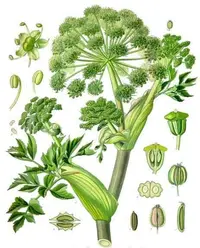
Garden angelica (Angelica archangelica) is a tall, aromatic biennial herb grown mainly for its striking foliage, hollow stems, and large, rounded umbels of yellow-green flowers. It develops a strong taproot and can reach an impressive height, giving a bold, architectural look in mixed borders or herb gardens.

This species is native to cool, damp regions of northern Europe and prefers moist, fertile soil in a cool, mild climate. It self-seeds quite easily, so it can persist for many years in a suitable site.

For those learning how to care for garden angelica, its main needs are consistent moisture, good drainage, and exposure to sun or light shade without extreme heat.

Main Plant Requirements

Care Difficulty

Moderate Care

Light Preference

Partial Shade

Water Requirements

Keep Soil Moist

Temperature Preference

Cold Hardy

Hardiness Zone

4–7

Soil Texture

Loamy, Silty, Organic-rich

Soil pH

Acidic (5.5–6.5), Slightly acidic (6.5–7.0)

Soil Drainage

Moist but well-drained

Fertilization

Minimal (feed rarely)

Get Personalized Care Plan

Scan your plant to receive care tips personalized for your specific plant

Available on iOS and Android

How to Care for the garden angelica

This plant prefers cool, bright conditions with protection from harsh midday sun.

  • Provide 4–6 hours of sun daily, ideally with morning sun and light afternoon shade, especially in warmer climates where garden angelica can scorch.
  • Grow in a site with open sky or very light dappled shade; dense shade causes weak, floppy stems and reduced flowering.
  • In hot summers, use taller plants or shade cloth to filter intense sun from 12–4 pm, while still maintaining bright ambient light.

This plant prefers consistently moist, cool soil without becoming waterlogged.

  • Water when the top 2–4 cm of soil feels slightly dry, aiming for evenly moist soil from spring through early fall, especially during active growth.
  • Use deep, slow watering that soaks the root zone, combined with well-drained, organic-rich soil to prevent standing water and root rot in Angelica archangelica.
  • Increase checks during hot, windy weather for drooping leaves or dry soil; reduce watering in late fall and winter as growth slows and rainfall increases.

This species is adapted to cool, temperate climates and dislikes prolonged heat.

  • Optimal growth occurs around 55–70°F (13–21°C), with vigorous foliage and flowering in cool, moist summers.
  • Mature plants tolerate short dips to about 15–20°F (-9 to -6°C) once established, especially with mulch protecting the crown in winter.
  • Prolonged temperatures above 80°F (27°C) can cause stress; provide extra shade, mulch, and soil moisture during heatwaves, and avoid hot, reflective planting sites.

Humidity is not a major factor for Angelica archangelica, which adapts well to typical outdoor air levels.

  • Performs reliably in 40–70% humidity commonly found in temperate outdoor gardens.
  • Tolerates short dry spells if soil moisture is maintained and roots do not dry out completely.
  • Leaves may brown at edges and wilt if low humidity combines with strong sun and dry soil.

Angelica archangelica prefers deep, evenly moist, fertile soil that supports strong, tall growth.

  • Use a loamy, crumbly soil rich in organic matter, such as garden loam mixed with 30–40% compost.
  • Ensure moderate drainage so water moves through but soil still retains moisture; avoid waterlogged or compacted ground.
  • Aim for slightly acidic to neutral pH (6.0–7.0), adding composted leaf mold to buffer minor pH issues.
  • Improve aeration and drainage by working in coarse sand or fine grit where native soil is heavy clay.

This tall, biennial species is possible but not ideal in containers, and needs careful pot setup for stability and moisture balance.

  • Choose a very deep, heavy container to support the tall, top-heavy stems and reduce tipping in wind.
  • Use a moisture-retentive but draining mix, such as 60% loam-based compost with 40% composted bark and coarse grit.
  • Place the pot where sides are partly sheltered to limit rapid drying and overheating of the root zone.

Angelica archangelica benefits from modest feeding in nutrient-poor soils but does not need heavy fertilization.

  • Use a balanced, all-purpose fertilizer (for example 10-10-10) or well-rotted compost for gentle nutrition.
  • Apply fertilizer at half strength every 4–6 weeks during the active growing season, starting in spring.
  • Avoid feeding in late fall and winter when growth slows or plants die back after flowering.
  • Water before and after applying soluble fertilizer to reduce root burn and help nutrients move into the soil.

Pruning for Angelica archangelica is minimal and mainly focuses on hygiene and seed control.

  • Use clean hand pruners or scissors to remove dead, damaged, or yellowing leaves at the base.
  • Cut spent flowering stems to ground level after seed set if self-seeding should be limited.
  • Leave some seed heads on healthy plants if natural reseeding and a wilder look are desired.
  • Clear away collapsed stems in late fall or very early spring to keep the crown open and reduce disease.

Angelica is usually grown in the ground, and transplanting must be done carefully because of its strong taproot.

  • Transplant young plants only, ideally in early spring or early fall, before the taproot becomes too deep.
  • Choose a final site with deep, loose soil and avoid moving the plant again, as older roots resent disturbance.
  • For container-grown plants, shift up only when roots circle the pot or growth slows noticeably.
  • Water thoroughly before and after moving, keep roots shaded, and mulch lightly to limit stress and moisture loss.

Propagation of Angelica archangelica is most reliable from fresh seed rather than from cuttings or division.

  • Collect seed as it ripens in late summer, then sow as soon as possible for better germination.
  • Sow seeds on the surface of moist, well-drained mix and chill outdoors or in a cold frame, since many need cold stratification.
  • Keep the seed medium evenly moist, with cool temperatures and bright, indirect light while seedlings establish.
  • Transplant seedlings when small, handling the taproot gently and moving them to a deep, final position early.

This species is quite cold hardy and usually needs only light winter care in temperate climates.

  • After frost blackens foliage, cut back collapsed stems to reduce rot and overwintering pests.
  • Apply a 5–8 cm layer of organic mulch around, but not on top of, the crown to buffer freeze–thaw cycles.
  • Container plants in very cold regions can be sunk into the ground or moved to an unheated, frost-free shelter.

Care Tips

Prompt bolt management

As soon as central flower stalks appear in the second year, remove them at the base if you want to prolong foliage harvest, since flowering rapidly diverts energy away from leaf and stem production.

Sturdy structural support

Install tall ring supports or discreet stakes early in the season so the large, hollow stems can grow through them, reducing the risk of lodging or snapping in strong wind or heavy rain.

Cool-root mulching

Apply a 5–8 cm layer of organic mulch around, but not touching, the crown to keep the root zone cool and moist, which helps this subarctic species stay vigorous in warmer summer conditions.

Self-seeding control

If you want to limit self-sown seedlings, cut and remove seed heads just as they begin to turn from green to pale yellow, before the seeds disperse widely.

Safe harvesting practice

Harvest stems and leaves in the early morning on an overcast day and wear gloves and long sleeves, as the sap can cause photosensitivity in some people, which is an important part of caring for garden angelica safely.

Common Pests and Diseases

Angelica rust

This disease causes orange to brown pustules on leaves and stems, often leading to yellowing and early dieback. Symptoms include reduced vigor and premature leaf drop in warm, humid weather.

Solution

Remove and destroy affected leaves as soon as pustules appear, and avoid overhead watering to keep foliage dry. Improve spacing and airflow around plants, rotate crops with non-Apiaceae species, and in severe cases use a sulfur or copper-based fungicide labeled for rust on edible herbs.

Bacterial leaf spot

This disease produces small, water-soaked spots on leaves that turn dark brown to black with a yellow halo. Symptoms include tattered, discolored foliage and reduced quality of harvested stems and leaves.

Solution

Promptly remove and discard infected leaves, and avoid working among plants when foliage is wet to limit spread. Use drip or soaker irrigation instead of overhead watering, keep plant debris cleared, and if the problem recurs, start new plants from certified clean seed and practice 3–4 year rotation from other umbel family crops.

Celery leaf miner

This pest is a fly larva that tunnels within the leaves, creating pale, winding mines and blotches between leaf veins. Symptoms include distorted foliage and reduced photosynthesis, which can weaken young plants.

Solution

Remove and destroy mined leaves as soon as damage is noticed, and use fine insect mesh or row cover over the crop to block adult flies, especially in areas with a history of damage. Encourage natural enemies by avoiding broad-spectrum insecticides, and consider using yellow sticky traps near plantings to monitor adult activity.

Aphids

These insects cluster on tender shoots and the undersides of leaves, sucking sap and causing curling, yellowing, and distorted growth. This pest also excretes sticky honeydew that can lead to sooty mold on foliage.

Solution

Wash colonies from stems and leaves with a firm stream of water, repeating every few days as needed. Support beneficial insects such as lady beetles, and if infestations persist, apply insecticidal soap or a light horticultural oil, making sure to cover leaf undersides and treating in cooler parts of the day.

Powdery mildew

This disease appears as white, powdery patches on leaves, petioles, and sometimes stems, often starting on older foliage. Symptoms include leaf yellowing, premature leaf drop, and reduced plant vigor late in the season.

Solution

Thin and space plants to increase air circulation and avoid high nitrogen fertilization that promotes dense, susceptible growth. Remove heavily infected leaves and, when conditions are consistently warm and dry, consider applying a labeled fungicide such as potassium bicarbonate or sulfur at the first sign of infection as part of broader Angelica archangelica care.

Interesting Facts

Short-lived giant umbel

This species is a large, short-lived perennial or biennial that dies after flowering once, producing tall hollow stems and a broad, domed umbel of greenish-white flowers that can exceed 30 cm across.

Northern river specialist

In the wild, it naturally favors cool, moist habitats such as riverbanks, wet meadows, and coastal areas across northern and central Europe and parts of Asia, where it forms dense stands in rich, damp soils.

Aromatic oil producer

Its roots, seeds, and stems contain aromatic essential oils with a strong, musky-spicy scent, which has led to documented use as a flavoring and fragrance in foods, liqueurs, and perfumery.
Botan icon

Did you know?

Garden angelica was historically cultivated in Scandinavia and other northern regions as an important leafy and root vegetable, sometimes grown in special enclosed plots or gardens due to its high value as one of the few robust green crops that tolerated cold, short-season climates.

FAQs about garden angelica

This species usually flowers in its second year, then sets seed and dies. Lack of bloom often means the plant is still in its vegetative stage or is stressed by heat, poor nutrition, or root disturbance.

Grow Healthy Plants with Botan Care

Keep your plants happy and healthy with plant identification, disease detection, and easy care guidance.

Botan plant care app — identify plants on mobile

Explore More Plants