Shelter From Wind
Site young trees where taller plants, buildings, or windbreak fencing reduce prevailing winds, since constant strong wind can distort the characteristic drooping branches and increase winter desiccation risk.


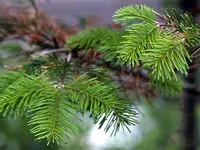
Brewer's spruce, Picea breweriana, is a slow-growing coniferous tree known for its graceful, weeping branchlets that hang in long curtains from horizontal branches. Mature trees form a narrow, pyramidal crown with dense, dark green needles and decorative, reddish to purple cones.
This species is native to high mountain slopes of southwestern Oregon and northwestern California, where it grows in cool, moist conditions. It is considered somewhat challenging outside its natural range because it dislikes heat, drought, and compacted or poorly drained soils.
Gardeners who care for Brewer's Spruce should provide a cool climate, good air circulation, and deep, slightly acidic, well-drained soil in a bright, open position.

Care Difficulty
Moderate Care

Light Preference
Full Sun

Water Requirements
Moderate Water

Temperature Preference
Cold Hardy

Hardiness Zone
5–7

Soil Texture
Loamy, Sandy, Rocky

Soil pH
Acidic (5.5–6.5), Slightly acidic (6.5–7.0)

Soil Drainage
Moist but well-drained

Fertilization
Minimal (feed rarely)
Scan your plant to receive care tips personalized for your specific plant
Available on iOS and Android
This high-elevation conifer prefers cool, bright conditions with consistent sun exposure.
This species prefers steadily moist but never waterlogged soil, especially while establishing.
This cold-adapted conifer thrives in cool to cold climates and tolerates significant winter chill.
This conifer prefers cool, moderately moist air but usually tolerates typical outdoor humidity in its growing range.
This species needs consistently moist, cool, well-aerated soil to establish deep, healthy roots.
This species can be grown in containers for many years when provided with a deep, stable, and well-drained setup.
This slow-growing conifer needs only modest feeding, especially in fertile ground.
Pruning needs for Picea breweriana are light and mainly corrective.
This species is usually grown in the ground, with container culture limited to young nursery plants.
Propagation of this spruce is specialized and most home growers buy young nursery trees instead of starting their own.
This conifer is cold hardy in most temperate climates and usually needs minimal winter attention in the ground.

Plant Health Check
Not sure what's wrong with your plant? Check your plant's health inside the app.
This species is the only North American spruce with strongly pendulous branchlets that form long, curtain-like drapes, a feature more typical of some ornamental conifers from Asia.
It occurs naturally only in a small portion of the Klamath and Siskiyou Mountains of southwest Oregon and northwest California, where it grows on cool, high-elevation slopes and ridges.
In its native range, it is most often found as scattered individuals within old-growth mixed conifer forests, rather than forming large pure stands, and tends to occupy harsh, rocky microsites that other trees struggle to colonize.

Brewer's spruce is considered one of the rarest native conifers in the United States because of its very restricted natural range and fragmented populations, which has led to conservation concern and monitoring in its home mountains.
This conifer has a slow growth rate, usually adding about 15–30 cm per year under good conditions. Young trees may grow slightly faster, but overall it remains a slow, long-term landscape tree.
Keep your plants happy and healthy with plant identification, disease detection, and easy care guidance.