Encourage Low Clumping
Pinch or cut back overly long, floppy stems after flowering to keep the plant in a compact, low clump that resists wind damage and exposes more stem surface to light.

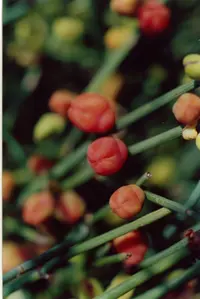
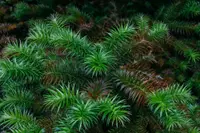
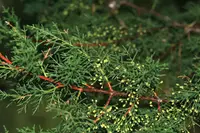
Ma huang (Ephedra equisetina) is an evergreen, shrubby gymnosperm with many thin, jointed green stems and very small, scale-like leaves. It has a strongly upright, broom-like growth habit and can form low, dense clumps over time.
This species is native to dry, rocky regions of Central Asia, where it grows in full sun with sharp drainage and low organic matter. Its drought tolerance and slow growth make it relatively undemanding but not suitable for very humid or poorly drained sites.
Gardeners who care for ma huang usually focus on providing strong light, lean mineral soil, and good air movement to mimic its natural steppe and mountain habitats.

Care Difficulty
Moderate Care

Light Preference
Full Sun

Water Requirements
Low Water

Temperature Preference
Cold Hardy

Hardiness Zone
4–8

Soil Texture
Sandy, Loamy, Rocky

Soil pH
Slightly acidic (6.5–7.0), Slightly alkaline (7.0–7.5)

Soil Drainage
Well-drained

Fertilization
Minimal (feed rarely)
Scan your plant to receive care tips personalized for your specific plant
Available on iOS and Android
This desert shrub needs strong sun to stay compact and healthy.
This species prefers dry, fast-draining conditions and is sensitive to excess moisture.
This hardy shrub tolerates a wide temperature range but prefers cool to warm, dry conditions.
Ephedra equisetina handles low humidity well, so air moisture is rarely a concern indoors or outdoors.
Ephedra equisetina prefers very fast-draining, mineral soils that stay dry between waterings.
This species is suitable for container growing when provided with a deep, very free-draining pot.
Ephedra equisetina is adapted to poor, rocky soils and needs only light feeding in cultivation, so caring for ma huang focuses more on drainage than nutrition.
Ephedra equisetina benefits from light, structural pruning rather than heavy cutting.
Ma huang is more often transplanted in the ground than maintained long term in containers, due to its deep, spreading root system.
Ephedra equisetina is usually propagated from seed, with some growers also using semi-hardwood cuttings.
This species is quite cold hardy and usually needs minimal winter care once established in the ground.

Plant Health Check
Not sure what's wrong with your plant? Check your plant's health inside the app.
This species is a characteristic shrub of dry, rocky slopes and dunes in Central Asia, especially around the Gobi Desert, where its deep root system allows it to access scarce groundwater and tolerate long periods of drought.
Instead of broad leaves, it has reduced, scale-like leaves and green, jointed stems that handle most of the photosynthesis, an adaptation that reduces water loss in its arid native habitats.
The stems contain naturally occurring ephedrine-type alkaloids used historically in East Asian medicine, which later became important model compounds in pharmacology, leading to modern regulation of wild harvesting in some regions.

Pollen and macrofossil evidence show that this species has been part of Central Asian steppe and semi-desert vegetation for thousands of years, making it a useful indicator species in paleoecological studies that reconstruct past climates and plant communities.
This species is dioecious, so male and female flowers form on separate plants. Lack of flowering often results from immature age, insufficient temperature fluctuations, or growing a single sex. Flowers are small and easy to overlook.
Keep your plants happy and healthy with plant identification, disease detection, and easy care guidance.