Talipot palm Care (Corypha umbraculifera)

Talipot palm

About Talipot palm

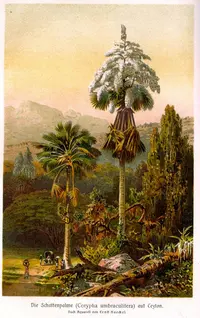
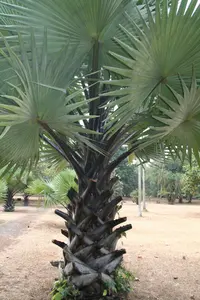
Talipot palm, Corypha umbraculifera, is a massive, slow-growing fan palm native to India and Sri Lanka. It forms a huge solitary trunk topped with a dense crown of enormous, circular fan leaves. In its natural habitat it grows in tropical lowland forests and coastal areas, eventually reaching tree-like dimensions and living for many decades before flowering once and then dying. Its size, long juvenile phase, and need for warm, frost-free conditions make it challenging outside true tropics or large conservatories. Gardeners who care for Talipot palm must plan for strong sun, consistent moisture, and deep, well-drained soil in a spacious, permanent site.


Main Plant Requirements

Care Difficulty

Hard Care

Light Preference

Full Sun

Water Requirements

Regular Water

Temperature Preference

Tropical / Frost Sensitive

Hardiness Zone

10–12

Soil Texture

Sandy, Loamy, Organic-rich

Soil pH

Acidic (5.5–6.5), Slightly acidic (6.5–7.0)

Soil Drainage

Moist but well-drained

Fertilization

Minimal (feed rarely)

Get Personalized Care Plan

Scan your plant to receive care tips personalized for your specific plant

Available on iOS and Android

How to Care for the Talipot palm

This large tropical palm needs strong, consistent light to fuel its slow but massive growth.

  • Provide 6–8 hours of direct sun daily in warm climates; in very hot regions, give Corypha umbraculifera light afternoon shade to prevent leaf scorch.
  • Young plants benefit from morning sun with bright, filtered light later in the day, especially during intense summer sun.
  • In cooler or cloudy seasons, choose the brightest, most open site available; insufficient light leads to slow growth, sparse crowns, and weak, drawn-out fronds.

This species prefers evenly moist, deep soil without staying waterlogged.

  • Irrigate when the top 3–5 cm of soil feel dry, applying enough water to soak the root zone, then allow excess to drain away.
  • During hot, windy, or dry seasons, expect to water more often; in cooler or rainy periods, reduce frequency but avoid complete drying of the root area.
  • Corypha umbraculifera shows underwatering through folded, browning leaflet tips, while yellowing, limp fronds and sour-smelling soil often indicate overwatering or poor drainage.

This palm thrives in consistently warm, frost-free climates.

  • Optimal growth occurs around 75–90°F (24–32°C); it tolerates brief peaks up to about 100°F (38°C) if soil moisture is adequate.
  • Avoid temperatures below 50°F (10°C); prolonged exposure near or under this level slows growth and can damage young tissue.
  • The plant is highly sensitive to frost; protect from any drop near 32°F (0°C) and avoid planting in low spots where cold air collects in winter.

Humidity matters mainly for young plants, which grow best in moderately humid air.

  • Aim for 50–70% humidity, especially for seedlings and juveniles kept in sheltered or nursery conditions.
  • Talipot palm tolerates brief dips to 30–40% but prolonged very dry air slows leaf expansion and can cause browned leaf tips and edges.
  • Increase humidity locally with grouped plants, large water trays near but not under pots, or a humidifier set away from foliage.

Corypha umbraculifera thrives in deep, moist, well-aerated soil that does not stay waterlogged.

  • Use a loamy, organic-rich base with noticeable structure, such as a mix of garden loam, coarse sand, and composted bark or leaf mold.
  • Ensure rapid drainage while retaining moisture by combining roughly 40% loam, 30% coarse sand, and 30% organic matter by volume.
  • Keep pH slightly acidic to neutral (pH 6.0–7.2), avoiding very acidic or strongly alkaline conditions that can limit nutrient uptake.
  • Avoid compacted clay, standing water, or thin, stony substrates by incorporating coarse material to improve aeration and prevent root suffocation.

This species is only suitable for temporary container growing during early life stages.

  • Choose a very deep, heavy container to accommodate the developing taproot and reduce the risk of the pot tipping in strong winds.
  • Use a wide, weighted base or place the pot in a stable outer sleeve to counterbalance the tall, eventually top-heavy growth.
  • Raise the container slightly off the ground on blocks so large drainage holes remain unobstructed and water does not pool under the pot.

Corypha umbraculifera benefits from modest feeding to support its large, slow-developing structure.

  • Use a balanced slow-release NPK fertilizer (for example 10-10-10) or well-rotted compost for in-ground trees.
  • Apply fertilizer once in early spring and again in mid-summer during the active growing season.
  • Reduce or stop feeding in fall and winter when growth slows, especially in cooler regions.
  • Use at 50–75% of the label rate for large palms to avoid salt buildup around the Talipot palm root zone.

Pruning Corypha umbraculifera is mainly maintenance, aimed at safety and tidiness rather than shaping.

  • Perform pruning in late winter or early spring in warm climates, when severe cold has passed.
  • Remove dead, diseased, or broken fronds at the base using clean, sharp loppers or a pruning saw.
  • Cut only completely brown fronds; leaving some green foliage maintains photosynthesis and supports trunk strength.
  • Avoid heavy crown reduction, as over-removal of fronds weakens the palm and can reduce flowering potential.

Transplanting Corypha umbraculifera is done infrequently, as this palm develops a deep, sensitive root system.

  • Look for roots circling the container drainage holes, slowed top growth, or frequent drying as signs a young plant needs a larger space.
  • Transplant in late spring or early summer, once soil is warm and stable weather reduces stress.
  • Increase container or planting hole size by 1–2 stages only, using well-draining, sandy soil to avoid waterlogging.
  • Handle the root ball gently, keep roots shaded and moist during the move, then water deeply and mulch lightly to reduce shock.

Propagation of Corypha umbraculifera is specialized and usually limited to seed-grown plants.

  • Use only fresh, viable seeds, as older seeds show sharply reduced germination rates.
  • Sow in late spring to early summer in a warm, bright location with temperatures near 77–86°F.
  • Provide a deep, well-draining sandy mix and keep it evenly moist but never waterlogged.
  • Expect slow, uneven germination; maintain consistent warmth and avoid disturbing emerging taproots.

Winter care is critical, as Corypha umbraculifera is highly sensitive to frost and prolonged cold.

  • Grow outdoors only in frost-free climates; sustained temperatures below about 40°F can cause damage.
  • Mulch the root zone with 5–10 cm of coarse organic material in mild-winter areas to buffer soil temperatures.
  • For container plants in marginal zones, move indoors or into a heated greenhouse before the first cold nights.
  • In emergency light frosts, wrap the crown with breathable fabric and avoid wetting foliage during cold snaps.

Care Tips

Plan Mature Size

Before planting, map out at least a 10–12 m radius of unobstructed space away from buildings, power lines, and other trees, since the mature crown and eventual flowering structure of Talipot palm require a large, clear area for safety and air movement.

Support Young Trunk

Install 2–3 sturdy stakes with soft, wide ties around young palms in windy sites for the first 2–3 years to keep the trunk upright while roots anchor, checking ties every few months so they do not cut into expanding tissue.

Manage Leaf Debris

As older fronds yellow and are removed, cut them cleanly near the trunk and promptly clear away fallen leaves and fruiting debris to reduce pest harborage, fungal buildup, and slipping hazards beneath the canopy.

Monitor Inflorescence Weight

When the massive flower stalk begins to develop, regularly inspect for cracked or stressed petiole bases and remove any damaged or dangerously overhanging sections early to reduce the risk of large pieces dropping unexpectedly in high‑traffic areas.

Plan Post‑Flower Removal

Because the plant dies after flowering, include in long‑term planning for growing Talipot palm the access for equipment or staged cutting needed to safely remove the very large dead trunk once seed production is complete.

Common Pests and Diseases

Palm leaf scale

This pest attaches to leaf surfaces and petioles, sucking sap and causing yellow spotting, leaf thinning, and a general loss of vigor. Heavy infestations can lead to premature leaf death on slow-growing Talipot palms.

Solution

Scrape off larger scales by hand or with a soft brush, then wash fronds with a mild insecticidal soap solution, focusing on the undersides and along midribs. For outdoor landscape specimens, encourage natural predators like lady beetles and apply a targeted horticultural oil spray during cooler parts of the day, repeating every 7–14 days until new growth appears clean.

Palm weevils

These insects bore into the crown and trunk tissues, where larvae tunnel and feed, causing internal damage that can lead to sudden crown collapse. Symptoms include wilting of the central spear leaf, foul odor from the crown, and oozing sap or frass at entry points.

Solution

Remove and destroy heavily infested palms promptly to reduce local weevil populations, and monitor nearby palms for early signs of spear leaf wilting. In regions where palm weevils are common, use pheromone traps and apply systemic insecticides labeled for palms as a preventative measure, focusing on the crown region during recommended intervals.

Ganoderma butt rot

This disease infects the lower trunk and root flare, gradually destroying structural tissue and leading to trunk base decay. Symptoms include reduced vigor, thinning canopy, and hard, shelf-like conks forming near the soil line.

Solution

Remove and dispose of infected palms including as much of the trunk and root mass as practical, and avoid replanting palms in the exact same hole. Improve drainage, prevent trunk injuries near the base, and keep mulch a few inches away from the trunk to reduce conditions that favor infection in nearby palms.

Leaf spot

This disease causes circular to irregular brown or gray lesions on older fronds, sometimes with darker margins and yellow halos. Symptoms include gradual coalescing of spots, leading to patches of dead tissue that reduce photosynthetic area on this already slow-growing species.

Solution

Prune and discard heavily spotted older fronds, avoiding cuts during wet weather, and water at the soil level rather than overhead to keep foliage dry. Improve air circulation around the canopy, and where disease pressure is high, use a palm-safe fungicide labeled for leaf spots according to label directions, focusing on young expanding leaves.

Red spider mites

These insects are tiny sap-sucking arachnids that thrive in hot, dry conditions and can cause fine stippling, bronzing, and dulling of fronds. Symptoms include delicate webbing on the undersides of leaves and a dusty appearance, particularly on container-grown or nursery plants, which affects Talipot palm indoor care scenarios or sheltered plantings.

Solution

Spray fronds thoroughly with a strong stream of water to dislodge mites, paying attention to the undersides of leaves, and slightly increase ambient humidity to slow population buildup. For persistent infestations, apply a horticultural oil or a miticide labeled for palms, repeating at intervals to target newly hatched mites, and isolate affected container plants from other palms when possible.

Interesting Facts

Largest palm inflorescence

This species produces one of the largest known flower clusters among all plants, with a single branched inflorescence that can reach several meters tall and wide, bearing millions of small flowers at once.

Monocarpic giant palm

The talipot palm is monocarpic, meaning it flowers only once at the end of its life, typically after several decades, and then gradually dies after setting fruits and seeds.

Cultural uses of leaves

In parts of South and Southeast Asia, the huge, fan-shaped leaves have been traditionally used for thatching, umbrellas, and ceremonial decorations, and historically served as a durable writing material for palm-leaf manuscripts.

Botan icon

Did you know?

Historical records indicate that large talipot palms were planted around temples and royal sites in Sri Lanka and southern India, where their rare flowering events were sometimes treated as notable local occurrences due to the scale and rarity of the display.

FAQs about Talipot palm

This species flowers only once at the end of its life, usually after several decades. The crown then produces a huge inflorescence, sets seed, and the plant dies naturally after flowering and fruiting.

Grow Healthy Plants with Botan Care

Keep your plants happy and healthy with plant identification, disease detection, and easy care guidance.

Botan plant care app — identify plants on mobile

Explore More Plants