fingerleaf gourd Care (Cucurbita digitata)

Also known as: finger-leaved gourd, coyote gourd, bitter squash
fingerleaf gourd

About fingerleaf gourd

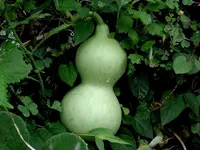
Fingerleaf gourd, Cucurbita digitata, is a perennial vine from arid and semi-arid regions of the southwestern United States and northern Mexico. It is adapted to hot, dry environments and poor, sandy or gravelly soils.

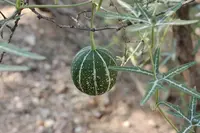
The plant has deeply divided, finger-like leaves and produces small, hard, inedible gourds. It often scrambles over rocks or low shrubs and can spread by sprawling stems and a deep root system.

Its drought tolerance makes it relatively low-maintenance once established, but it needs strong light and very well-drained soil. Understanding how to care for fingerleaf gourd starts with respecting its desert origin and avoiding excess moisture.

Main Plant Requirements

Care Difficulty

Easy Care

Light Preference

Full Sun

Water Requirements

Low Water

Temperature Preference

Tropical / Frost Sensitive

Hardiness Zone

9–11

Soil Texture

Sandy, Rocky, Loamy

Soil pH

Slightly acidic (6.5–7.0), Neutral (7.0)

Soil Drainage

Well-drained

Fertilization

Minimal (feed rarely)

Get Personalized Care Plan

Scan your plant to receive care tips personalized for your specific plant

Available on iOS and Android

How to Care for the fingerleaf gourd

This desert vine thrives in strong sun but benefits from some protection in extreme heat.

  • Provide 6–10 hours of direct sun daily; full sun is ideal in spring and early summer for vigorous vining and flowering of fingerleaf gourd.
  • In very hot climates, give morning sun with light afternoon shade or filtered light after 2–3 p.m. to reduce leaf scorch and water loss.
  • Avoid deep shade; less than 4–5 hours of direct sun leads to weak, elongated growth and fewer flowers and fruits.

This drought-tolerant species prefers deep, infrequent watering in fast-draining soil.

  • Water only when the top 5–8 cm of soil are completely dry; leaves may slightly lose turgor before recovery after watering, which is normal for Cucurbita digitata in arid regions.
  • Use sandy or gravelly soil that drains quickly; avoid standing water around the crown to reduce root rot risk and stem base decay.
  • During peak heat and active growth, expect more frequent deep soakings, then reduce watering sharply in cooler seasons as growth slows and natural rainfall increases.

This species is adapted to hot, arid conditions and performs best in warm to hot temperatures.

  • Aim for 75–95°F (24–35°C) during active growth; vines tolerate brief spikes to 100–105°F (38–41°C) if soil moisture is sufficient.
  • Protect plants from frost; growth slows below 60°F (16°C) and tissue damage occurs near 32°F (0°C), so sow or transplant after all frost risk has passed.
  • In cooler seasons or mild deserts, plants may persist as long as temperatures stay mostly above 55°F (13°C), but strongest growth occurs in sustained summer heat.

This desert-adapted vine tolerates low humidity, so indoor air is usually sufficient for fingerleaf gourd.

  • Aim for 20–40% humidity; avoid prolonged exposure above 60% that encourages fungal issues.
  • Dry indoor air rarely harms the plant, but excessive humidity with poor air flow can stress foliage and stems.
  • If air is very humid, space plants widely, improve ventilation, and water early in the day so surfaces dry quickly.

Soil for Cucurbita digitata should be dry-leaning, very well drained, and slightly alkaline to neutral.

  • Use a sandy or gravelly mix with some loam, targeting a loose, crumbly structure that never stays waterlogged.
  • Blend roughly 50–60% coarse sand or fine grit with 20–30% loam and 10–20% compost for moderate fertility.
  • Aim for pH 7.0–8.0, amending acidic ground with crushed limestone or garden lime to raise pH gradually.
  • Avoid heavy clay, compacted areas, and mixes high in peat that hold water and restrict root aeration.

This species can be grown in containers, but only where there is enough space and support for its vigorous vining habit.

  • Choose a wide, heavy container at least 35–40 cm deep so the vine does not tip or outgrow the root zone too quickly.
  • Use a very fast-draining, sandy mix and elevate the pot so drainage holes stay unobstructed and water clears immediately.
  • Position the container where trailing stems can spill safely or climb a sturdy support without blocking access paths.

This desert-adapted perennial gourd needs only light feeding in cultivation, as fingerleaf gourd is naturally adapted to low-nutrient soils.

  • Use a light top-dressing of compost or a low-rate, balanced NPK fertilizer (such as 5-5-5) at planting time.
  • During active growth in spring–summer, apply a diluted balanced liquid feed at 1/4–1/2 strength every 4–6 weeks if growth looks weak.
  • Avoid high-nitrogen products, which push soft, viney growth and reduce flowering and fruiting.
  • Stop feeding in late summer so the plant can harden growth; do not fertilize during winter dormancy.

Pruning Cucurbita digitata is mainly done to manage vine length and remove unhealthy growth, not as a strict shaping requirement.

  • Time any pruning for late spring to early summer once vines are growing strongly and frost risk has passed.
  • Remove dead, diseased, or storm-damaged stems first, cutting back to healthy tissue with clean, sharp pruning shears.
  • Thin crowded or tangled vines to improve light and airflow, which supports flowering and reduces fungal problems.
  • Shorten excessively long runners to keep plants within their space, encouraging lateral shoots and more flowering points.

This species is usually grown in the ground; transplanting young Cucurbita digitata seedlings carefully is more important than container repotting.

  • Transplant in late spring after frost, when seedlings have 2–3 true leaves and roots just fill but do not circle the starter cell or pot.
  • Handle by the root ball or leaves, not the stem, and keep roots intact to limit transplant shock.
  • Set plants in a sunny, very well-drained site, keeping the original soil level even with the surrounding ground.
  • Water thoroughly right after transplanting, then keep soil lightly moist for 7–10 days before allowing conditions to dry more between waterings.

Cucurbita digitata is most commonly propagated from seed, which is straightforward under warm, bright conditions.

  • Sow fresh or stored seed in late spring when soil temperatures reach 70–85°F, either indoors in pots or directly outdoors in mild regions.
  • Use a fast-draining seed mix; plant seeds 2–3 cm deep and keep the medium lightly moist, not waterlogged.
  • Provide strong light and warm air temperatures; germination typically occurs within 7–14 days under suitable warmth.
  • Harden off indoor-grown seedlings for 7–10 days before planting outside, gradually increasing sun and outdoor exposure.

In its native range this species tolerates heat and drought better than prolonged hard frost, so winter care focuses on temperature and drainage.

  • In mild, frost-light climates, established in-ground plants generally overwinter without special protection if soil drains very well.
  • In regions with freezes below about 25°F, grow in raised beds or containers and treat as an annual, replanting from seed each year.
  • For container plants kept multiple seasons, move under cover or into a cool, bright indoor space before the first hard freeze and reduce watering.

Care Tips

Vine direction control

As the vines elongate, gently reposition and pin them in the desired direction with landscape staples or small rocks so they root along the stems and form a more drought-resilient, wind-stable plant mass.

Deep mulching strategy

Apply a 5–8 cm layer of coarse, dry mulch such as gravel, crushed bark, or decomposed granite around but not touching the stems to reduce soil temperature swings and conserve moisture in hot, arid sites.

Dryland root training

During establishment, water less often but more deeply and gradually increase the interval between irrigations to encourage a deep taproot system that tolerates prolonged dry periods.

Seasonal pest scouting

In late spring and early summer, inspect leaf undersides and young shoots weekly for squash bugs and cucumber beetles, removing egg clusters by hand and using row covers early in the season before flowering to reduce pest pressure without chemicals when growing fingerleaf gourd.

Erosion-control planting

On slopes or loose sandy banks, plant several individuals in a staggered pattern 60–100 cm apart so the sprawling vines knit the soil surface together and limit erosion over time.

Common Pests and Diseases

Squash vine borer

This pest tunnels inside stems and can rapidly collapse young vines, especially in cultivated or irrigated stands near agriculture. Symptoms include sudden wilting of runners, small entry holes near the stem base, and sawdust-like frass.

Solution

Cut and destroy infested stem sections as soon as wilting appears, then mound soil over healthy nodes so the vine can root again. Where practical, use floating row covers before adults are active, rotate away from other squash crops nearby, and remove and dispose of old vines after the growing season to break the life cycle.

Cucumber beetles

These insects feed on young leaves, flowers, and developing fruits, and also transmit bacterial wilt among cucurbits growing in the same area. Damage appears as ragged holes in foliage and scarring on fruits.

Solution

Hand-pick beetles in small plantings and shake them from vines into soapy water early in the morning when they move slowly. Reduce nearby weedy hosts, use lightweight row covers on young plants where that is feasible, and in farm-adjacent sites consider targeted baited traps placed away from the vines to lower local beetle pressure.

Powdery mildew

This disease produces white, powdery patches on older leaves during warm, dry periods with high humidity, which can reduce photosynthesis and fruit quality. Symptoms include yellowing and premature death of heavily covered leaves.

Solution

Improve air movement around vines by avoiding overcrowding and removing dense surrounding weeds, and water at soil level rather than overhead. Remove and discard the worst-affected leaves early and, in high-value or ornamental plantings, apply a sulfur or potassium bicarbonate fungicide labeled for cucurbits at the first sign of spotting, following label directions carefully.

Downy mildew

This disease causes yellow angular spots on the upper leaf surface with gray to purplish fuzzy growth underneath, often appearing after humid, cool nights. Severely affected leaves collapse, exposing fruits to sunburn.

Solution

Increase spacing and orient plant rows to prevailing winds to promote faster leaf drying, and avoid late-day overhead irrigation. As soon as downy lesions appear, remove badly affected leaves and consider a copper-based fungicide labeled for cucurbits in regions where downy mildew is regularly reported, observing all label precautions to limit copper buildup in soil.

Squash bugs

These insects pierce leaves and stems to suck sap, causing yellow spots that turn brown and crispy, mainly on older foliage. Heavy infestations can weaken vines and reduce fruit development, especially in drier sites where plants are already stressed.

Solution

Regularly inspect the undersides of leaves for egg clusters and crush or remove them before hatching, and hand-collect nymphs and adults into soapy water. Clear plant debris and old vines at season’s end, use boards or similar objects as traps placed on soil overnight and remove bugs sheltering beneath them in the morning, and encourage natural predators by maintaining some nearby native vegetation without broad-spectrum insecticides, which supports practical Cucurbita digitata care instructions.

Interesting Facts

Desert-adapted roots

This species develops a deep, tuberous root that stores water and carbohydrates, allowing the plant to survive long dry periods in arid and semi-arid habitats of the southwestern United States and northern Mexico.

Highly bitter fruits

The small striped gourds contain very high levels of bitter compounds called cucurbitacins, which strongly deter most herbivores and make the fruits inedible for humans without extensive processing.

Specialist moth relationship

The vine serves as a primary host plant for the moth Hyles lineata (white-lined sphinx), whose larvae feed on the foliage and help transfer pollen as the adult moths visit the flowers at dusk and night.

Botan icon

Did you know?

Unlike many cultivated squashes, this wild gourd was traditionally used more for its durable, hollowed shells as small containers or rattles than as a food source, reflecting its strong bitterness and tough rind.

FAQs about fingerleaf gourd

This species can spread widely by long vines and persistent roots, especially in dry, open sites. In suitable climates it may become difficult to remove, so give it ample space and avoid planting near delicate ornamentals.

Grow Healthy Plants with Botan Care

Keep your plants happy and healthy with plant identification, disease detection, and easy care guidance.

Botan plant care app — identify plants on mobile

Explore More Plants