Control Water Motion
Use a small circulation pump or air stone to create gentle but constant water movement so the fronds stay in slow motion without being shredded, which improves nutrient and gas exchange for healthier growth.

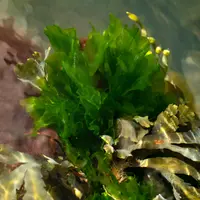
Sea lettuce (Ulva lactuca) is a thin, sheet-like green seaweed commonly found attached to rocks in shallow coastal waters. It has ruffled, translucent fronds that resemble leafy salad greens.
This marine alga grows quickly in nutrient-rich, well-lit water and often forms bright green patches along shorelines. It is widely eaten in some coastal cuisines and used as a nutrient source in aquaculture.
Because it tolerates a range of temperatures and salinities, it is relatively forgiving in controlled marine tanks, provided water quality is stable. Understanding how to care for Sea lettuce starts with consistent water movement, good light, and clean, well-oxygenated seawater.

Care Difficulty
Hard Care

Light Preference
Full Sun

Water Requirements
Aquatic

Temperature Preference
Cool Climate

Hardiness Zone
Unknown

Soil Texture
Sandy, Silty, Organic-rich

Soil pH
Slightly alkaline (7.0–7.5), Alkaline (7.5–8.5)

Soil Drainage
Waterlogged tolerant

Fertilization
Minimal (feed rarely)
Scan your plant to receive care tips personalized for your specific plant
Available on iOS and Android
Ulva lactuca, commonly called sea lettuce, needs strong natural light to maintain fast growth and healthy green blades.
Ulva lactuca is a marine alga that relies on constant contact with clean, moving saltwater rather than intermittent soil watering.
This species grows best in cool to mild marine conditions and declines when water becomes too warm or cold.
Ulva lactuca needs constantly high water contact rather than air humidity, so ambient humidity is usually not a limiting factor.
Ulva lactuca is a marine macroalga that does not grow in soil, but similar support media can be used in aquaculture setups.
This species can be kept in containers such as marine aquaria or culture tanks if water volume and stability are adequate.
Ulva lactuca grows in nutrient-rich seawater and usually needs no additional fertilizer in home culture.
Pruning Ulva lactuca is mainly a harvest and hygiene task rather than structural shaping.
Ulva lactuca is typically grown attached to substrates or in marine tanks, so transplanting focuses on maintaining healthy attachment and water access.
Ulva lactuca is commonly propagated through fragmentation and spore-based reproduction in controlled marine systems.
In natural coastal habitats this seaweed tolerates seasonal cooling well and usually needs no special winter care in the ocean.

Plant Health Check
Not sure what's wrong with your plant? Check your plant's health inside the app.
This seaweed grows as a very thin, translucent sheet that is only 2–3 cells thick, which allows rapid nutrient and gas exchange directly across its surface.
Under high nutrient conditions, such as in nutrient‑polluted coastal waters, it can form large green tides, creating dense mats that dramatically change local light and oxygen conditions.
Its tissues readily absorb and store dissolved nitrogen and phosphorus from seawater, so it is often used as a bioindicator to monitor coastal nutrient pollution and eutrophication.

Genetic studies show that what is called Ulva lactuca in different parts of the world often represents several closely related, look‑alike species, which has led to significant taxonomic revision of the traditional sea lettuce group.
This green macroalga is edible and commonly used in soups, salads, and as a dried seasoning. Harvest only from clean, unpolluted waters, rinse thoroughly to remove sand and small animals, and use fresh or dried soon after collection.
Keep your plants happy and healthy with plant identification, disease detection, and easy care guidance.