Moriche Palm Care (Mauritia flexuosa)

Also known as: muriti
Moriche Palm

About Moriche Palm

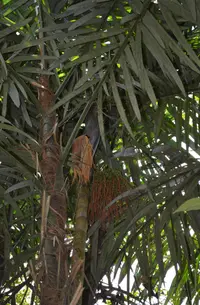
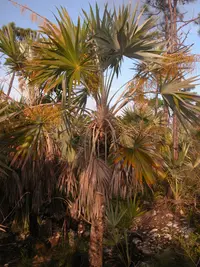
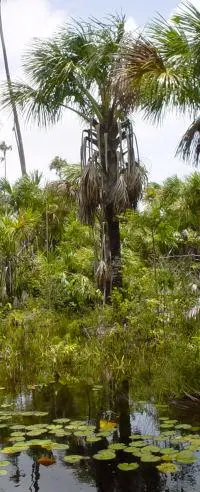
Mauritia flexuosa, commonly called moriche palm or buriti palm, is a large, water-loving palm native to tropical wetlands and river edges in South America. It forms tall, solitary trunks topped with a full crown of long, stiff, fan-like leaves.

In its natural habitat it often grows in dense stands, shaping entire swamp landscapes and providing food and shelter for wildlife. Its fruits and sap are widely used by local communities.

This species needs constant warmth, very high humidity, and ample water, which makes it challenging outside tropical climates. Anyone who wants to care for Moriche Palm must be ready to provide bright light, evenly moist conditions, and space for its long-term growth.

Main Plant Requirements

Care Difficulty

Hard Care

Light Preference

Full Sun

Water Requirements

Aquatic

Temperature Preference

Tropical / Frost Sensitive

Hardiness Zone

11–12

Soil Texture

Sandy, Loamy, Organic-rich

Soil pH

Acidic (5.5–6.5)

Soil Drainage

Waterlogged tolerant

Fertilization

Minimal (feed rarely)

Get Personalized Care Plan

Scan your plant to receive care tips personalized for your specific plant

Available on iOS and Android

How to Care for the Moriche Palm

This tropical palm needs strong light and long sun exposure to grow at its natural pace.

  • Provide full sun for 6–10 hours daily; young plants benefit from light afternoon shade in very hot, dry climates.
  • Allow filtered or light partial shade (around 3–4 hours direct sun) only in cooler or cloudier regions, as Moriche Palm slows markedly in deep shade.
  • Watch for sun scorch on new fronds in sudden heat waves and for stretched, pale growth if surrounding vegetation or buildings begin to block sun seasonally.

This species is adapted to wetlands and demands consistently moist to saturated conditions.

  • Maintain soil that is always moist; in the ground, it tolerates standing water, while in raised or slightly drier sites the top 2–5 cm should never fully dry out.
  • Increase water volume in warm seasons and during active growth if the upper soil starts to lose gloss or feel only slightly damp to the touch.
  • Reduce watering only slightly in cooler months, but avoid hard drying; yellowing, limp fronds often indicate root stress from prolonged dryness or sudden flooding in compacted soil.

This palm is strictly tropical and has very low tolerance to cold.

  • Aim for 75–90°F (24–32°C) for fastest growth; Mauritia flexuosa care outdoors is most successful in consistently warm, humid climates.
  • Protect plants whenever temperatures approach 45–50°F (7–10°C), and expect serious damage or death near 32°F (0°C) or with any frost.
  • In hot periods above 95°F (35°C), maintain soil moisture and humidity to prevent heat stress, especially for young or newly established specimens.

This species prefers very humid air and reacts poorly to prolonged dryness.

  • Aim for 70–90% humidity, replicating its swamp habitat rather than typical indoor room conditions.
  • Leaf tips browning, folded fronds, and stalled growth indicate humidity stress, especially in heated or air-conditioned spaces.
  • Increase humidity with large trays of water and pebbles near the plant, grouped plants, or a cool-mist humidifier when caring for Moriche Palm.

Mauritia flexuosa needs constantly moist, organic-rich soil that never fully dries.

  • Use a deep, fibrous mix of 50–60% peat or coco coir, 20–30% compost, and 20–30% coarse sand to mimic swampy conditions.
  • Ensure slow drainage that retains moisture but avoids standing water above the root crown for long periods.
  • Target a slightly acidic pH around 5.5–6.5, which supports nutrient uptake in this wetland palm.
  • Improve aeration with coarse sand or fine grit rather than chunky bark, which can dry unevenly in waterlogged-style setups.

This palm is difficult but possible to grow in containers if ample space and moisture are provided.

  • Choose a tall, heavy container to stabilize the eventual height and prevent tipping in wind or on balconies.
  • Use a pot with multiple side and bottom holes so excess water can exit while the lower mix remains consistently moist.
  • Stand the container in a shallow, monitored water tray to keep the lower root zone saturated without submerging the crown.

Mauritia flexuosa benefits from light, steady nutrition but is sensitive to overfeeding in containers.

  • Use a balanced slow-release fertilizer (such as 10-10-10) or well-rotted compost mixed into the topsoil at the start of the warm growing season.
  • Apply fertilizer 1–2 times per growing season for young or container-grown plants; mature, in-ground trees often need no additional feeding.
  • Dilute liquid feeds to 1/2–1/4 strength and apply only to moist soil to avoid root burn.
  • Stop feeding in late fall and withhold fertilizer during cooler, low-growth periods to prevent weak, elongated tissue.

Mauritia flexuosa needs only minimal structural pruning, mainly to maintain safety and plant health.

  • Carry out pruning at the end of the dry or cooler season, before vigorous new growth starts.
  • Remove dead, diseased, broken, or badly damaged fronds at the base, leaving healthy green leaves intact.
  • Use clean, sharp loppers or a pruning saw, disinfecting blades between cuts to limit disease spread.
  • Avoid heavy crown thinning, which can weaken the palm and reduce its ability to photosynthesize and store reserves.

This palm is usually grown in-ground, so focus on careful transplanting of young Mauritia flexuosa rather than frequent repotting.

  • Transplant at the beginning of the warm rainy season to support fast root establishment and reduce water stress.
  • Look for roots circling the container, slowed growth, or frequent wilting as signs a seedling is pot-bound and needs a larger site.
  • Move up only 1 pot size or into a hole just wider than the root ball, keeping the original soil mass intact to limit transplant shock.
  • Water deeply after transplanting, shade the palm lightly for 1–2 weeks, and keep soil evenly moist while new roots extend into surrounding soil.

Mauritia flexuosa is propagated almost exclusively from seeds and requires patience and warm, stable conditions.

  • Collect fully ripe fruits, clean off pulp, and sow fresh seeds for best germination potential.
  • Sow seeds in a deep container with a moist, free-draining, sandy mix and maintain 77–86°F with high humidity.
  • Place containers in bright, indirect light and keep the substrate evenly moist, never waterlogged, throughout the long germination period.
  • Expect slow, uneven germination over several months; transplant seedlings only once they develop a strong primary root and 2–3 leaves.

This strictly tropical palm has very low frost tolerance and needs careful winter management outside humid equatorial climates.

  • Keep temperatures above 55–60°F; exposure near freezing can kill foliage and damage the growing point.
  • In marginal climates, grow Mauritia flexuosa in large containers that can be moved indoors or into a heated greenhouse for winter.
  • Provide bright, indirect light indoors and reduce watering so the root zone stays slightly moist but not saturated during cooler months.
  • If planted outdoors in warm regions, add an organic mulch layer 5–8 cm thick around the root zone to buffer brief cool spells.

Care Tips

Water-table management

When possible, site plants near an irrigation pond or controlled swale so roots can access consistently moist subsoil while the crown remains on slightly raised ground to prevent trunk rot.

Wind-firm establishment

In the first 3–5 years, use 2–3 flexible stakes set outside the root zone and attach the trunk with soft ties, checking twice per year to adjust or remove them as the palm develops a stable root system.

Mulch for root zone

Apply a 5–10 cm ring of coarse organic mulch starting 20–30 cm from the trunk out to the drip line to buffer soil moisture, moderate temperature, and reduce weed competition without suffocating the root collar.

Flood-tolerant spacing

In flood-prone sites, plant in clusters with 4–6 m spacing so individuals help break flowing water and reduce erosion around each trunk during seasonal inundation.

Nutrient-reserve protection

Avoid removing older, green or yellowing fronds unless they are damaged, since these store nutrients that the palm reclaims, which is especially important when caring for Moriche Palm in nutrient-poor, wet soils.

Common Pests and Diseases

Palm bruchid beetles

This pest attacks fruits and seeds, with larvae boring inside and destroying the endosperm, which reduces natural regeneration and usable fruit yield.

Solution

Collect and destroy infested and fallen fruits, harvest fruits promptly at maturity, and keep the area under trees clean to reduce breeding sites; in plantation or nursery settings, monitor flowering and fruiting bunches and use fine mesh bags or exclusion netting around developing fruit clusters to limit adult beetle access.

Rhynchophorus palm weevils

This pest bores into the crown and upper stem, causing internal tunneling, foul-smelling rot, crown collapse, and eventual palm death if not detected early.

Solution

Inspect the crown region regularly for oozing sap, frass, or wilted central leaves, remove and destroy heavily infested palms to prevent spread, and use pheromone traps and sanitation of cut plant material to lower adult populations; in high-risk areas, protect wounds on trunks and leaf bases and avoid unnecessary injuries to the stem.

Leaf spot disease

This disease causes scattered brown to dark lesions on leaflets that may coalesce, reducing photosynthetic area and weakening young or stressed palms, especially in humid, crowded stands.

Solution

Remove and destroy heavily spotted or senescent fronds, avoid overhead irrigation in managed plantings, and improve spacing and airflow; in nurseries or high-value collections, use a registered broad-spectrum fungicide labeled for palms if cultural measures do not stop progression, following label directions closely as part of broader Mauritia flexuosa care.

Bud rot

This disease affects the growing point of the palm, leading to yellowing and collapse of the spear leaf and surrounding young fronds, with a soft, often foul-smelling tissue in the central crown.

Solution

At early stages, remove and discard affected spear and surrounding rotten tissue, improve drainage and avoid water standing in the crown, and maintain good nutrition; in plantations or collections, apply a systemic fungicide labeled for palm bud rot into the crown area and to nearby palms, and promptly remove dead individuals to reduce inoculum.

Interesting Facts

Amazonian swamp architect

This palm naturally forms dense stands in seasonally flooded Amazonian wetlands, where its trunks and aerial roots help stabilize waterlogged soils and create microhabitats for fish, amphibians, and invertebrates.

Key wildlife food source

Its large, oil-rich fruits are a critical food resource for many Amazonian animals, including macaws, tapirs, and rodents, which in turn disperse the seeds and shape the structure of the surrounding forest.

Nutrient-dense fruit pulp

The orange fruit pulp is very high in carotenoids, especially provitamin A compounds, and also provides dietary lipids, making it a nutritionally important wild food in several Amazonian regions.

Botan icon

Did you know?

Mauritia flexuosa often forms extensive monodominant stands known as buritizais, where this single palm species structurally dominates the landscape and strongly influences local hydrology, fire regimes, and biodiversity patterns across large areas of lowland Amazonia.

FAQs about Moriche Palm

Growth is slow to moderate. Seedlings often stay small for several years while building roots, then trunks elongate 15–30 cm per year in good conditions. Expect a visibly established juvenile palm after roughly 8–12 years outdoors.

Grow Healthy Plants with Botan Care

Keep your plants happy and healthy with plant identification, disease detection, and easy care guidance.

Botan plant care app — identify plants on mobile

Explore More Plants