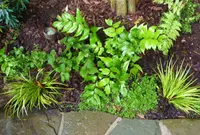
Griffith Humata Care (Davallia griffithiana)

Griffith Humata

About Griffith Humata

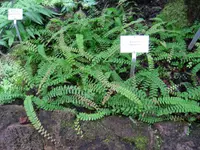
Griffith humata (Davallia griffithiana) is an epiphytic fern known for its fine, feathery fronds and creeping, fuzzy rhizomes that often drape over pot edges. It forms a softly arching, airy clump that suits hanging baskets and shallow containers.

In nature, it grows on trees or rocks in humid, shaded forests of Southeast Asia, where it benefits from constant moisture and good air movement. This growth habit makes it moderately easy indoors if its need for even moisture, loose, well-drained substrate, and gentle filtered light is respected.

Understanding how to care for Griffith Humata starts with mimicking these stable, cool to mild, and relatively humid conditions, while avoiding waterlogging or very dry air.

Main Plant Requirements

Care Difficulty

Moderate Care

Light Preference

Bright Indirect Light

Water Requirements

Keep Soil Moist

Temperature Preference

Tropical / Frost Sensitive

Hardiness Zone

11–12

Soil Texture

Loamy, Peaty, Organic-rich

Soil pH

Acidic (5.5–6.5)

Soil Drainage

Moist but well-drained

Fertilization

Light (every 4–6 weeks)

Get Personalized Care Plan

Scan your plant to receive care tips personalized for your specific plant

Available on iOS and Android

How to Care for the Griffith Humata

This fern prefers soft, filtered light that mimics bright forest shade.

  • Provide 2–4 hours of gentle morning sun or bright, dappled light under a tree or shade cloth; avoid harsh midday and afternoon sun.
  • Griffith Humata tolerates partial to deep shade, but in very dim areas fronds become sparse and pale, so move it slightly closer to the light source.
  • In summer, use filtered light or 30–50% shade cloth; in winter, allow brighter exposure through windows or leafless canopies to maintain growth.

This fern prefers evenly moist, not soggy, conditions around its fibrous roots and rhizomes.

  • Water when the top 2–3 cm of soil or substrate feels just barely dry, then soak thoroughly so excess drains away, avoiding any standing water.
  • Use a loose, fast-draining mix so Davallia griffithiana does not sit in waterlogged soil, which leads to black, mushy rhizomes and yellowing fronds.
  • Reduce frequency in cool seasons when growth slows, but never allow the root zone to dry out fully; crisp, browning frond tips signal underwatering.

This fern grows best in mild, consistently warm conditions without sharp temperature swings.

  • Aim for 65–80°F (18–27°C) for steady growth; it manages brief highs to 85°F (29°C) if humidity stays moderate to high.
  • Protect it from cold; growth declines below 55°F (13°C) and damage occurs near 40°F (4°C), so avoid planting in frost-prone, exposed spots.
  • In regions with cool winters, position it in a sheltered, frost-free microclimate; in hotter climates, provide shade and airflow during heat waves above 85°F (29°C).

This fern prefers consistently moist air to support its fine fronds and surface rhizomes.

  • Aim for 60–80% humidity; it tolerates brief dips but prolonged air below 40% causes stress.
  • Dry air leads to crisping tips, pale fronds, and stalled growth in Griffith Humata.
  • Increase humidity with a pebble tray under the pot, grouped plants, or a small cool-mist humidifier.

Davallia griffithiana grows best in a loose, airy, organic-rich medium that drains very quickly.

  • Use a mix of roughly 50% fine orchid bark, 25% peat or coco coir, and 25% perlite to keep roots aerated.
  • Ensure the mix is fast-draining yet evenly moist, never waterlogged, to protect delicate surface rhizomes from rot.
  • Target slightly acidic to neutral pH, around 5.5–7.0, which suits typical peat- or coir-based fern mixes.
  • Avoid dense garden soil, heavy clay, or potting mixes dominated by fine peat without added bark or perlite.

This species is well suited to container growing, especially shallow or hanging setups that showcase its creeping rhizomes.

  • Choose a wide, shallow pot that allows rhizomes to spread horizontally rather than a deep, narrow container.
  • Use a container material that matches your environment, such as plastic to retain moisture or terra-cotta to reduce excess wetness.
  • Stabilize hanging baskets or wall containers so spreading fronds and rhizomes do not shift the root mass and damage fine roots.

This fern benefits from light, steady feeding during active growth but does not need heavy fertilization.

  • Use a balanced liquid fertilizer (around 10-10-10 or 20-20-20) diluted to 1/4–1/2 strength for Griffith Humata in spring and summer.
  • Apply every 4–6 weeks while fronds are actively growing, skipping feedings if growth slows due to low light or stress.
  • Reduce or stop feeding in fall and winter, when growth is minimal, to avoid salt buildup in the potting mix.
  • Rinse the potting medium with plain water every few months to flush excess nutrients and protect the fine roots.

Davallia griffithiana needs only light, maintenance pruning to stay tidy and healthy.

  • Best time for pruning is late winter to early spring, just before new fronds start to emerge.
  • Remove dead, yellowing, or damaged fronds at the base using clean, sharp scissors to limit infection risk.
  • Thin very crowded fronds to improve air flow, which reduces fungal problems and keeps the clump more balanced in shape.
  • Avoid cutting healthy rhizomes; instead, focus on fronds, since heavy rhizome removal can slow growth.

This fern prefers slightly snug conditions and only occasional repotting or transplanting.

  • Look for roots circling the container surface, pushing the plant up, or water running straight through as signs it needs a larger pot.
  • Aim to repot every 2–3 years in spring, when Davallia griffithiana resumes active growth and recovers more quickly.
  • Move the plant just 1 pot size up, using a loose, well-drained, peat-free mix to support the sensitive, creeping rhizomes.
  • Handle rhizomes gently, keep them near the surface, water thoroughly after repotting, and keep humidity high to reduce transplant stress.

This fern is most commonly propagated by careful division of its creeping rhizomes.

  • Best season for division is spring, when new growth starts and the plant can rebound from root disturbance.
  • Lift the plant gently and separate sections of rhizome, ensuring each division has several healthy fronds and firm roots attached.
  • Plant divisions in a shallow, well-drained mix, keeping rhizomes partly exposed and spacing them to allow spreading.
  • Maintain high humidity, consistently moist (not waterlogged) substrate, and bright, indirect light to encourage establishment of new plants.

This tropical fern is sensitive to frost and needs mild, protected winter conditions in most climates.

  • Keep temperatures above 55°F; prolonged exposure below this range can damage fronds and rhizomes.
  • In cold regions, grow Davallia griffithiana in containers and move indoors before night temperatures drop near 50°F.
  • Indoors, place in bright, indirect light and maintain higher humidity with trays of water, room humidifiers, or grouping plants.
  • Water slightly less in winter, allowing the upper mix to dry a bit between waterings while never letting the rhizomes fully dry out.

Care Tips

Rhizome positioning

Set the fuzzy rhizomes on top of the substrate rather than burying them, so they stay aerated and can spread evenly around the rim of the pot or mount.

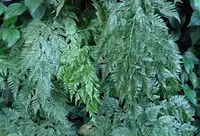
Mounted culture

For a more natural growth habit, tie rhizomes onto a slab of cork bark or tree fern fiber with nylon fishing line, then mist more frequently to compensate for faster drying.

Gentle root division

When dividing, cut the rhizome into sections with 3–5 fronds each using a sterile blade, and keep divisions snugly potted so the rhizomes do not wobble as they re-establish.

Humidity zoning

Place the plant on a wide pebble tray under or beside other ferns to create a small, localized humidity pocket rather than raising humidity in the entire room.

Preventive pest checks

Inspect the hairy rhizomes and frond bases monthly with a hand lens for early signs of scale or mites, and rinse under a gentle shower before using any targeted treatment when needed, which is a sound practice when caring for Griffith Humata.

Common Pests and Diseases

Rhizoctonia blight

This disease causes brown, water-soaked lesions at the base of fronds and along creeping rhizomes, leading to sudden frond collapse. Symptoms include rapid wilting of affected fronds while nearby foliage may still look green initially.

Solution

Remove and discard all affected fronds and visibly infected rhizome sections, cutting back into firm, healthy tissue. Improve air circulation, avoid overhead watering, keep the rhizomes slightly drier on the surface, and treat remaining growing media with a sulfur-based fungicide or a biofungicide containing Trichoderma following label directions.

Pythium root decline

This disease attacks fine feeder roots of the fern in constantly moist media, causing plants to lose vigor, yellow, and fail to produce new fronds. Symptoms include stunted growth and roots that appear dark, mushy, and easily break apart.

Solution

Reduce watering frequency so the mix stays lightly moist but not saturated, and repot into a fresh, well-drained, airy substrate with high-quality peat or bark and perlite. Trim away decayed roots, disinfect tools between cuts, and drench the new medium with a biological root treatment such as products containing beneficial microbes to suppress Pythium.

Scale insects

These insects attach along the hairy rhizomes and frond stalks, appearing as small brown or tan bumps that suck sap and weaken the plant. Symptoms include sticky honeydew, sooty mold on fronds, and slow, thin new growth.

Solution

Manually remove scales from rhizomes and stipes using a cotton swab dipped in isopropyl alcohol, taking care not to saturate the hairy surface. After mechanical removal, wash the plant gently with lukewarm water, then apply a horticultural oil spray labeled for ferns and repeat treatments every 7–10 days until no new scales appear.

Mealybugs

These insects hide in the hairs of the rabbit-foot rhizomes and at leaflet bases, forming white cottony clusters that sap energy from the plant. Symptoms include distorted or yellowing fronds and a general decline despite adequate water and light.

Solution

Isolate the plant, then dab visible mealybugs with isopropyl alcohol on a cotton swab and carefully rinse the rhizomes and fronds with a strong but gentle stream of water. Follow with a neem oil or insecticidal soap treatment suitable for ferns, ensuring thorough coverage of the rhizomes and undersides of fronds, and repeat every 7–10 days until the infestation is gone.

Fern aphids

These insects colonize tender new fronds and pinnae, clustering on the undersides where they feed and cause curling, puckering, and pale patches. Symptoms include sticky honeydew, possible sooty mold, and reduced production of new fronds, especially in indoor collections of multiple ferns where growing Griffith Humata close together increases spread risk.

Solution

Shower the plant with lukewarm water to knock aphids off new growth, shielding the potting mix to avoid waterlogging. After rinsing, apply insecticidal soap or a low-rate horticultural oil to the undersides of fronds, repeat every 5–7 days until no aphids remain, and separate heavily infested plants from healthy ferns during treatment.

Interesting Facts

Rabbit foot rhizomes

This fern develops thick, furry rhizomes that creep over soil and hard surfaces, resembling a rabbit’s foot and allowing the plant to anchor itself on mossy rocks and tree trunks in its native range.

Epiphytic forest specialist

In the wild, this species typically grows as an epiphyte on tree bark in humid Asian forests, relying on moisture and nutrients captured from rain, leaf litter, and decaying organic debris rather than deep soil.

Frond architecture variation

Its fronds are finely divided and often show subtle differences in size and shape depending on light and humidity levels, a plastic response that helps maximize photosynthesis in shaded understory habitats.

FAQs about Griffith Humata

Brown leaf tips or fronds usually result from low humidity, irregular watering, or excess fertilizer salts. Check that the root rhizomes are not buried too deeply, improve air moisture, flush the substrate, and trim only completely dead tissue.

Grow Healthy Plants with Botan Care

Keep your plants happy and healthy with plant identification, disease detection, and easy care guidance.

Botan plant care app — identify plants on mobile

Explore More Plants